
Livraison le jour même ou le lendemain

Qualité garantie

Débloquez vos offres de bienvenue: Livraison GRATUITE | Jusqu'à -80 % | 30 jours d'essai gratuits à JoyPlus
Téléchargez l'application
A frying pan that starts sticking after just a few weeks, a sauté pan that is too heavy to handle or an electric saucepan that is awkward to clean can quickly turn everyday meals into a chore. Non-stick cookware can make cooking with less fat, cleaning and preparing quick meals much easier — provided you check a few key features before placing your order.
Not all non-stick coatings are created equal. Their composition, the material used for the cookware body and the quality of the base all have a direct impact on heat distribution and long-term durability.
A product listing may also describe a surface as “healthy” or “free from harmful substances” without specifying which substances are meant. If you are looking for PFOA-free cooking, check the exact wording used: “no intentionally added PFOA” does not necessarily mean that the product is free from every substance in the PFAS family. It is therefore worth reading the manufacturer’s description carefully.
A non-stick frying pan or lidded sauté pan is not automatically compatible with induction. This technology requires a suitable magnetic base. If you have an induction hob, look for an explicit statement such as induction-compatible cookware.
Gas and electric hobs are generally less demanding, but the diameter of the base should still match the size of the ring. A container that is too small or poorly positioned will heat less evenly.
The words “dishwasher safe” do not guarantee the same lifespan as gentle hand washing. Detergents, knocks between utensils and high temperatures can speed up wear on the coating.
To protect a non-stick surface, preferably use silicone, wooden or nylon spatulas. Avoid metal utensils and do not leave an empty pan heating for too long. Also check whether the lid, power cord or handle can be removed.
Cast aluminium offers a good balance between light weight, heat conduction and ease of handling. However, it must sit on a sufficiently stable base to reduce the risk of warping. Granite-, ceramic- or marble-effect finishes may also refer to different compositions, so do not judge a product solely by its external appearance.
The SENSARTE model featured below combines a cast aluminium body with a Swiss ILAG granite-effect non-stick coating. Its listing states that it contains no intentionally added PFOA, PFOS, APEO, lead or cadmium. This information reflects the features stated by the manufacturer and does not replace the need to follow the usage recommendations.
For one person or a couple, a 24 to 26 cm frying pan and a 1.2 to 2 litre electric saucepan are generally sufficient for preparing eggs, noodles, vegetables or soup. For slow-cooked dishes, family portions and batch cooking, it is better to choose a capacity of 3 to 5 litres.
A compact appliance should also be easy to store in a cupboard or fit on a narrow worktop. Measure the available space before ordering, especially if the lid is bulky or the handle cannot be removed.
For a multifunction electric saucepan or an electric hot pot, power affects how quickly it heats up, as well as how much electricity it uses during operation. Two power levels are generally enough to bring liquid to the boil quickly, then maintain a gentler cooking temperature.
Overheating and boil-dry protection are useful features, but they do not replace using the appliance in accordance with the instructions. Avoid overfilling the container and always place the appliance on a stable surface away from water.
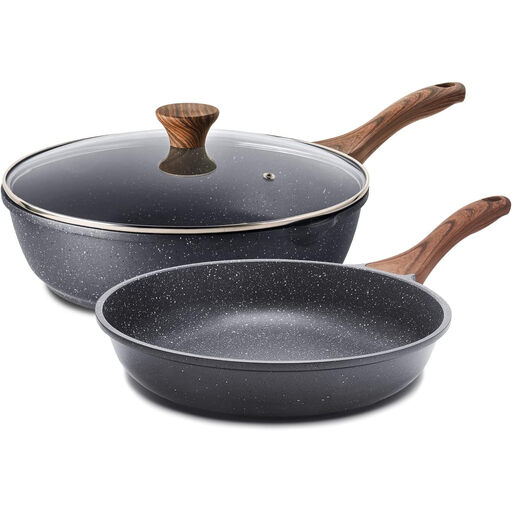
Why this choice suits this profile : This set combines a 24 cm frying pan with a deep 5-quart sauté pan and lid. It gives you plenty of variety without having to buy multiple pieces.
The stainless steel magnetic base is stated to be compatible with induction, gas and electric hobs. To help protect the coating, hand washing is recommended.
Two complementary sizes, a tempered glass lid and Bakelite handles stated to be heat-resistant up to 150 °C.
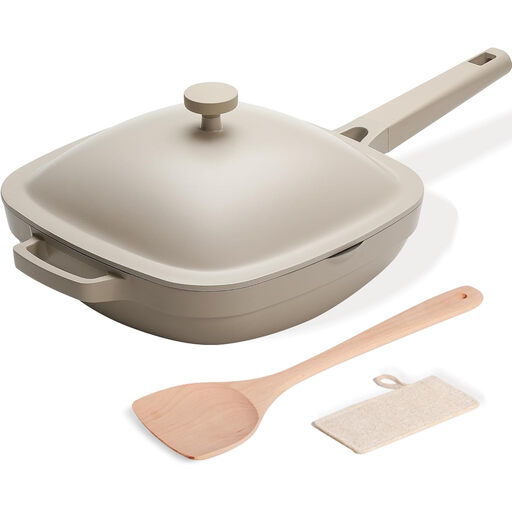
Why this choice suits this profile : Its deep shape is ideal for stir-fried, braised or slow-cooked dishes, with a surface stated to be more generous than that of a traditional round frying pan.
The listing specifies that this pan is not dishwasher- or oven-safe: two limitations to consider before buying.
PFAS-free Ti-Ceramic coating, two pouring spouts, raised lid, wooden spatula and vegetable-fibre sponge included.
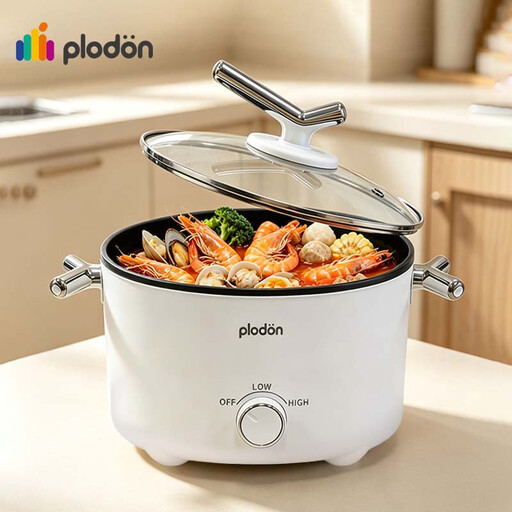
Why this choice suits this profile : With a 2 litre capacity, this container is suitable for students, small kitchens and meals prepared directly at the table or in a limited space.
The LOW/HIGH settings keep things simple. The instructions recommend not exceeding two-thirds of the capacity to reduce the risk of spills.
Stated power of 1 000 W, glass lid, detachable cord and non-stick interior.
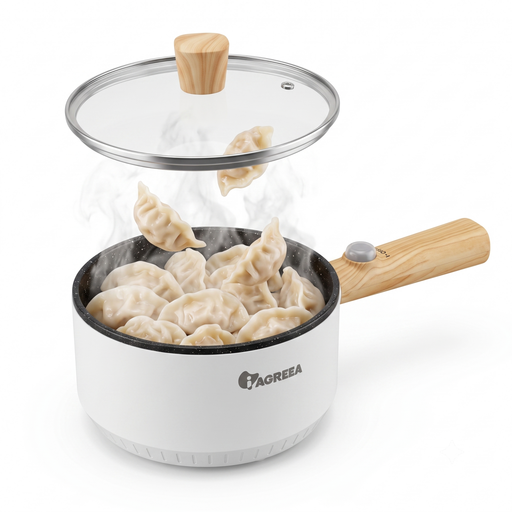
Why this choice suits this profile : Its compact size is ideal for noodles, soups, vegetables, porridge and individual portions, whether you are in a studio flat, office or student accommodation.
The listing mentions protection against overheating and boil-dry operation. The detachable European power cord makes storage and cleaning easier.
Two power levels, glass lid with steam vent and wooden handle stated to be heat-resistant.
We have brought together a complete, real-time updated selection of products that meet these demanding criteria and European safety requirements.
Yes, but only if its base is designed for induction. Look for this information in the technical specifications rather than relying solely on the coating material. Aluminium on its own is generally not magnetic.
It depends on how often it is used, the temperature, the washing method and the utensils used. Moderate cooking temperatures, hand washing and avoiding metal utensils all help slow down wear. However, there is no guaranteed lifespan that applies to every household.
Consumption depends on the appliance’s power and how long it runs. A 1 000 W model used for 15 minutes consumes approximately 0.25 kWh. The actual cost then depends on the electricity tariff in your contract. To reduce heating time, use the lid and adjust the power to suit the dish being prepared.