What should you check before buying?
Start by checking your cookware and measuring the available cut-out. Then choose a heating method to suit the way you cook and your installation. UFC-Que Choisir points out that induction requires a ferromagnetic base, and that cut-out dimensions are not the same as the hob’s external dimensions.
| What matters |
What to check before buying |
Who is most concerned? |
| Cookware compatibility |
Test the bases with a magnet and check that your cookware is the right size for the cooking zones. |
If I want to keep the pans I use often and avoid replacing them unnecessarily, compatibility comes first; around 36% of consumers share this priority. |
| Fitting your kitchen |
Measure the cut-out and check the fitting dimensions, as well as the instructions for the exact model. |
When replacing a hob in a redesigned kitchen, I want to know whether it will fit the space available; around 29% of consumers prioritise this check. |
| Cooking method |
Identify the cooking methods you’ll use and check that the necessary connections are available before considering a dual-fuel hob. |
If the choice between induction, radiant or halogen zones and gas cooking will shape my everyday use, the heating method matters most; around 21% of consumers put it first. |
| Overall cost and service |
Assess the cost of any cookware you may need to replace separately from any work required; check the warranties and fitting terms. |
If I want to plan for the costs of the hob and its installation without assuming that everything needs replacing, around 14% of consumers prioritise the overall cost and service. |
Induction hobs available on Joybuy
The models below are built-in induction hobs in a range of sizes and configurations. Check the fitting dimensions and cookware compatibility for each model.
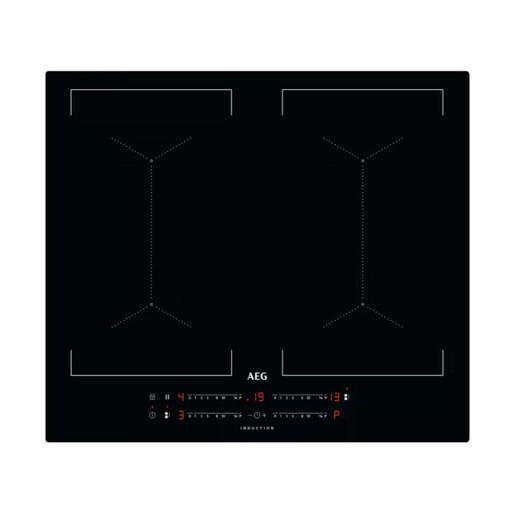 Image unavailable
AEG IKS64453IB, 60 cm built-in induction hob, 4 zones
For a fitted kitchen where a 60 cm induction hob with 4 zones suits the available space. Cookware must be induction-compatible and have a ferromagnetic base.
The description lists combinable FlexiBridge zones, a timer for each zone and a child lock.
View on Joybuy
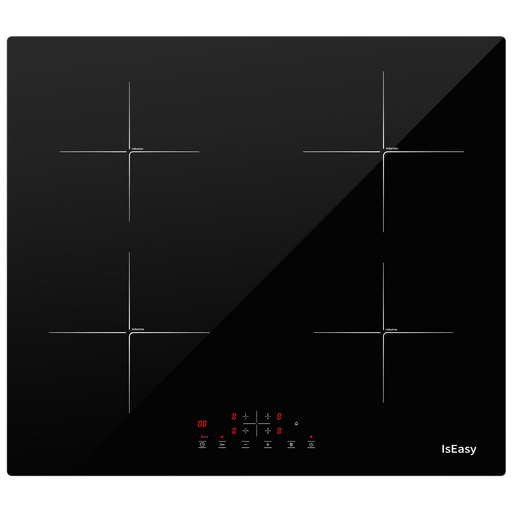 Image unavailable
IsEasy, 60 cm built-in induction hob, 4 zones, 6800 W
Worth considering if a 60 cm built-in hob with 4 zones suits your kitchen. Induction requires compatible cookware with a ferromagnetic base.
The title lists 9 power levels, a timer from 1 to 99 min and a Boost function.
View on Joybuy
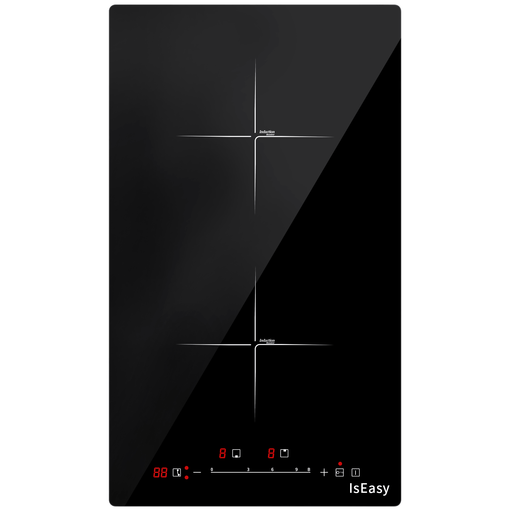 Image unavailable
IsEasy Domino, 29.5 cm built-in induction hob, 2 zones, 3400 W
Compare its 29.5 cm Domino format with the space available. Also check the fitting dimensions and planned connection. Cookware must be induction-compatible and have a ferromagnetic base.
The title lists 9 heat settings, a timer, a child lock, a Booster function and a voltage of 220–240 V.
View on Joybuy
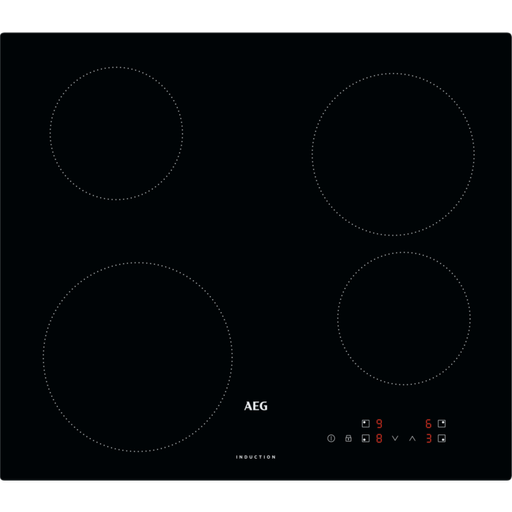 Image unavailable
AEG IBS64200CB, 59 cm induction hob, two-phase Perilex connection
Consider this model if its 56 × 49 cm fitting dimensions suit the available space and the specified connection is compatible with your installation. It is designed for standard built-in installation, not flush fitting.
Induction requires compatible cookware with a ferromagnetic base.
View on Joybuy
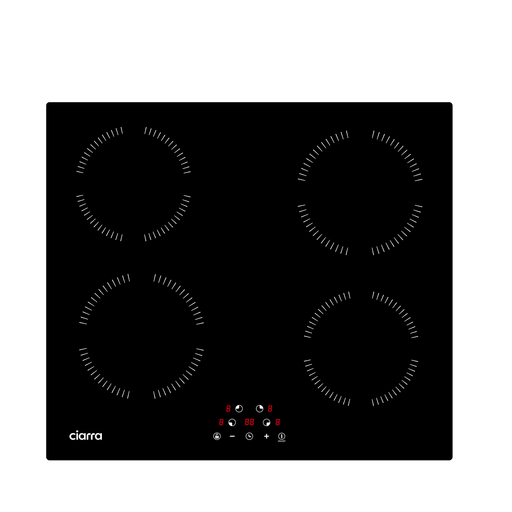 Image unavailable
CIARRA CABBIH4-A, built-in induction hob, 4 zones
Compare the stated cut-out size of 560 × 490 mm with the existing space, and ask a qualified electrician to check the installation requirements. Cookware must be induction-compatible and have a ferromagnetic base.
The title lists 9 power levels.
View on Joybuy
Frequently asked questions
How can I check my pans before choosing induction?
Test the base of each pan you want to keep with a magnet: if it sticks, the base contains iron. Then check that the pans are the right size for the zones on the hob you’re considering. As UFC-Que Choisir points out, the material name, such as “stainless steel”, isn’t enough on its own.
Will a hob advertised as 60 cm wide automatically replace my old one?
No. The visible width doesn’t confirm that the hob will fit the existing cut-out. Measure the opening and compare it with the fitting dimensions and the instructions for the exact model. UFC-Que Choisir distinguishes these measurements from those of the visible hob; also check the space needed for installation.
What should be checked before connecting a new electric hob?
Ask a suitably qualified professional to compare the model’s connection specifications with your existing installation, if necessary. Promotelec describes a dedicated circuit for cooking under the rules it sets out, but this information can’t be used to assess your installation remotely.
Does a dual-fuel hob always require a new gas certificate of conformity?
No. Buying a hob alone doesn’t mean that a new certificate is always required. Article 21 of the order of 23 February 2018 requires a certificate for a new installation or certain modifications to an existing installation, with exceptions depending on the work involved. Légifrance sets out the rule, while Cegibat, GRDF, clarifies that some types of work don’t require this certificate. Ask a professional to assess the planned work for your home.
What protection applies when you buy from a professional seller?
In France, the legal guarantee of conformity applies to goods sold by a professional to a private individual, under the conditions set by law. It is separate from any optional commercial warranty. The Ministry of the Economy confirms that it covers new, second-hand and refurbished goods; check the fitting terms separately.


