Households that do a weekly shop and stock up on frozen food
If you bring home several days’ worth of shopping at once, compare the space for fresh food with the freezer capacity. The total capacity doesn’t tell you how these two spaces are divided.


First, choose a format that fits in your kitchen, then check separately how much space you need for fresh food and frozen food. A fridge freezer is worth considering if you do a weekly shop and buy frozen food; a table-top or fridge-only model is better suited to frequent shopping and a limited need for freezer space. For a larger model, compare its usable capacity with the space it takes up, its annual energy consumption and its noise level.
If you bring home several days’ worth of shopping at once, compare the space for fresh food with the freezer capacity. The total capacity doesn’t tell you how these two spaces are divided.
A compact appliance still needs enough room for its doors to open and for you to move around it. Its capacity should also suit how often you shop, as Que Choisir’s buying guide points out.
In an open-plan kitchen or one close to a living area, check the model’s noise level. To compare energy use, look at its kWh per year and usable capacity alongside those of similar-sized appliances.
Work out how much storage you need and measure the space before comparing the energy label details, including the capacity of each compartment, kWh per year and noise level.
| Feature | What to check | Who it matters to |
|---|---|---|
| Weekly shopping and frozen food | Compare the usable capacity in litres of the fridge and freezer separately. | When I put away a week’s shopping, I need enough room for fresh food without reducing my frozen-food supplies. Around 31% of consumers make this a priority. |
| Space and access | Measure the appliance, the route into the kitchen and the space needed to open its doors; check the manual for installation clearances. | In a narrow kitchen, I want to install the appliance and open its drawers without blocking the way. This is the top consideration for around 31% of consumers. |
| Smaller shops and frequent trips | Check the usable capacity and the space actually available for frozen food. | If I shop little and often, I prefer storage that suits what I keep at home. For around 19% of consumers, this matters more than a large capacity. |
| Noise and energy use | Compare the dB and kWh per year of models with similar formats and capacities. | With an open-plan kitchen, I want to be comfortable with the everyday noise while keeping an eye on electricity use. Around 19% of consumers make these features their priority. |
A spacious appliance may have too little room for frozen food, or more fresh-food space than you need. The energy label lists the capacity of each compartment, as the European Commission explains.
Note down how much space you need for fresh and frozen food separately, then compare the corresponding usable capacities in litres.
Having enough width doesn’t guarantee that the appliance will fit through the route into your kitchen or that its doors and drawers will open once it’s installed.
Also measure the depth and height, check access through your home and look out for nearby obstacles. For clearances and ventilation, follow the manual for the model you choose rather than relying on a margin that may not apply to every appliance.
The rating alone doesn’t tell you how much electricity the appliance uses or how much storage space you get. The European Commission says the label also shows energy consumption, capacity and noise emissions.
Compare kWh per year, usable capacity in litres and noise levels across appliances with similar capacities and formats.
One to consider when comparing freestanding or integrated fridge freezers by their technical specifications.
Worth a look if you’re after a fridge freezer with a separate freezer compartment or dedicated fresh-food compartments.
A brand to consider for fridge freezers, multi-door models and American-style formats.
Worth considering among two-door fridges and fridge freezers with a range of interior layouts.
This selection includes fridge freezers that keep fresh and frozen food in one appliance, as well as multi-door and American-style models to consider if their capacity and size suit your kitchen.
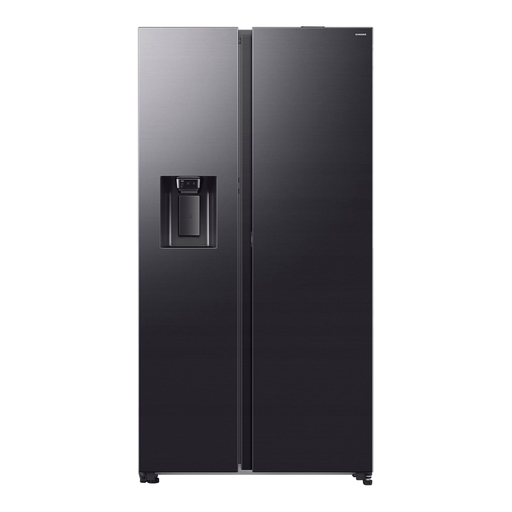 Image unavailable
Worth considering if your shopping calls for plenty of capacity and you have room in your kitchen for a side-by-side model.
Advertised total capacity: 640 L. Check the capacity of each compartment, the delivery route and the door clearance before choosing this format.
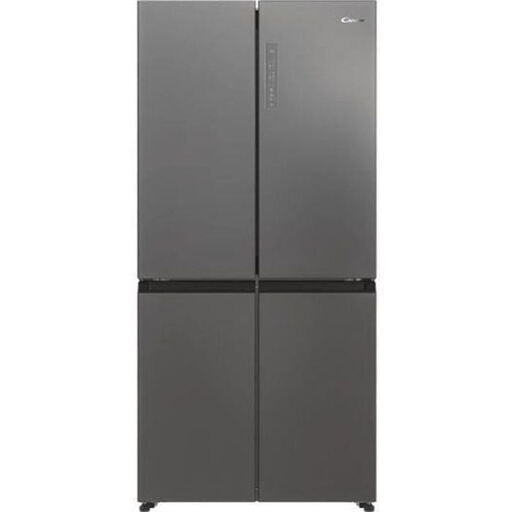 Image unavailable
Worth a look if you want to store a large shop in a four-door fridge freezer.
Advertised total capacity: 467 L; energy rating E and Total No Frost technology are listed in the model name. Check how the capacity is divided and the installation clearances in the product documentation.
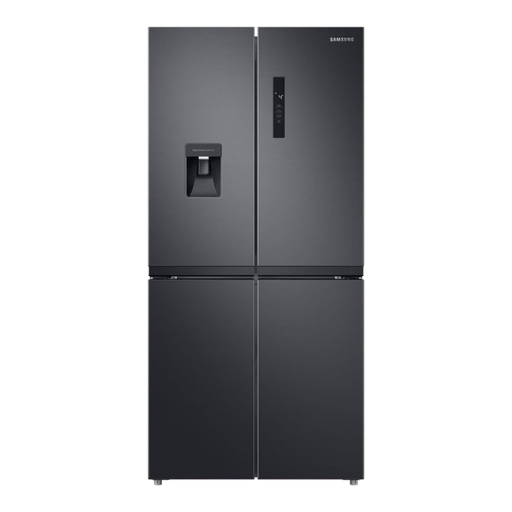 Image unavailable
Worth considering for a large shop, provided this bigger format fits the space you have in mind.
Advertised total capacity: 488 L; energy rating E. Check the fresh and frozen food capacities separately, and look at the installation requirements if water or ice features matter to you.
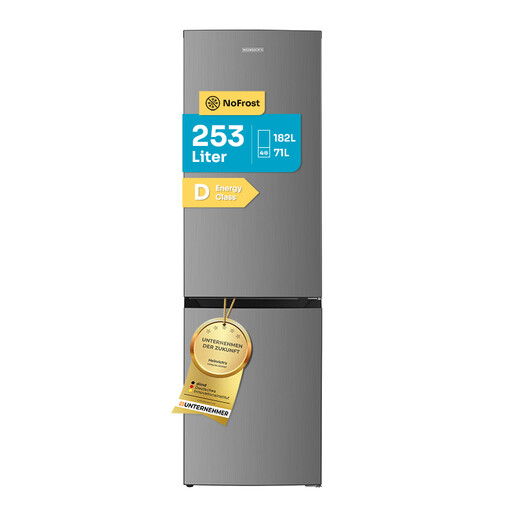 Image unavailable
Worth considering if you want to store fresh and frozen food in a fridge freezer with a moderate capacity.
The product name lists 182 L for refrigeration, 71 L for freezing, 39 dB and No Frost. Check the full dimensions and kWh per year in the model documentation.
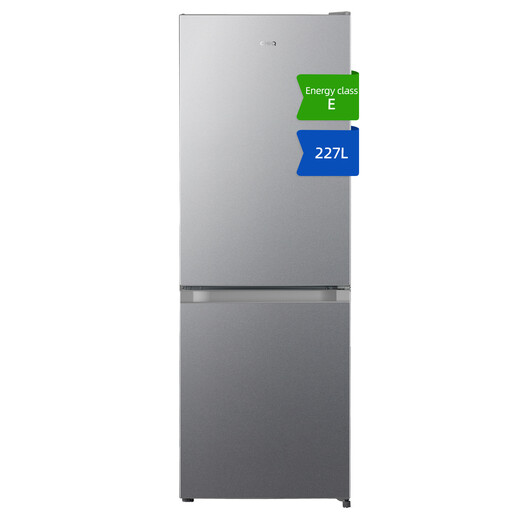 Image unavailable
Worth a look if kitchen width is limited but you still want a separate freezer compartment.
The product name lists 153 L for refrigeration, 74 L for freezing and a width of 54 cm; it also mentions Low Frost and energy rating E. Check the height, annual energy consumption and clearances before ordering; Low Frost doesn’t mean you’ll never need to defrost it manually.
As a guide, Que Choisir’s buying guide suggests 100 to 150 L for one person, then an extra 50 L for each additional person. Use this as a starting point and adjust for how often you shop, how much frozen food you keep and whether you have a separate freezer.
Compare their annual consumption in kWh, storage capacities and noise emissions, as well as their energy ratings. The European Commission shows these details on the label. For a useful comparison, look at appliances with similar formats and capacities.
Ask which parts are available for the specific model, who can obtain them and which repairer can carry out the work. EU ecodesign rules require certain parts to be available under conditions that vary, including according to the part and who it is supplied to. They don’t guarantee that every repair can be carried out under the same conditions.
In France, the legal guarantee of conformity applies when a business sells a fridge to a private individual, as the Ministry of the Economy explains. Keep your receipt, the product description and delivery documents so you can clearly report the fault to the seller. Any additional commercial guarantee is separate.