Households that mainly cook with fresh ingredients
If frozen food takes up little room in your shopping, start by looking at fridge capacity and the interior layout. Check whether any small freezer compartment would genuinely meet your needs.


If you mainly store fresh food, a fridge on its own means you won’t have to give up space for a freezer you rarely use. If you regularly buy frozen food, a fridge-freezer gives you both compartments in one appliance. Choose between a built-in and freestanding model based on the space available, required clearances and the model’s instructions. ADEME points out that refrigeration appliances run continuously, so also compare the capacity you need and the energy label.
If frozen food takes up little room in your shopping, start by looking at fridge capacity and the interior layout. Check whether any small freezer compartment would genuinely meet your needs.
If you regularly buy frozen food or freeze portions, a fridge-freezer gives you separate compartments for fresh and frozen food. Compare the capacity of each compartment, not just the total volume.
If you have an existing housing unit or a fitted kitchen, measure the available space and the delivery route. The installation type, ventilation and door opening may determine which models are suitable.
First, work out how much fresh and frozen food you buy. Then compare the capacities you’re considering with your kitchen space and each model’s stated energy consumption.
| Factor | What to check | What matters to shoppers |
|---|---|---|
| Capacity split | Compare the usable litres in the fridge and freezer separately, based on what you usually buy. | When most of my shopping is fresh, I want enough room for it rather than a large total capacity that’s poorly divided; around 36% of consumers put this balance of capacity first. |
| Regular freezing | Check that there’s a proper freezer compartment with enough capacity if you often store frozen food or portions. | If I often freeze meals, a small occasional-use compartment won’t meet my needs; freezing would be the top priority for around 29% of consumers. |
| Electricity use | Check the annual consumption on the energy label and compare appliances with similar layouts and capacities. | For an appliance that runs all year round, I’d rather avoid paying to run unused capacity; nearly 21% of consumers would put electricity costs first. |
| Space and installation | Measure the space, access routes and door opening; for a built-in model, also check the required housing unit and ventilation. | In a fitted kitchen, I need to be able to get the appliance delivered and installed without altering the units; around 14% of consumers would put this compatibility first. |
Two appliances with a similar total capacity can divide the space differently between the fridge and freezer. A large compartment you rarely use won’t solve a shortage of space for fresh food.
Think about what you usually store in each compartment, then compare their usable capacities in the product details.
A built-in model needs a compatible housing unit and door system; a freestanding model also needs the clearances set out in its instructions.
Measure the space, delivery access and door opening before ordering. Check the installation instructions for the exact model.
An incompatible housing unit or door fixing may mean adapting your kitchen units or arranging specialist installation.
According to ADEME, refrigeration appliances run continuously, and choosing an oversized appliance or one with more capacity than you need can increase electricity use.
Compare the annual consumption of appliances with capacities suited to your household, rather than choosing on energy rating alone.
If you’re replacing a fridge, its collection needs to be coordinated with delivery of the new one. The DGCCRF has found that some retailers do not provide clear information about their take-back arrangements.
Before ordering, ask when your old appliance can be collected and how to prepare it.
If collection hasn’t been arranged, you’ll need to organise transport or disposal separately.
These ranges give you a few options to compare. Check the features and installation requirements for the exact model you’re considering.
Beko’s French range includes built-in and freestanding fridge-freezers, with different cooling systems depending on the model.
Bosch fridge-freezer product pages let you check dimensions and energy labels for each model.
Electrolux offers built-in and freestanding fridge-freezers. Check the installation documents before choosing.
Whirlpool’s range includes built-in and freestanding fridge-freezers, with separate compartments for fresh and frozen food.
These models combine refrigeration and freezing in one appliance. The selection includes freestanding models and one built-in model. Check which installation type suits your kitchen, then compare usable capacities.
 Image unavailable
Worth considering if you want to store fresh and frozen food in one multi-door appliance.
The product page lists Total No Frost and an energy rating of E. Check there’s enough room to open the doors and allow for the clearances in the instructions.
 Image unavailable
Worth considering if you regularly buy both fresh and frozen food.
The model is listed with Total No Frost and an energy rating of E. Compare the capacity of each compartment with your needs and check the installation clearances.
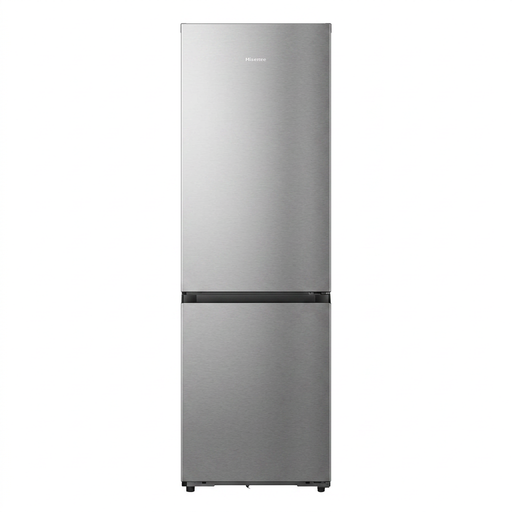 Image unavailable
Worth considering if a freestanding model suits your kitchen and you need both compartments.
The model name indicates No Frost, and the stated noise level is 35 dB. Check its energy label and measure the space before choosing.
 Image unavailable
Worth considering if your kitchen has a compatible housing unit and you also need a freezer compartment.
The model is listed with TwinTech No Frost and an energy rating of E. Check the housing-unit dimensions, door fixing and ventilation requirements in the instructions.
 Image unavailable
Worth considering if you have limited width but still need space for frozen food.
The product page lists 153 L of fridge capacity, 74 L of freezer capacity, a width of 54 cm, a reversible door, Low Frost and an energy rating of E. Also check the height, depth and required clearances.
A fridge-freezer is a good choice if you regularly need space for frozen food or portions you freeze yourself. If you mainly store fresh food, compare the fridge capacity of a fridge-only model with the capacity split of a fridge-freezer.
Not without checking the installation requirements: the two types of appliance aren’t automatically interchangeable. Measure the housing unit and check the ventilation, door opening and door system requirements in the instructions for the model you’re considering.
Check the instructions for the appliance you’ve bought before switching it on. In its general installation guide, Electrolux recommends waiting at least 4 hours after installation before plugging in the appliance; always follow the instructions for your specific model.
Compare the annual consumption on the energy labels of appliances with similar layouts and capacities. According to ADEME, refrigeration appliances run continuously, and choosing more capacity than you need can increase electricity use.
If you’re replacing an appliance, ask the retailer how to arrange for your old one to be taken away before you order. Confirm when it will be collected and how to prepare it, particularly if your new fridge is being delivered to your home.