
Livraison le jour même ou le lendemain

Qualité garantie

Débloquez vos offres de bienvenue: Livraison GRATUITE | Jusqu'à -80 % | 30 jours d'essai gratuits à JoyPlus
Téléchargez l'application
Choosing toilet paper might seem trivial, and yet… It's an everyday purchase where marketing traps are numerous and unpleasant surprises are common. To help you see more clearly, we've analysed the criteria that truly matter to find a product that combines comfort, efficiency, and value for money.
Shopping for your home often means juggling quality and budget. Here are the most common mistakes that can cost you dearly or leave you with a disappointing product.
To avoid these traps, focus on concrete features. Here are the three things to check before you buy toilet paper online or in-store.
The number of plies directly affects strength and absorbency.
Composition is just as important. Pure cellulose wadding is the gold standard for softness. Alternatives like bamboo toilet paper are gaining popularity for their eco-friendly credentials, as bamboo is a fast-growing resource. Look for labels like FSC (Forest Stewardship Council), which guarantee the wood comes from sustainably managed forests.
Don't just rely on the price of the toilet paper pack. To assess the real cost, do this simple calculation: Price of Pack / (Number of Rolls × Number of Sheets per Roll) = Cost per Sheet
This is the only reliable method to compare a family pack of 12 rolls with 150 sheets each to a pack of 4 compact rolls with 400 sheets each. The result is often surprising!
For many, the place of manufacture is a decisive factor. The Made in France label can be a guarantee of quality, compliance with standards, and support for the local economy. Additionally, for sensitive skin, dermatological certifications are a far more reliable indicator of trust than a simple added scent.
Here are a few options that cater to different user profiles, based on the objective criteria we've just discussed.
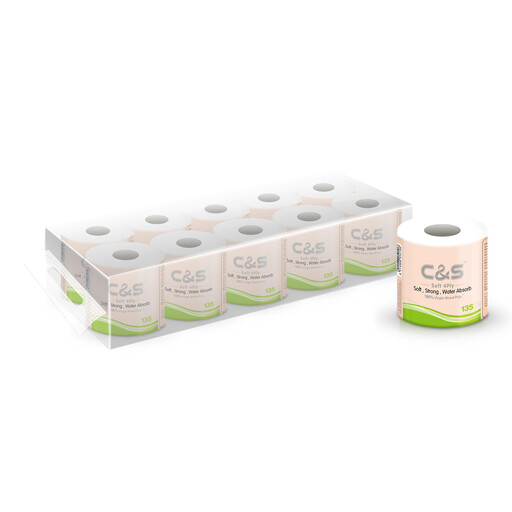
Why we recommend it: This family pack is the perfect compromise between quantity, quality, and price. With 10 rolls of 135g each, it ensures a long-lasting supply for the household and reduces frequent shopping trips.
It avoids the "XXL roll" trap by displaying a weight per roll (135g), an objective metric that reveals its density. Its 4 plies ensure strength without the excessive bulk that can cause plumbing issues.
Its 4 plies provide comfort and durability, while the 10-roll format is ideal for never running out.
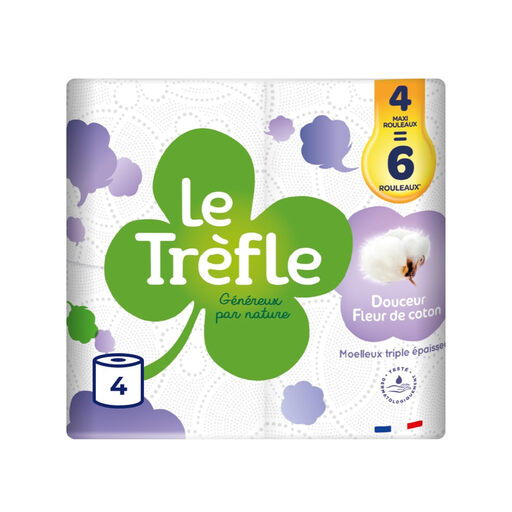
Why we recommend it: This is the ideal solution for sensitive or reactive skin. The lotion with cotton flower extract is designed to be soothing, and the product has been dermatologically tested to minimise the risk of irritation.
Here, the lotion isn't just a gimmicky scent. Dermatologically tested, it's designed to soothe and care for delicate skin.
Its soothing cotton flower lotion, dermatological testing, and Made in France quality.
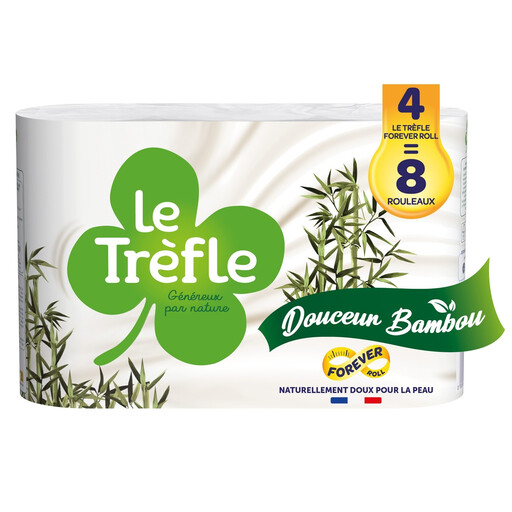
Why we recommend it: For those who want to combine comfort with eco-consciousness. The inclusion of bamboo fibres, a renewable resource, and its French manufacturing make it a responsible choice.
Transparency is key here: the composition (a blend of wadding and bamboo) is clearly stated. The "4 rolls = 8" claim indicates a higher density and therefore better value for money over time.
The combination of bamboo fibre (more sustainable), a compact format, and being Made in France.
Discover other products rigorously selected by our experts for their quality and value.
There's no magic number. A standard roll contains between 150 and 200 sheets. A compact roll can have 300, 400, or even more. The key is to never compare the number of rolls, but rather the total number of sheets in the pack. Calculate the cost per sheet (or per 100 sheets) for a truly fair comparison.
The risk exists, especially with older plumbing or a septic tank. Good quality 4-ply papers are designed to disintegrate quickly. As a precaution, it's still advisable not to use an excessive amount with each flush. Always check the packaging: septic tank compatibility is usually indicated.
Bamboo is a fast-growing grass that requires significantly less water and pesticides than trees. However, turning it into paper pulp is still an energy-intensive process. A bamboo toilet paper is generally a more sustainable option than one made from non-sustainably managed forests. For a truly green choice, opt for certified products (FSC, Ecolabel) and, ideally, those that are not bleached with chlorine.