
Livraison le jour même ou le lendemain

Qualité garantie

Débloquez vos offres de bienvenue: Livraison GRATUITE | Jusqu'à -80 % | 30 jours d'essai gratuits à JoyPlus
Téléchargez l'application
A hairbrush can be used to detangle, smooth, add volume, create a blow-dry style or groom a beard. However, not every shape is equally suited to every task. A round brush chosen at random may be ineffective on thick hair, while an unsuitable heated brush could be too harsh for fine hair.
Before placing your order, it is worth distinguishing between marketing claims and features that can actually be checked.
A detangling brush usually has soft or flexible bristles. It works through knots without pulling excessively. A blow-dry brush or round brush, on the other hand, is primarily designed to shape the hair with the help of a hairdryer.
Running a round brush through very tangled hair can quickly become a laborious, or even uncomfortable, task. Conversely, a soft, flat brush may not be enough to create the desired volume from the roots.
This wording does not remove the need to examine the brush’s shape, diameter or materials. Curly, thick or very long hair may be easier to detangle with a wide-tooth comb. Short hair and fringes, meanwhile, are often easier to style with a 25 mm round brush.
For heated appliances, the temperature range, whether they can be used on dry or damp hair and how precisely they can be adjusted matter more than a general promise of results.
Hair, dust and product residue eventually build up between the bristles. A brush that is difficult to clean quickly becomes less comfortable and less effective. For an electrical appliance, also remember to check the plug type, cord length, heat-up time and safety instructions.
In France, a model with an incompatible plug may require an adaptor. This is particularly important when buying an imported appliance.
Wood often provides a comfortable grip and a firm structure. Nylon bristles are available in different lengths and with varying degrees of flexibility. Double-height designs may grip sections of hair more effectively during a blow-dry, while flexible bristles are generally better suited to gentle detangling.
Inspect the bristles regularly. If they become sharp, come loose or lose their shape, it is best to replace the brush to reduce the risk of irritation.
A heated brush, straightening brush or hot air brush is not used in the same way as a conventional brush. In particular, check:
A high temperature is not necessarily more effective. For fine or weakened hair, a moderate setting and a quick pass are generally easier to control. Always follow the manufacturer’s recommendations.
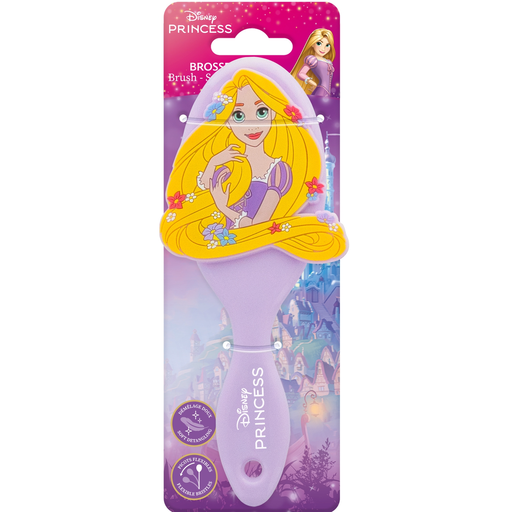
Why this choice suits this need : This detangling brush is suitable for a simple routine, for both children and adults, and can be used on dry or slightly damp hair.
Its flexible bristles and rounded tips help you avoid choosing a rigid brush to tackle everyday knots.
A flat shape, flexible bristles, use on dry or damp hair and the option to clean it with soapy water.
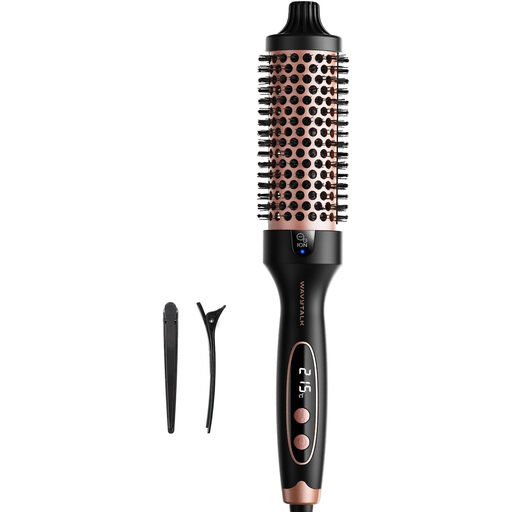
Why this choice suits this need : It is designed for people who want to add volume and create curls on dry hair, with precise enough temperature control.
Its five settings, from 150 °C to 215 °C, mean you do not have to use the maximum temperature every time.
A 38 mm barrel, digital display, 360° swivel cord and a design advertised for use on dry hair only.
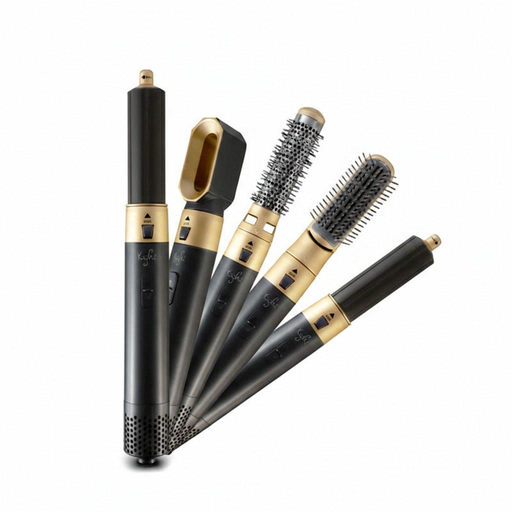
Why this choice suits this need : This kit combines drying, straightening, volumising and two curling attachments, reducing the number of accessories you need to store in the bathroom.
Its five interchangeable heads clearly identify the different functions, rather than passing off a simple heated brush as a hot air brush.
1 000 W of power, three airflow settings, a 1.8 m swivel cord and a supplied travel pouch.
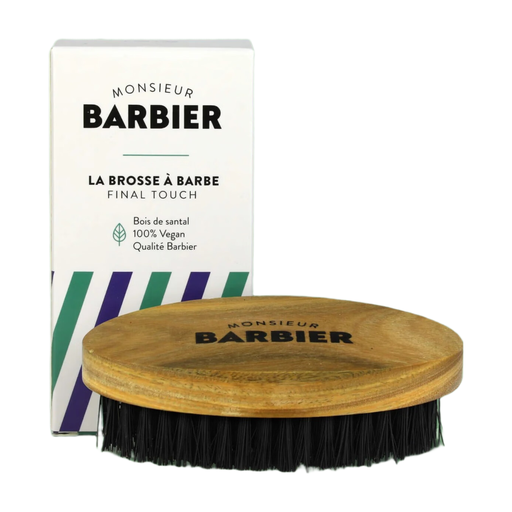
Why this choice suits this need : This beard brush is designed for medium to long beards and can also be used to style hair.
It is advertised for medium to long beards, rather than being presented as a universal accessory suitable for every length.
A sandalwood handle, synthetic fibres and stated dimensions of 12 × 6,3 × 4 cm.
We have put together a comprehensive, regularly updated selection of products that meet these exacting criteria, as well as European safety requirements.
A wide-tooth comb is often the most practical option for separating sections without flattening the shape of the curls. Work gently from the ends towards the roots, on damp or dry hair depending on your routine. A flat brush with soft bristles may be suitable for styling, but avoid forcing it through knots.
It depends on the model, the temperature selected and the condition of your hair. Choose the lowest setting that delivers the result you want, use the appliance on dry hair when recommended in the instructions and do not hold it in the same place for too long. After use, unplug it and allow it to cool before putting it away.
There is no universal lifespan. A conventional brush should be replaced when its bristles become misshapen, broken or difficult to clean. For an electrical appliance, also check the condition of the cord, casing and different settings. Regular maintenance — removing hair, cleaning the brush with a suitable product and allowing it to dry completely — will help keep it in good condition for longer.