
Livraison le jour même ou le lendemain

Qualité garantie

Débloquez vos offres de bienvenue: Livraison GRATUITE | Jusqu'à -80 % | 30 jours d'essai gratuits à JoyPlus
Téléchargez l'application
Choosing a new cooking pot can be a daunting task given the jungle of materials, sizes, and features. Between an indestructible stainless steel Dutch oven, a stylish glass pot, or an ultra-convenient electric steamer, it's hard to know where to start.
Our mission: to guide you step-by-step in finding the cookware that truly matches your cooking style, your stovetop, and the size of your household. Follow the guide!
Before you jump into our selection, let's review the essential points that will make all the difference.
The choice of material is crucial: it directly impacts cooking performance, the lifespan of your pot, and its maintenance.
The first thing to check is compatibility with your stovetop. If you cook on an induction hob, look for the coil-shaped pictogram or the induction-compatible pot label.
Capacity is just as important. For a single person or a couple, 2 to 3 litres is sufficient. For a family, aim for a large-capacity pot of 4 litres or more for soups, stews, and other hearty meals. Finally, never overlook the lid: a pot with a lid is essential for retaining moisture and concentrating flavours, especially for slow cooking.
For those who want to combine simplicity and versatility, the electric steamer is an option not to be overlooked. These fully autonomous appliances allow you to cook, simmer, or steam without having to stand over the stove. They are perfect for gently cooking vegetables, fish, or dumplings—a method that best preserves their nutritional qualities.
To help you make your choice, here are three models that stand out for their features and use cases.
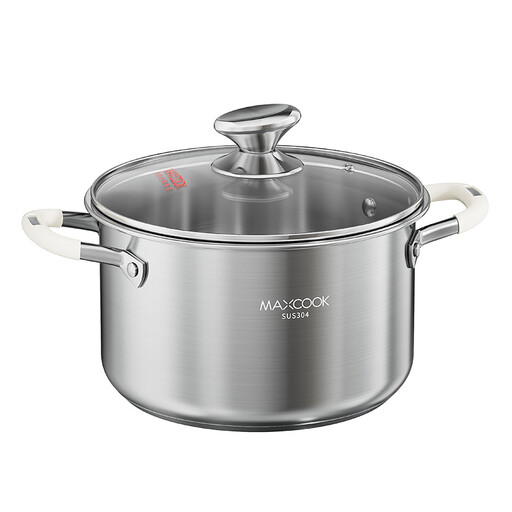
What sets it apart
This stainless steel Dutch oven from Maxcook checks all the boxes for the perfect everyday companion. Made from food-grade 304 stainless steel, it's built to last. Its generous 4.3-litre capacity is perfect for family meals. We appreciate its tempered glass lid for keeping an eye on the cooking and its heat-insulating silicone handles for a secure grip.
Pros
Who is it for?
For anyone looking for a reliable and ultra-versatile cooking pot that can handle any recipe and adapt to any stovetop.

What sets it apart
More than just a pot, the Bear electric cooker is a mini-kitchen in its own right. With its main 2.5-litre pot and four 0.4-litre inner ceramic pots, it can prepare a complete meal in one go. Its 600-715W power is perfectly calibrated for gentle cooking, steaming, or simmering your dishes.
Pros
Who is it for?
Ideal for health-conscious individuals, students, or small households looking for a practical, healthy, and compact solution.
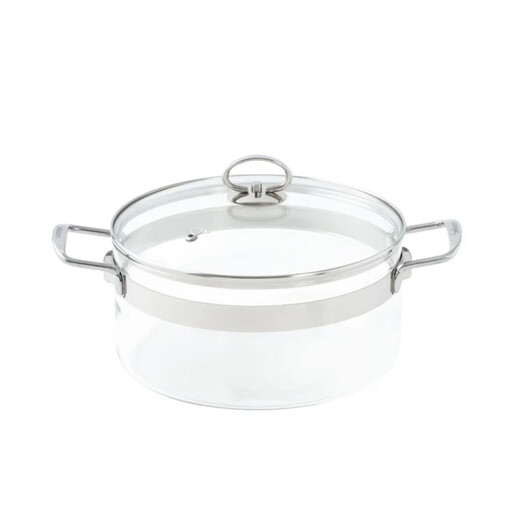
What sets it apart
This Belissam glass pot plays the transparency card, both literally and figuratively. Made from borosilicate glass, it is guaranteed free of PTFE, PFAS, and any other coatings. This non-porous material ensures healthy cooking that never alters the taste of your food. Its sleek design allows you to monitor cooking at a glance and serve directly at the table. It's even oven-safe up to 180°C (356°F).
Pros
Who is it for?
For cooks who are demanding about the composition of their cookware and make healthy cooking a priority. It's also a beautiful piece to place at the centre of the table. Note that an adapter disc is required for use on an induction hob.
Are you captivated by the transparency and health guarantees of borosilicate glass? If you want to explore other sizes or shapes, know that there is a multitude of models for all uses, from small saucepans to large family-sized stockpots.
? Discover our complete selection of transparent glass pots to find the model that meets your needs.
They're often confused, but there is a nuance. A stockpot is taller than it is wide, perfect for large quantities of liquid (soups, broths, cooking pasta). A Dutch oven is lower and wider, making it more versatile, especially for searing meat before letting it simmer.
The foolproof trick: the magnet test. Take a magnet and place it on the bottom of your pot. If it sticks firmly, you're good to go—it's compatible! Otherwise, look for the coil-shaped logo or the induction-compatible pot label on the product or its packaging.
PFAS (per- and polyfluoroalkyl substances) are chemical compounds sometimes found in non-stick coatings. The problem? They are nicknamed "forever chemicals" and are suspected of having adverse health effects, especially if the coating is damaged or overheated. Choosing healthy, PFAS-free cooking with inert materials like stainless steel or glass is therefore applying a precautionary principle for your health and the environment.