
Livraison le jour même ou le lendemain

Qualité garantie

Débloquez vos offres de bienvenue: Livraison GRATUITE | Jusqu'à -80 % | 30 jours d'essai gratuits à JoyPlus
Téléchargez l'application
After being spayed or neutered, an adult cat’s nutritional needs may change. A cat that lives mainly indoors may sometimes use less energy, while its appetite stays the same. Choosing sterilised cat food should therefore be based on tangible factors: age, weight, activity level, ingredients, daily portion and budget.
Claims such as “weight control”, “easy digestion” or “urinary support” generally indicate the recipe’s intended purpose, but they do not guarantee the same results for every cat. Instead, look at the analytical constituents, particularly protein, fat, fibre and crude ash.
A high-protein recipe is not automatically right for your cat. The amount you serve, its activity level and its body condition matter just as much.
Cheap sterilised cat food can reduce the daily cost, but a 7 or 12 kg bag is only worthwhile if your cat likes the recipe and finishes it before it loses freshness. Once opened, store the food in an airtight container away from moisture and light.
If your cat often changes food or is fussy, a 300 g to 1.5 kg pack reduces the risk of waste.
A sudden change can upset digestion. Manufacturers generally recommend a gradual transition over 7 to 10 days, mixing the old and new food together. A clean bowl of water, refreshed regularly, should always be available, especially with a dry diet.
For a cat aged at least 1 year, look for the wording “complete food for sterilised or neutered adult cats”. This means the product is designed to provide the daily ration, provided you follow the recommendations on the packaging.
Sterilised adult cat food is not necessarily suitable for kittens or pregnant or nursing cats. If your cat has a known illness, significant excess weight or recurring urinary problems, ask a vet for advice before changing its diet.
For a less active indoor cat, a recipe with a moderate fat content may be suitable. As a guide, the products featured here have fat levels ranging from 11.5% to 16%, depending on their formulation.
Do not focus only on the percentage shown on the bag. Also check the recommended portion for your cat’s weight and weigh servings using kitchen scales. Treats should be included in the daily intake.
Protein helps maintain muscle mass, but its source and the recipe’s overall balance should also be assessed. Fibre may support digestive comfort, while minerals and certain additives are often highlighted in urinary health sterilised cat food recipes.
A preference for chicken, salmon or beef may guide your choice, but it does not replace reading the ingredients list. Recipes may also contain cereals, peas, maize or several sources of animal protein. If your cat has a particular sensitivity, check the label carefully.
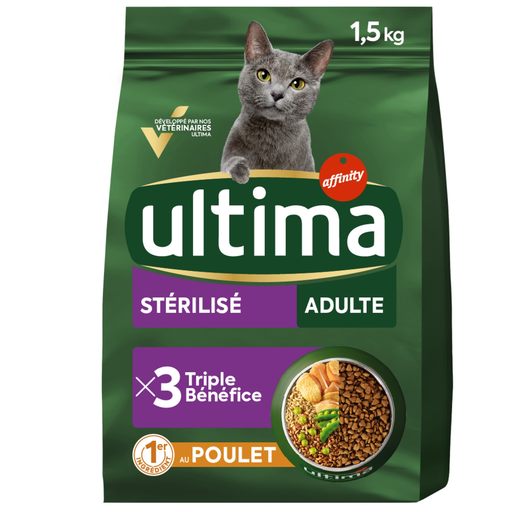
Why this choice suits this profile : The 1.5 kg pack lets you try a chicken recipe for sterilised cats without committing too much of your budget or taking up cupboard space with a bulky bag.
The product details state a fat content of 12% and provide portions based on weight, rather than relying solely on a general claim.
17% chicken, 35% crude protein and 1 100 mg/kg taurine.
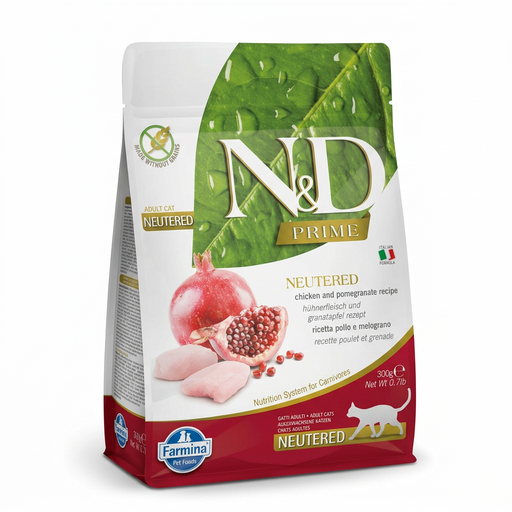
Why this choice suits this profile : This small pack is ideal if you want to try a grain-free recipe that is rich in animal-based ingredients before moving to a larger size.
The 300 g pack reduces the risk of waste if your cat rejects the new texture or does not tolerate the transition well.
The product details mention 11% fat, 5.1% fibre and a grain-free composition.
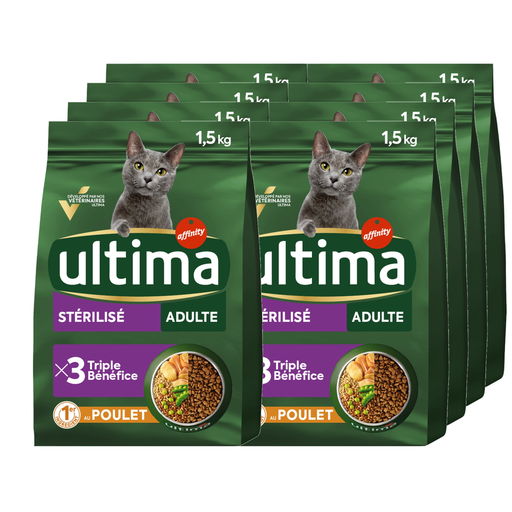
Why this choice suits this profile : The 12 kg bag is suitable for a household with several cats or for anyone who wants to leave longer between restocks.
The portion table and storage instructions make it easier to measure servings and keep the product fresh after opening.
17% chicken, 35% protein and 12% fat, with pea fibre and beetroot pulp.
Purina One sterilised cat food includes beef and chicken recipes, with 37% crude protein and 13% fat according to the product details consulted. Pack sizes range from a small 450 g bag to a large 7.5 kg pack.
Ultima sterilised cat food is available in several recipes: chicken, salmon, beef or trout. The products generally contain 35% protein and around 12% fat, in pack sizes ranging from 1.5 kg to 12 kg. The salmon version may suit households looking for salmon sterilised cat food, while the trout recipe highlights digestion, according to its product details.
Whiskas sterilised cat food is available here in a 7 kg bag, with 30% crude protein and 11.5% fat. The recipe includes fibre, chicory and a balanced mineral content. Focus on the daily portion, how well your cat tolerates the food and the cost per day, rather than the bag price alone.
We have put together a complete, real-time updated list of products that fully meet these strict selection criteria and European safety regulations.
The amount depends on your cat’s weight, activity level, age and the recipe’s energy density. Start by following the table on the packaging, weigh the portion, then regularly monitor your cat’s shape and weight. Before changing products, start by cutting back on extras.
A food labelled complete can provide an adult cat’s daily ration, provided it is served according to the instructions. Fresh water is still essential. You can also offer wet food, adjusting the quantities to take the total intake into account.
Follow the date shown on the packaging and close the bag carefully, or transfer its contents to an airtight container. Choose a pack size suited to your household’s consumption so that the food remains appetising right down to the final serving.