
Livraison le jour même ou le lendemain

Qualité garantie

Débloquez vos offres de bienvenue: Livraison GRATUITE | Jusqu'à -80 % | 30 jours d'essai gratuits à JoyPlus
Téléchargez l'application
Whether you need to free up space on your smartphone, equip your new camera, or boost your drone's performance, choosing an SD card can quickly become a headache. Faced with a jungle of acronyms (UHS, V30, A2) and formats, it's easy to feel overwhelmed.
As a product expert at Joybuy, my mission is simple: to help you make sense of it all. This guide is designed to decode the technical jargon and present a curated selection of memory cards for every budget and use case. The goal? To empower you to make the right choice, free from marketing fluff.
Choosing the right memory card isn't just about its capacity. To ensure your devices perform at their best, speed and compatibility are criteria you absolutely cannot overlook.
Storage capacity is often the first thing people look at. It's directly linked to the card type:
Pro Tip: Always check the maximum capacity supported by your device (smartphone, camera, etc.) in its technical specifications or manual.
A card's speed, especially its write speed, is crucial for recording smooth, stutter-free video and nailing your burst mode photos. To navigate this, you need to juggle several standards:
Here, the distinction is simple:
Good to know: most microSD cards are sold with an SD adapter, making them extremely versatile.
To move from theory to practice, here are three models that cover very different needs, from daily use to professional demands.
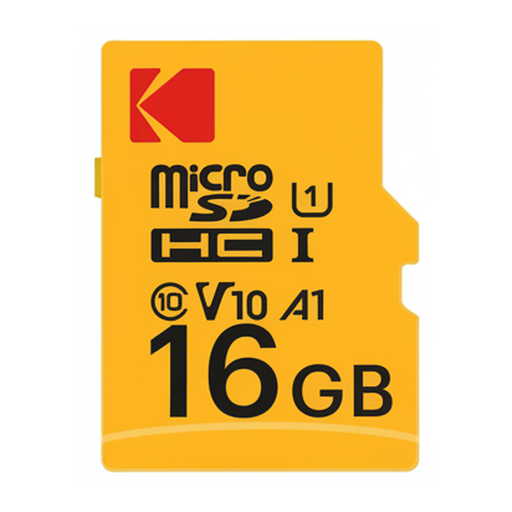
Why we recommend it This Kodak microSD card is the simple, budget-friendly solution to give your devices some breathing room. With its Class 10, UHS-I U1, and V10 certifications, it gets the job done perfectly for everyday tasks like taking photos and recording Full HD videos. Its included SD adapter makes it compatible with a wide range of devices.
Highlights
Who is it for? Users who need a bit more space on a smartphone, tablet, or compact camera, without needing supersonic speeds.
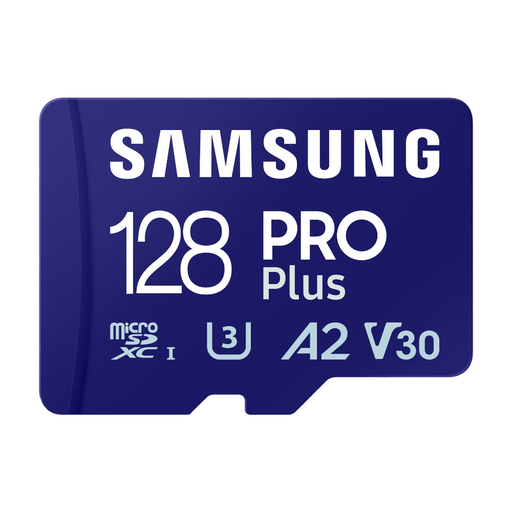
Why we recommend it The Samsung PRO Plus is the Swiss Army knife of performance. Its 128?GB capacity offers plenty of room, while its speeds (up to 180?MB/s read and 130?MB/s write) make it highly responsive. Certified V30 and A2, it's built for smooth 4K video recording on a drone or smartphone and ensures lightning-fast app launches.
Highlights
Who is it for? Content creators, drone pilots, and portable console gamers looking for a reliable and fast card for their large files and demanding applications. It's also the smart choice for a hybrid camera memory card.
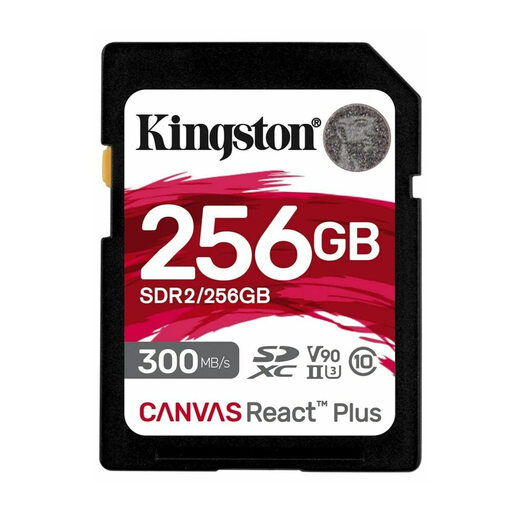
Why we recommend it Here, we're entering the big leagues. This card is for those who make zero compromises on speed. Thanks to its UHS-II interface, it reaches stratospheric speeds (up to 300?MB/s read and 260?MB/s write). Its V90 certification makes it the ultimate fast SD card, capable of handling 8K video streams, high-frame-rate 4K, and RAW burst shooting without breaking a sweat.
Highlights
Who is it for? Professional photographers and videographers using high-end mirrorless cameras or camcorders that are UHS-II compatible. It's the essential partner for securing the most demanding workflows.
If none of these models match your device or budget, don't worry, many other options are available.
? Discover our full range of memory cards for phones and other devices.
1. What's the difference between a UHS-I and a UHS-II SD card? It's all about speed. A UHS-I card has a single row of pins and reaches a theoretical speed of 104?MB/s. A UHS-II card adds a second row to boost speeds (up to 312?MB/s). Be aware, to take advantage of this, your device (card reader or camera) must also be UHS-II compatible.
2. Can I use any microSD card in my phone? In theory, yes, but there are two things to check: the format (the microSD card is standard on almost all recent smartphones) and the maximum supported capacity. An older phone might not recognize a 512?GB card, for example. A quick look at your mobile's spec sheet will save you from any unpleasant surprises.
3. Is a V30 card sufficient for 4K video? Yes, absolutely. The V30 certification guarantees a minimum sustained write speed of 30?MB/s. This meets the requirement recommended by most camera and drone manufacturers for smooth recording in 4K UHD (3840 x 2160 pixels) at standard bitrates (around 100?Mbps, which is 12.5?MB/s).