
Livraison le jour même ou le lendemain

Qualité garantie

Débloquez vos offres de bienvenue: Livraison GRATUITE | Jusqu'à -80 % | 30 jours d'essai gratuits à JoyPlus
Téléchargez l'application
Whether you're trimming an overgrown hedge, cutting boards for your next shelf, or preparing firewood for a campfire, having the right saw is essential. The problem? The market is flooded with misleading marketing promises. An unsuitable tool or a poor-quality blade is a surefire way to waste time, money, and a good deal of patience.
As the Head of Product Recommendations at Joybuy, my role is to help you see things more clearly. Together, let's break down the common pitfalls to avoid and the essential criteria for making a truly informed choice.
Before you check out, it's crucial to know how to spot the marketing claims that often hide disappointing products.
To avoid these disappointments, focus on concrete technical specifications. These are what define a tool's quality and its suitability for YOUR projects.
A saw's performance depends first and foremost on its blade. Ignoring this detail means risking a slow, imprecise, and dangerous cut.
A good saw blade set should include a selection of these materials to be prepared for any situation.
Choosing the right type of saw is just as critical. Here's a quick overview of the essential models for DIYers and gardeners.
To move from theory to practice, here is our selection of products that suit different user profiles, all evaluated according to the objective criteria we've just discussed.
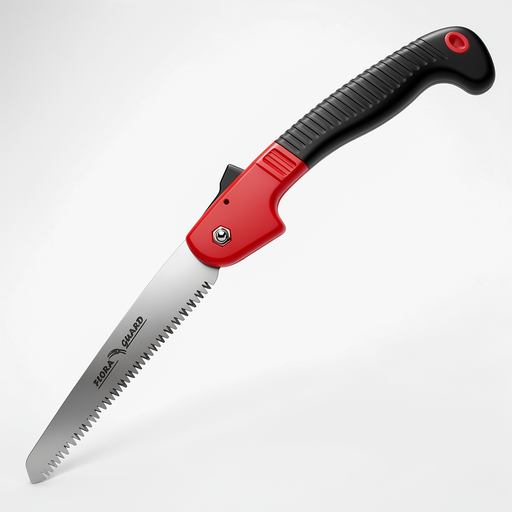
Why we recommend it: Perfect for anyone looking for a simple, reliable, and portable cutting tool for the garden, hiking, or camping. No battery to charge, no complex settings: it's always ready to go.
This saw doesn't promise the world. It focuses on one thing: manual, portable cutting. This is what guarantees its effectiveness for pruning and cutting small-diameter wood.
Its 7-inch (17.8 cm) blade delivers a fast and efficient cut. The ergonomic TPR handle ensures a secure and comfortable grip, reducing fatigue during prolonged use.
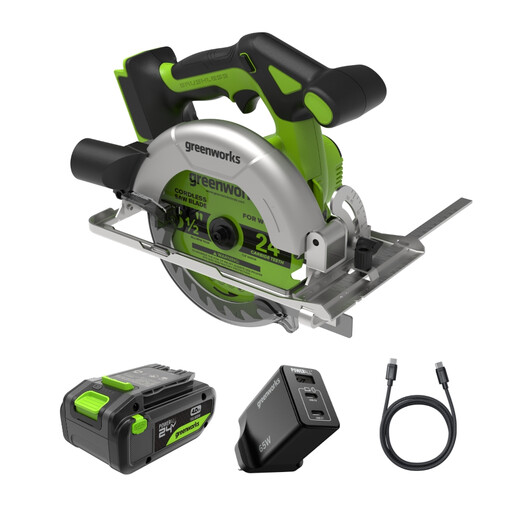
Why we recommend it: Essential for renovation or woodworking projects that demand straight, clean cuts. The freedom of cordless, combined with the power of a brushless motor, makes it a top choice for discerning DIYers.
It avoids the "false power" trap thanks to its brushless motor, a technology that objectively delivers more torque and runtime than conventional motors.
Its bevel cutting capability (from 0 to 45°) and its 57 mm cutting depth at 90° give it great versatility for creating different types of joints.
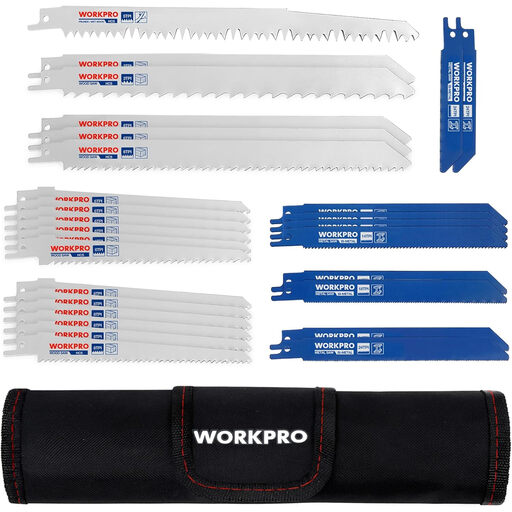
Why we recommend it: For those who already own a reciprocating saw and use it intensively on various materials. This comprehensive kit ensures you always have the right blade on hand for optimal performance and extended tool life.
It counters the "disposable" blade trap by offering an assortment of specialised blades made of HSS and CrV (Chrome Vanadium). Using the right blade for the material is the best guarantee of longevity.
Its universal compatibility with most major brands (Bosch, DeWalt, Makita, etc.) and its storage pouch make it a kit that is as practical as it is economical, ready for any job site.
1. What is the lifespan of a reciprocating saw blade? It depends on three factors: the blade material (bi-metal and carbide are more durable), the material you're cutting (metal wears out a blade much faster than softwood), and your technique (excessive pressure is counterproductive). By using the right blade for each task and letting the tool do the work without forcing it, you will significantly extend its lifespan.
2. Is a cordless circular saw as powerful as a corded model? Today, yes. Modern cordless models, especially those equipped with brushless motors and high-performance batteries (24V and up), can now hold their own against corded models for most common jobs. For very intensive, prolonged cuts in dense materials, a corded model will retain a slight advantage in raw, consistent power. But for everyday versatility, cordless has become the practical choice.
3. How do I maintain my cutting tools to keep them effective? It's simple, but essential. After each use, give the blade a quick wipe with a dry brush to remove sawdust and residue. Always store the tool and blades in a dry place to prevent rust. On electric models, check that the ventilation grilles are clear to avoid overheating. A well-maintained tool is a tool that lasts.