
Livraison le jour même ou le lendemain

Qualité garantie

Débloquez vos offres de bienvenue: Livraison GRATUITE | Jusqu'à -80 % | 30 jours d'essai gratuits à JoyPlus
Téléchargez l'application
Choosing pet food is not simply a matter of comparing the price per kilo. With claims such as “high in protein”, “grain-free”, “natural” and “premium”, it is easy to lose sight of what really matters. The actual composition, the food classification and the recommended serving sizes remain the most important criteria.
For a dog or cat living in France, three pitfalls come up time and again:
Here are the points to check before filling your basket.
The term “complete food” means that the product is formulated to make up your pet’s daily ration, provided that the manufacturer’s recommendations are followed. Conversely, a product labelled “complementary pet food” must be given alongside the main diet.
INABA Churu cat treats, for example, can be fed by hand or added to cat biscuits, but they must not replace a complete meal. The recommendation generally states 1 to 2 portions per day, adjusted according to the cat’s weight and activity level. Their stated water content is as high as 91%, but that does not make them a balanced ration.
Start with the ingredients list rather than the claims highlighted on the packaging. For dog biscuits, pay particular attention to:
Acana Weight & Fitness Dog Food lists chicken, eggs, whole herring, cod liver oil and legumes among its ingredients. Its analytical constituents are 33% crude protein, 11% crude fat, 7% crude fibre and 12% moisture. The product information also states 0.6% omega-3 fatty acids. These figures allow you to compare recipes more objectively, without automatically assuming that they provide a particular health benefit.
The term grain-free food should also be viewed in context. A recipe containing no wheat, maize or rice may suit certain preferences, but it often includes other sources of carbohydrates, such as peas, chickpeas or lentils. It is therefore better to assess the composition as a whole.
Kitten food cannot be replaced with food intended for an adult cat. Nutritional needs also change after neutering, in cases of low activity or when weight needs to be monitored.
For food intended for a neutered cat, check the recipe name as well as the feeding guidelines. A formula for a neutered adult cat may be more suitable than a standard recipe, but the amount served should always be adjusted to the individual animal. Weigh portions with scales rather than relying solely on a measuring cup.
Storage conditions also matter: keep biscuits in a cool, dry place, close the bag carefully and refrigerate opened wet-food pouches in accordance with the instructions on the packaging.
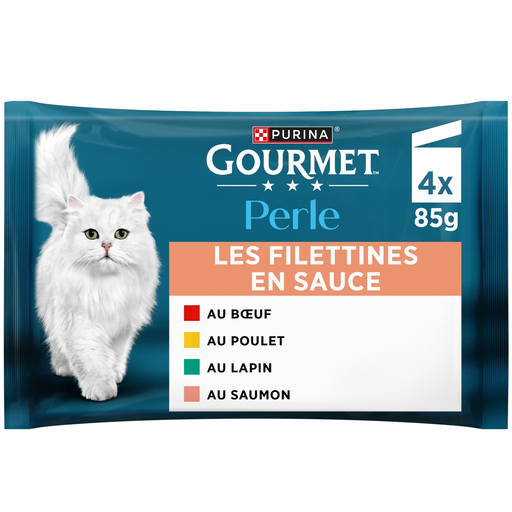
Why this choice suits this profile: The four 85 g pouches let you try several flavours without having to buy a large pack straight away.
It is presented as a complete food for adult cats, and the instructions specify how many pouches to give each day.
Four flavours, stated moisture content of 80% and individual pouches that are easy to store before opening.
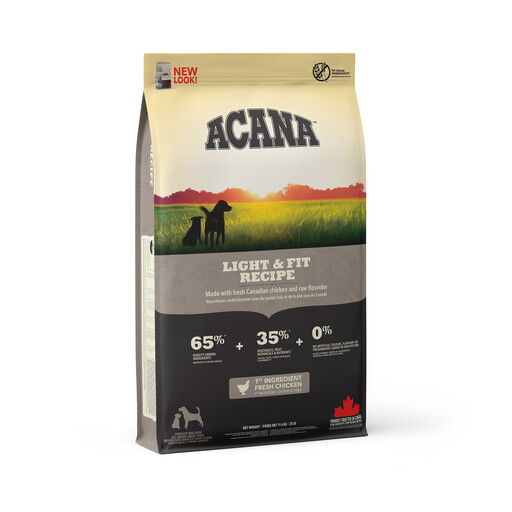
Why this choice suits this profile: The large bag is aimed at households looking for a dog recipe with detailed analytical data in a family-sized format.
The product information specifies that it is a complete food, lists the analytical constituents and provides recommended portions based on the dog’s weight.
33% crude protein, 11% crude fat and stated inclusion of cod liver oil.
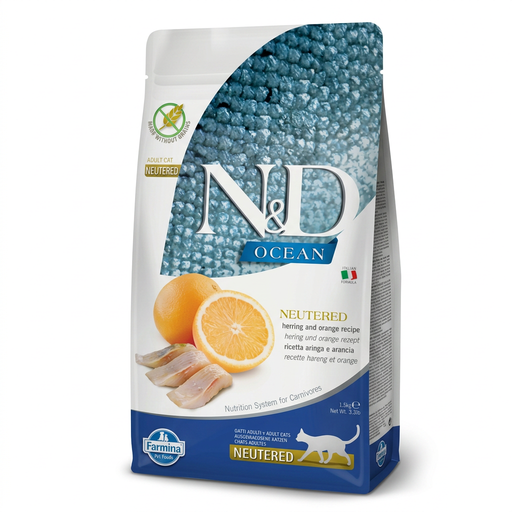
Why this choice suits this profile: Its name specifically targets neutered cats, whose portions and body condition need to be monitored regularly.
This product is clearly intended for neutered cats rather than being presented as a universal recipe.
The 1,5 kg format makes it easier to monitor freshness and adjust daily quantities.
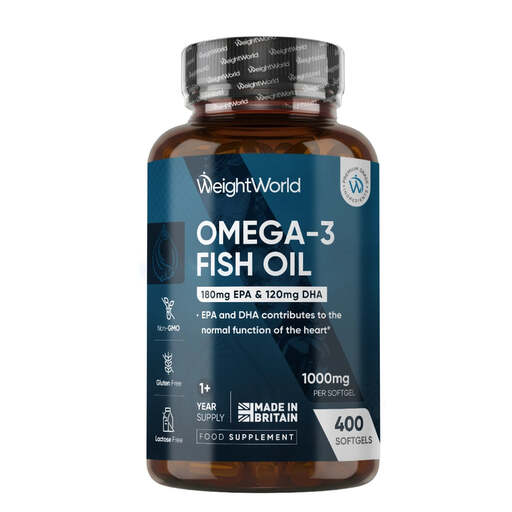
Why this choice suits this profile: This omega-3 food supplement is intended for adults looking for a long-lasting format for their own consumption, not for feeding animals.
The product information distinguishes between the amount of fish oil, 1,000 mg, and the amount of omega-3, 300 mg per capsule.
The product information states that each capsule contains 180 mg of EPA and 120 mg of DHA, with 400 capsules per bottle.
Cat treats should remain a small part of your pet’s daily intake. INABA tuna and chicken sticks, along with the bites in tuna, scallop, salmon, crab and prawn flavours, are presented as complementary foods. Their stated water content is as high as 91%, but their purpose remains that of a reward or supplement.
Canned tuna intended for human consumption, such as PETIT NAVIRE in natural juice, should not be considered complete food for cats. The same applies to MASROJANA anchovy-stuffed olives: this is a food product intended for humans, containing fish and nearly 2.96 g of salt per 100 g. It is not designed for animal nutrition.
For adults, an omega-3 fish oil supplement should be selected by checking the actual EPA and DHA content, allergens, recommended dosage and storage conditions. Never give your pet a supplement intended for humans without consulting a vet.
We have put together a complete, real-time updated list of products that fully meet these strict selection criteria and European safety regulations.
The amount depends on your pet’s weight, age, activity level, neutering status and the recipe’s energy density. Start by following the table on the packaging, then monitor your pet’s weight and body condition regularly. If given frequently, treats should be deducted from the daily intake.
The term “grain-free” describes a composition, but on its own it is not a sufficient criterion. Check the other sources of carbohydrates, whether the food is complete and whether the recipe is suitable for your pet’s age. If your pet has an identified allergy or dietary issue, ask a vet for advice.
Follow the manufacturer’s instructions. Once opened, wet-food pouches should generally be refrigerated and consumed quickly, often within 24 hours. For a tin of tuna intended for human consumption, the PETIT NAVIRE product information recommends refrigeration and consumption within two days.