
Livraison le jour même ou le lendemain

Qualité garantie

Débloquez vos offres de bienvenue: Livraison GRATUITE | Jusqu'à -80 % | 30 jours d'essai gratuits à JoyPlus
Téléchargez l'application
As the back-to-school season approaches or when it's time to restock your office supplies, choosing a simple notebook can quickly become a headache. Between endless school supply lists and shelves overflowing with options, it's easy to get lost. The worst part? The wrong choice has daily consequences: pages that tear, ink that bleeds through, or a binding that doesn't survive the first term.
Before you fill your cart, here are the classic pitfalls that turn this seemingly simple purchase into a chore:
To help you see more clearly, we've broken down the technical points to check to make the right choice—one that truly fits your needs.
A few key features are all you need to sort through the options and find the notebook that will serve you faithfully all year long.
The difference may seem minor, but it's fundamental depending on its intended use.
The ruling (the lines on the pages) should be adapted to your use.
The paper weight, expressed in grams per square meter (g/m?), determines the paper's thickness and opacity.
To put all this into practice, here is our selection of models that meet specific needs while avoiding the usual pitfalls.
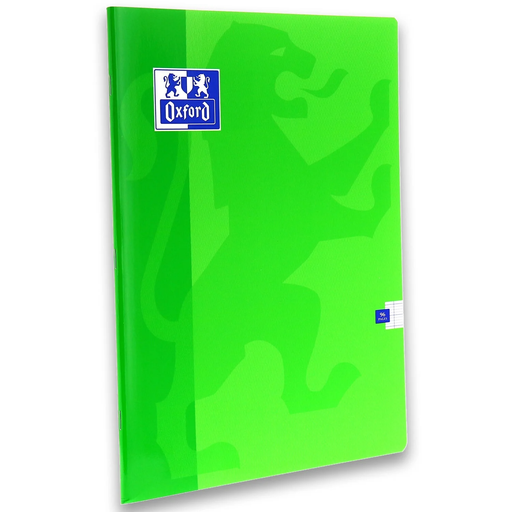
Why it's the right choice: This notebook checks all the boxes for middle and high school supply lists with its 24x32 format and Seyès French ruling. It's designed for heavy use throughout the school year.
Its laminated card cover withstands rough treatment in a backpack. The Optik Paper, a proprietary Oxford technology, prevents ink from bleeding through, even with a fountain pen.
Meets teachers' requirements with superior quality paper for optimal writing comfort. The two-color ruling is designed to reduce visual fatigue.
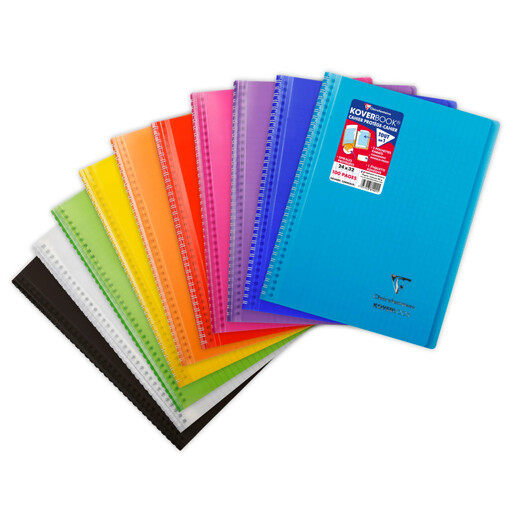
Why it's the right choice: Ideal for students juggling handouts and notes. The spiral binding allows for a 360° opening, which is practical on a cramped lecture hall desk, and the storage flaps are a major asset for organisation.
The wraparound transparent polypropylene cover acts as a built-in protector, shielding both the pages and the spiral. No more bent spirals or dog-eared covers. The 90g/m? paper from Clairefontaine ensures perfect opacity.
A 2-in-1 concept (notebook + cover) with storage pockets. Velvety vellum 90g/m? paper for a superior writing experience.
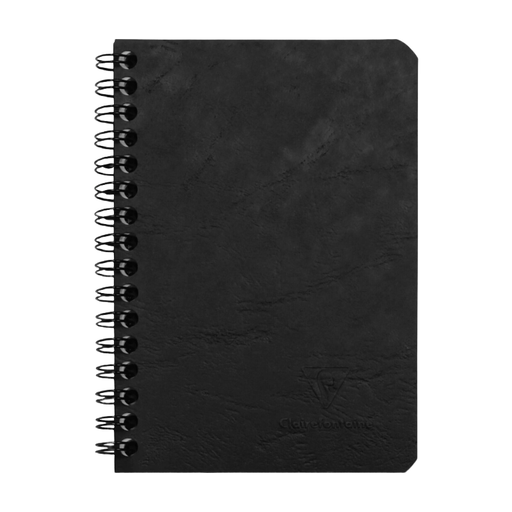
Why it's the right choice: Its compact size is perfect for slipping into a jacket pocket or a handbag. The hardcover and understated aesthetic make it a discreet and elegant notepad for meetings, travel, or journaling.
Its textured hardcover and stitched binding guarantee rock-solid durability, far superior to softcover notebooks. The Clairefontaine 90g/m? paper ensures a premium writing experience with zero show-through.
French-made, with velvety vellum 90g/m? paper and a lay-flat binding for total writing comfort.
We have curated a complete range of products that meet our strictest quality criteria.
An A4 notebook measures 21 x 29.7 cm. A 24x32 cm notebook is wider and taller. This larger format is a unique feature of the French school system: it allows an A4 sheet to be pasted inside without its edges sticking out, thus protecting handouts given in class.
The paper weight (expressed in g/m?) indicates the mass of the paper, which is directly related to its thickness and opacity. A low-weight paper (less than 80g/m?) will be thinner, and ink is likely to bleed through. A 90g/m? paper (or higher), like the famous velvety vellum from Clairefontaine, offers unmatched writing smoothness and an opacity that prevents ink from bleeding or showing through. This keeps the back of the page perfectly usable.
It all depends on your use case: