
Livraison le jour même ou le lendemain

Qualité garantie

Débloquez vos offres de bienvenue: Livraison GRATUITE | Jusqu'à -80 % | 30 jours d'essai gratuits à JoyPlus
Téléchargez l'application
Whether you're taking class notes, managing a professional project, or unleashing your creativity, choosing a notebook seems simple at first glance. Yet, we've all experienced the frustration of ink bleeding through the page, a binding that falls apart after a few weeks, or an impractical size. These annoyances can quickly turn an everyday tool into a genuine source of frustration.
Before you make a decision, beware of common misconceptions! Here are the two most common traps that can ruin your writing experience:
To avoid these pitfalls, simply focus on a few technical specifications. They will help you choose a product that truly fits your needs, whether you are a student, a professional, or an artist.
Grammage, expressed in grams per square metre (g/m?), indicates the paper's weight, but not its quality. Here’s how to navigate your options:
The way the pages are held together directly impacts your notebook's usability.
The ruling, or line style, should be adapted to your use case.
To guide you, here is our selection of products suited to different profiles, all chosen based on these objective criteria.
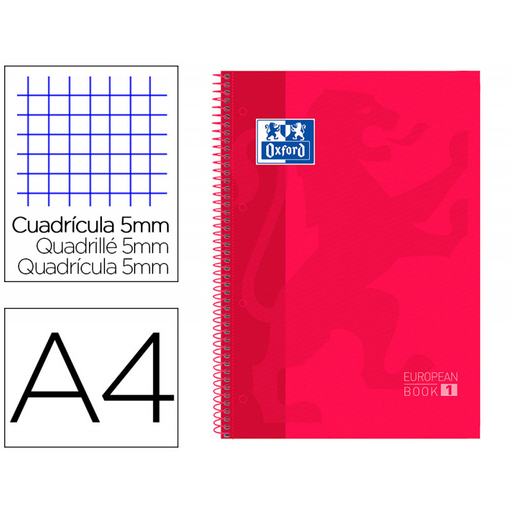
Why we chose it: This notebook is built for intensive use. Its A4 notebook format, extra-rigid cover, and sturdy spiral binding effortlessly withstand the rigours of being carried in a backpack. The sheets are detachable and hole-punched for easy filing in a binder.
The OPTIKPAPER+ 90 g/m? paper is ultra-white and perfectly smooth. The result: ink doesn't feather or bleed through, even with a fountain pen. The spiral binding is robust and doesn't bend easily.
The combination of high-quality paper and practical details (micro-perforations, 4-hole punch for binders) makes it a powerful ally for academic success.
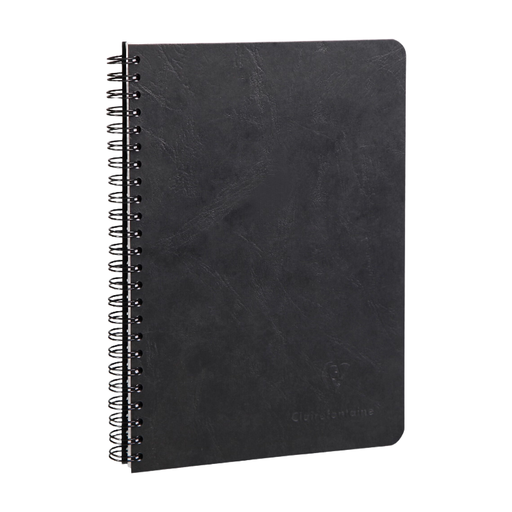
Why we chose it: This A5 notebook is the perfect blend of aesthetics and practicality. Its durable, leather-effect cover and compact size make it an ideal travel companion for journaling, note-taking, or as a bullet journal.
Its wire-o binding ensures a perfectly flat 180° opening. No more frustration from a notebook that won't stay open! The famous 90g Clairefontaine Brushed Vellum paper offers unparalleled smoothness and unbeatable opacity.
Its lay-flat opening, coupled with the quality of the paper, provides exceptional writing and drawing comfort, all in a portable and robust format.
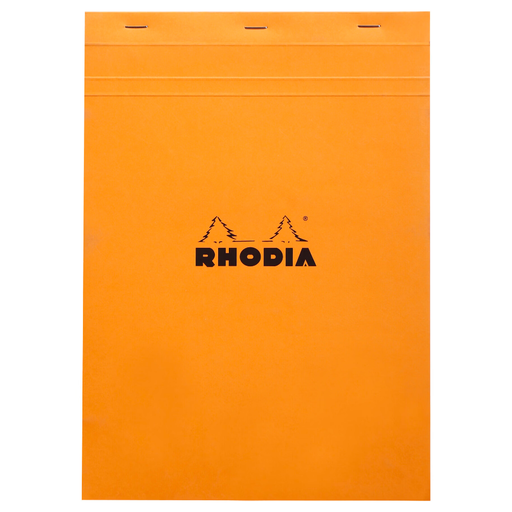
Why we chose it: The Rhodia notepad is a timeless classic, and for good reason: it's simple, reliable, and highly functional. Its extra-stiff cardboard back allows for comfortable note-taking, even without a surface. The micro-perforated sheets tear out cleanly to be shared or filed.
It gets straight to the point. Its 80 g/m? super-fine vellum paper is a safe bet, renowned for its everyday writing comfort. The rigid back is the real asset that sets it apart from cheaper, but far less practical, alternatives in the field.
Its stiff cardboard back guarantees a stable writing surface in any situation: in a meeting, on a job site, or between appointments.
If you're a fan of *bullet journaling* or creative note-taking, a dot grid ruling is probably for you. Discover our selection of notebooks that meet the same high-quality standards.
For use with ballpoint pens or pencils, a high-quality 80 g/m? paper (like Clairefontaine or Rhodia) is generally sufficient. If you use fountain pens, felt-tip pens, or highlight your notes extensively, it's better to opt for 90g paper or higher. Papers like Clairefontaine 90g paper or Oxford's Optik Paper are specifically treated to prevent ink from showing through.
It all depends on your use case. The spiral-bound notebook is very practical because it can open 360 degrees, which is useful for writing on your lap or on a cluttered desk. A sewn (or case-bound) notebook is often more durable and offers a perfectly flat writing surface across the double page, without the inconvenience of the spiral in the middle. It is the preferred format for journaling or long-term notebook keeping.
Seyès ruling, also known as “large grid,” is the standard in the French school system. It consists of a main 8x8 mm grid with finer horizontal lines spaced 2 mm apart, which guide the height of the letters. It is particularly useful for children learning to write, but it remains very popular with middle and high school students for well-structured note-taking.