
Livraison le jour même ou le lendemain

Qualité garantie

Débloquez vos offres de bienvenue: Livraison GRATUITE | Jusqu'à -80 % | 30 jours d'essai gratuits à JoyPlus
Téléchargez l'application
Condensation on windows, musty smells, laundry that takes ages to dry, or cold walls in a basement: a dehumidifier can help you get indoor humidity under control. But you need to choose a model that suits the room and your lifestyle.
Product specs often highlight the number of litres of water extracted per day. That’s a useful indicator, but it’s not enough to separate the best from the rest. Here are the main pitfalls to avoid and the criteria to check before you buy.
A capacity of 16, 20 or 25 L/day is usually measured under specific temperature and humidity conditions. In a room that isn’t well heated or a cool basement, the actual amount of water collected can be much lower.
Instead, look at several factors together: the recommended room size, the operating temperature range, and whether it has automatic defrost. A dehumidifier destined for a basement needs to work properly in a cool environment.
In a very humid room, a small tank can fill up quickly. If you have to empty it several times a day, the appliance will stop as soon as its water-level safety switch kicks in.
For a basement, utility room or prolonged use, go for a dehumidifier with a drain hose. This must be installed correctly, without kinks and with enough slope towards the drain. Gravity drainage alone won’t work if the drain point is higher up – you’ll need a pump.
Noise levels vary depending on the mode you select, the fan speed and whether the compressor is running. A figure quoted for night mode doesn’t necessarily reflect the noise at full power.
For a dehumidifier destined for a bedroom, check the noise level in decibels, look for a sleep mode and see if you can set a timer. A model rated at 32 or 35 dB on low speed will generally be more pleasant at night, but only the full spec sheet gives you a clear picture.
For a room of around 10 to 16 m², a model rated at 10 or 12 L/day can work if humidity is moderate. For a space between 25 and 32 m², appliances of 12 to 16 L/day give you more headroom. Models of 20 to 25 L/day are better suited to large rooms, very damp homes or frequent laundry drying.
These figures are only a guide: insulation, temperature, ventilation and the number of occupants all have a big impact on results.
A humidity sensor lets you set a target level and lets the appliance switch on and off automatically. This feature stops the dehumidifier running unnecessarily and makes daily use much simpler.
Models with a display that shows the ambient humidity level are handy for keeping an eye on the room. Bear in mind, though, that two hygrometers can show different readings depending on where they’re placed and the air circulation.
A washable filter makes maintenance easy. Cleaning it regularly helps keep good airflow – follow the frequency stated in the manual, often every two weeks for the models concerned.
The appliances shown here use R290 refrigerant and a 220–240 V power supply. Follow the instructions in the manual, leave about 20 to 25 cm of space around the air inlets and outlets, and place the unit on a stable surface. If it has been transported tilted, let it stand upright for the time recommended by the manufacturer before plugging it in.
A crystal moisture absorber is a different solution: it works without electricity and without noise, which makes it interesting for small spaces. However, its capacity and speed of action are nothing like those of a compressor-based appliance.

Why this suits this profile: Its size works for rooms of around 16 m² and the LED display makes initial settings easy in a bedroom, bathroom or utility room.
It combines a 2.1 L tank, a full-tank alert and a continuous drainage function, which cuts down on stops caused by the tank filling up.
Stated capacity of 10 L/day, automatic defrost, removable filter and noise level rated at 45 dB.
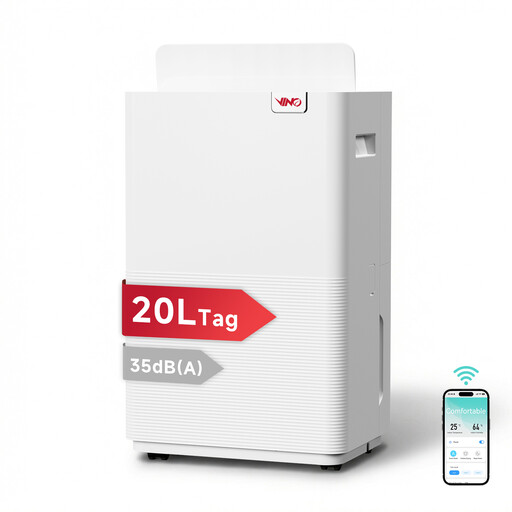
Why this suits this profile: App control and remote scheduling are ideal for people who want to automate humidity management in a large room.
The humidity set-point, 24-hour timer and two drainage options mean you’re not reliant on a small tank that needs manual emptying.
Stated capacity of 20 L/day, sleep mode, Wi-Fi control, laundry drying function and a 2.5 L tank.
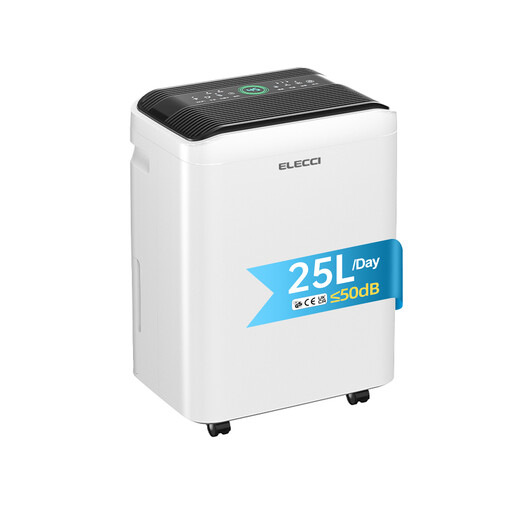
Why this suits this profile: Its stated capacity and large tank are ideal for basements, garages, utility rooms or spaces up to around 50 m², depending on conditions.
The supplied hose allows continuous drainage, while automatic defrost makes it easier to use in cooler rooms.
Three speeds, 24-hour timer, laundry drying mode, castor wheels and noise level rated at 36 dB.
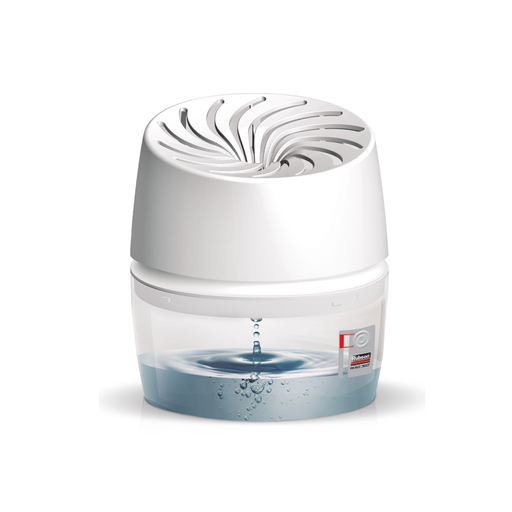
Why this suits this profile: This electricity-free model is ideal for cupboards, small bedrooms, caravans or rooms up to around 20 m², where silence is the priority.
It doesn’t claim to offer the output of a compressor appliance – its role is clearly limited to passive absorption, with crystal refills.
Silent operation with no power needed, refill indicator, pouring spout and a 450 g refill included.
We’ve put together a full list, updated in real time, of products that meet these demanding selection criteria and European safety standards.
Put it on a flat floor, a good distance from walls, curtains and furniture so you don’t block the air inlets and outlets. While it’s running, close any openings if that’s compatible with your home’s ventilation. In a bathroom, keep the appliance away from water splashes and follow the manufacturer’s instructions carefully.
The cost depends on the appliance’s power rating, how long it runs and the rate on your energy tariff. To estimate it, multiply the power in kilowatts by the number of hours of use, then by the price per kilowatt-hour. A timer, humidity sensor and automatic set-point can cut down on unnecessary running time, but they don’t guarantee a specific amount of savings.
It depends on how often you use it, how well you maintain the filter, the quality of the installation and whether you let it rest after transport. Empty the tank before moving the appliance, clean the filter as the manual says and unplug it before any maintenance. If humidity persists or you already see signs of mould, also look for the cause of the problem: a leak, damp ingress or poor ventilation may need specific attention.