
Livraison le jour même ou le lendemain

Qualité garantie

Débloquez vos offres de bienvenue: Livraison GRATUITE | Jusqu'à -80 % | 30 jours d'essai gratuits à JoyPlus
Téléchargez l'application
A planner that is too small for your appointments, a notebook whose pages ripple or a layout that does not match your habits can quickly turn an appealing purchase into an accessory abandoned at the back of a drawer. To choose a planner and notebook suited to work, study, travel or journalling, it is best to look beyond the cover and colour.
An A6 notebook slips easily into a bag or coat pocket, but writing space is limited. It is ideal for lists, quick ideas and notes taken while travelling. However, detailed professional planning or keeping track of several projects will often call for an A5 planner, which is more comfortable to consult and annotate.
A faux-leather cover, a colourful finish or a style inspired by a Moleskine planner say little about how the notebook will perform day to day. Instead, check the rigidity of the cover, and whether it has an elastic fastening, bookmark, pocket or pen loop. These details make all the difference when your notebook comes with you every day.
Paper weight affects writing comfort and how visible the ink is on the reverse side. 70 g/m² paper may be perfectly suitable for a standard ballpoint pen, while 100 g/m² paper will generally offer better durability for everyday note-taking. Also take the time to distinguish between a lined notebook, a weekly planner and a daily planner: each one suits a different way of organising your life.
Think about how much space you have in your bag and how often you write away from home. A notebook that is easy to take with you will naturally be used more often, while a larger model will offer more comfortable reading and clearer organisation.
A dated planner encourages a regular routine and suits those who like to visualise a specific period. An undated planner can be started at any time, without leaving blank pages if your habits change or your routine takes a break. An 18-month planner, meanwhile, provides an extended monthly and weekly structure, making it practical for following a course, a long-term project or a career transition.
Before ordering, look carefully at how the pages are arranged: monthly view, weekly view, daily space, notes pages and any sections dedicated to goals or travel.
A hardcover offers better protection for the pages when a notebook is carried in a fully packed bag. An elastic fastening also helps prevent it from opening unexpectedly. A bookmark lets you find a page in an instant, while a pen loop means you will not have to search for a compatible writing instrument.
For regular use, also check the care instructions. Faux leather and paper should be kept away from moisture, excessive heat and prolonged contact with water. Small accessories such as ribbons and elastic fastenings should be kept out of reach of children under three years of age.
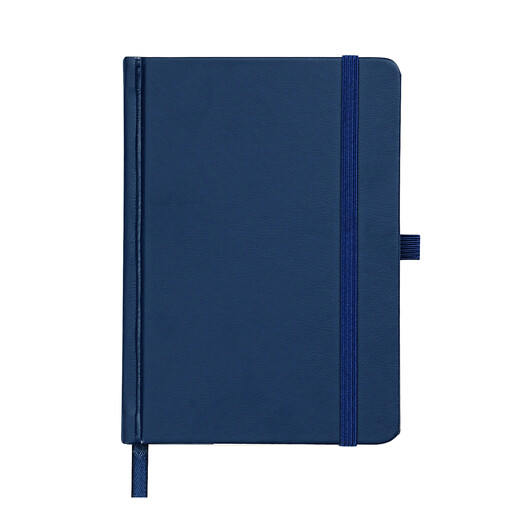
Why this choice suits this profile : Its A6 format is easy to handle and carry every day. It can be used as a lined notebook, an ideas notebook or an undated planner that you can start straight away, without waiting for a particular time of year.
The dimensions and page count are clearly stated: 10.5 × 14.8 cm and 160 pages, or 80 sheets. You can therefore assess its actual capacity before buying.
100 g/m² lined paper, rigid PU cover, ribbon bookmark, elastic fastening and pen loop.

Why this choice suits this profile : Its A5 format and undated monthly and weekly views are ideal for tracking projects, studying, structured journalling and goals spread over several months.
The undated format means you will not waste pages if your routine is interrupted or you start part-way through the year.
224 pages, 100 g/m² lined paper, hardcover, monthly and weekly sections, elastic fastening and bookmark.
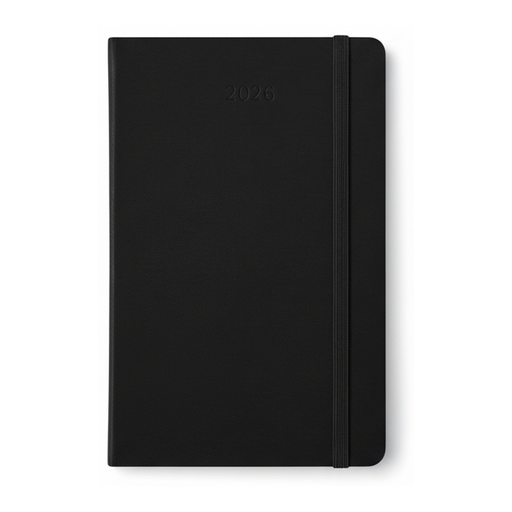
Why this choice suits this profile : Its horizontal weekly layout is ideal for professionals, travellers and creatives who want to keep appointments, notes, ideas and projects together in one place.
The product details specify the horizontal format, 70 g/m² paper weight and approximate dimensions of 13 × 21 cm, making it easier to compare with your writing needs.
Calendar, pages for travel, goals, ideas and lined notes, inner pocket, elastic fastening and bookmark.
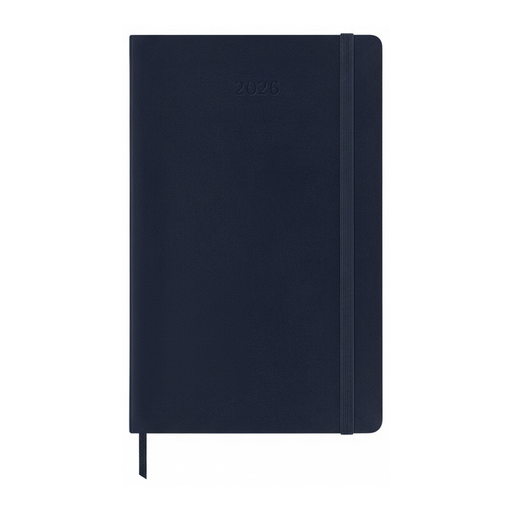
Why this choice suits this profile : One page per day gives you room to detail appointments, tasks, notes and reflections. This format is suitable for busy professional schedules as well as for people who write extensively.
The daily layout is clearly stated, so you will not mistake a weekly planner for a format designed for highly detailed days.
Daily page, calendar, travel, goals and ideas sections, softcover, inner pocket and binding that allows the planner to lie flat.
We have put together a complete, real-time updated selection of products that meet these exacting criteria, while complying with European safety regulations.
The A5 format offers more space for meetings, lessons and professional planning. A6 is better suited to short lists, spontaneous ideas and travelling. If you switch between the office and public transport, keeping an A5 at home and an A6 in your bag can be a useful combination.
It all depends on how often you write. An undated planner does not become obsolete when you skip several weeks, unlike a dated annual planner. A model designed to cover 18 months can therefore support different projects, provided you take its page count into account and keep it away from moisture.
Store it in a dry place, avoid leaving it in direct sunlight or near a heat source, and clean the cover with a soft, slightly damp cloth when permitted by the manufacturer. Do not overfill the inner pocket, and regularly check the condition of the elastic fastening, bookmark and pen loop.