
Livraison le jour même ou le lendemain

Qualité garantie

Débloquez vos offres de bienvenue: Livraison GRATUITE | Jusqu'à -80 % | 30 jours d'essai gratuits à JoyPlus
Téléchargez l'application
Whether for back-to-school season, office organisation, or simply the need to jot down ideas, choosing a notepad or stationery can seem trivial. And yet, who hasn't cursed a notebook where the ink bleeds through the pages, or sticky notes that are anything but sticky? These minor annoyances, often caused by technical details we overlook, can quickly render our supplies useless. To help you make the right choice, here are the pitfalls to avoid and the criteria to know before you check out.
Fortunately, avoiding these disappointments is as simple as knowing the few key characteristics that separate good office or school supplies from bad.
No need to get lost in the details. Three key points are all it takes to separate the wheat from the chaff and choose a product that won't end up forgotten in the back of a drawer.
Paper weight, expressed in grams per square metre (g/m?), is the number one criterion. It determines the paper's thickness, rigidity, and opacity.
The ruling (the lines on the page) and the size of your notebook should be tailored to your needs.
As for formats (A4, A5, A6), they cater to different needs for portability and space, from a large desk pad to a small pocket-sized notebook.
The way the sheets are held together determines both the durability and the usability of your notepad.
Don't underestimate micro-perforated sheets! They are a major asset for tearing out a page cleanly, without mangling it, before filing it away.
To illustrate these criteria in action, here are a few products that tick all the right boxes for different user profiles.
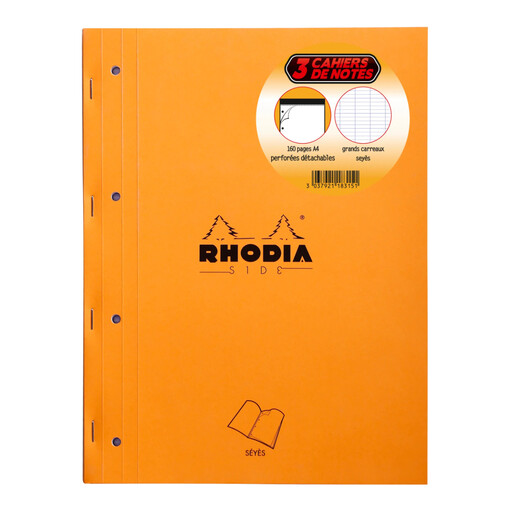
Why we love it: This pack provides enough supply for an entire semester with the impeccable quality of Rhodia. The A4+ format is perfect for taking notes in class, and the Clairefontaine paper guarantees consistently excellent writing comfort.
Avoids the false economy of a low-quality bulk pack. Here, the 80 g/m? vellum paper is a sure bet: ink doesn't bleed through, and both sides of the sheet are perfectly usable.
Its ultra-rigid cardboard back allows you to take notes anywhere, even without a desk. The micro-perforated sheets detach flawlessly for hassle-free filing.
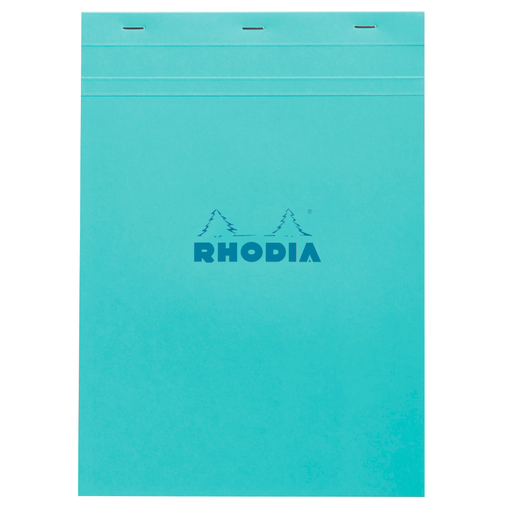
Why we love it: Perfect for professionals who juggle written notes and diagrams. The grid ruling helps structure thoughts, while the "Colors" range adds a touch of understated elegance to any desk.
It doesn't fall into the generic notepad trap. Its 5x5 mm grid ruling is specifically designed for technical use, providing optimal visual comfort for plans and tables.
The combination of a rigid back and micro-perforated sheets makes it an efficient and portable work tool. Your notes stay pristine, even after being detached.
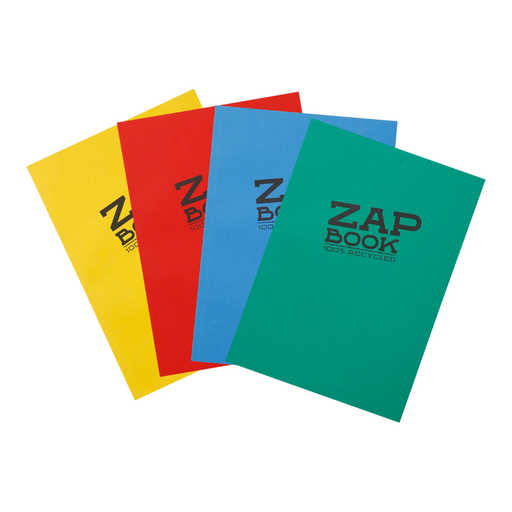
Why we love it: The notebook that ticks the boxes for versatility and commitment. Its portable A5 format and blank pages make it the ideal companion for notes, lists, or quick sketches on the go.
This proves that a recycled paper notebook doesn't mean making compromises. The paper is 100% recycled, but also acid-free and pH-neutral, ensuring excellent preservation of writings and drawings.
Its generous page count (160 sheets) and 80 g/m? weight make it a reliable and pleasant tool for daily use, ready to capture all your ideas, from the most structured to the wildest.
Explore our full selection of products that meet our quality criteria and current standards.
80 g/m? is the quintessential all-rounder, perfect for everyday use with most pens. 90 g/m?, the signature of many Clairefontaine notebooks, is noticeably thicker, smoother, and more opaque. It's the choice for connoisseurs, especially those who use fountain pens, as it virtually eliminates any risk of show-through and offers an incomparable glide.
It all depends on your needs. Seyes ruling is a staple in French schools. Lined ruling is the standard for note-taking in business or at university. Grid ruling (5x5 mm) is ideal for diagrams, tables, or bullet journaling. Finally, plain pages offer complete freedom for drawing or mind mapping.
A quality sticky note is designed to stick and unstick multiple times without leaving residue or damaging the surface. Unpleasant surprises (torn paper, glue marks) almost always come from low-end products. For delicate surfaces like book pages or a screen, always opt for trusted, proven brands.