
Livraison le jour même ou le lendemain

Qualité garantie

Débloquez vos offres de bienvenue: Livraison GRATUITE | Jusqu'à -80 % | 30 jours d'essai gratuits à JoyPlus
Téléchargez l'application
A notebook or spiral-bound notepad can accompany you through lessons, work, journaling or your first sketches. But the choice quickly becomes complicated when you consider formats, ruling, paper weight and pack sizes. A pretty cover alone isn't enough to guarantee a pleasant everyday experience.
Before you fill your basket, there are three pitfalls to avoid:
The A5 notebook, measuring 148 × 210 mm, is easy to carry. It's ideal for students, meetings, remote working and keeping a diary. Sold in packs, it can also help you separate subjects or projects without buying multiple individual notebooks.
The A4 notebook, roughly 21 × 29.7 cm, offers more space for diagrams, tables and detailed notes. It's better suited to the office, a training folder, or work that requires a structured layout.
An A7 or similar format slips easily into a pocket. It's mainly used for jotting down a shopping list, an idea or a quick reminder. The trade-off is a limited writing surface.
Very common in French school supplies, Séyès ruling doesn't serve the same purpose as wide-ruled or standard grid paper. So it's best to start with your intended use before choosing a cover or colour.
Paper weight refers to the weight of the paper per square metre. 70 gsm paper is lightweight and perfectly fine for everyday note-taking. A weight of 80 to 90 gsm generally feels more premium, especially with liquid ink pens.
The Clairefontaine papers used in some notebooks and pads are described with precise characteristics: vellum paper, weight, ruling, micro-perforation or PEFC certification. This information lets you compare products on concrete grounds, rather than relying on marketing claims alone.
Spiral binding often allows you to open the notebook flat and fold the pages back. This is handy in a lecture hall or on a cramped desk. Glued or stapled binding takes up less space on a shelf and works well for pages you want to tear out or archive.
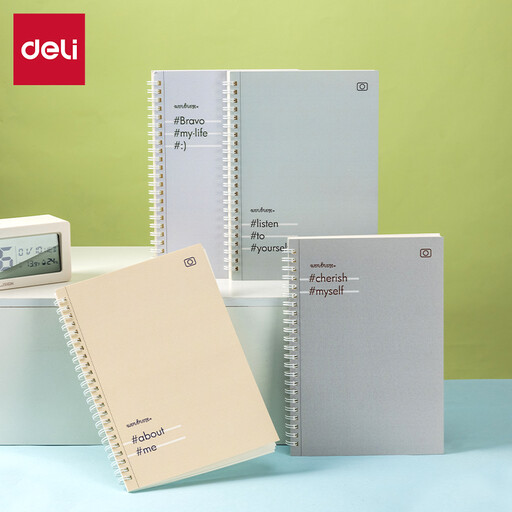
Why this choice suits this profile: The A5 format and pack of four notebooks let you separate lessons, lists and personal notes without buying multiple individual items.
The listing clearly states 60 sheets, i.e. 120 pages per notebook, with 70 gsm paper and a spiral binding.
An A5 format, four notebooks and 120 pages per unit for everyday school and office use.
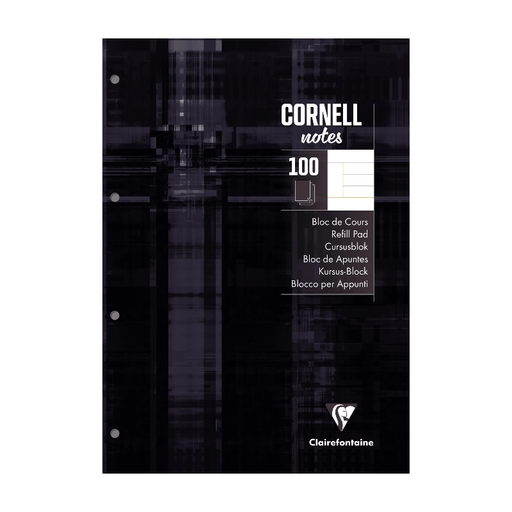
Why this choice suits this profile: This office notebook is aimed at those who want generous capacity, a pleasant writing surface and easy page filing.
The listing details the Clairefontaine Vélin Velouté 90 gsm paper, micro-perforated sheets and four filing holes.
An A4 format, 200 pages, a rigid cardboard cover and 8 mm ruling for structuring your notes.
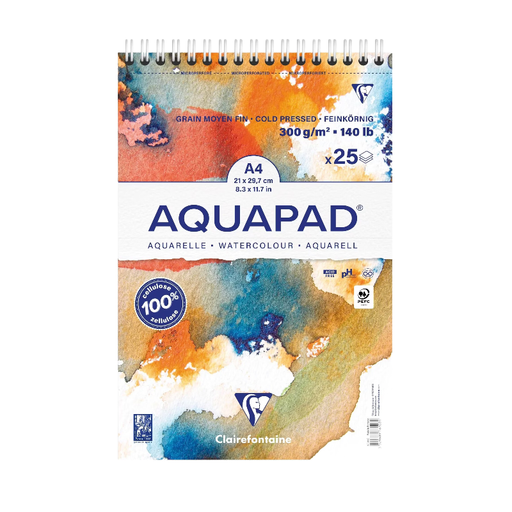
Why this choice suits this profile: This spiral-bound notepad is designed for beginners in watercolour and gouache, as well as artistic exercises that need thicker paper.
This isn't just a standard notebook: the listing specifies it's 300 gsm watercolour paper with a medium-fine grain and double sizing.
An A4+ format, 25 pages and acid-free paper described as suitable for practice with wet techniques.

Why this choice suits this profile: The small size and top-opening design are ideal for quick reminders, to-do items and one-handed note-taking.
The A7 format is clearly stated, with 50 sheets per notebook and a squared ruling. There's no mistaking it for a study notebook.
Four notebooks, spiral binding on the top edge, squared paper and a pocket-sized format.
We've put together a comprehensive, real-time updated selection of products that meet these exacting criteria as well as European safety standards.
A notebook generally refers to a pad made of several bound pages, often used for lessons or filing. A spiral-bound notepad uses a metal or plastic binding that makes it easy to open flat and fold pages back. The right choice depends mainly on how you'll carry it, how often you'll use it, and whether you need to tear out pages.
For everyday notes, a weight of 70 to 80 gsm works well with many ballpoint pens and rollerballs. If you use a more liquid ink, check the manufacturer's recommendations and go for 90 gsm paper when that information is available. For watercolour or washes, a specialist paper like the one in the Aquapad will be far more suitable than a standard notebook.
A pack of notebooks can reduce the cost per unit and make it easier to organise by subject, project or use. However, you should check the actual number of sheets, the format and the ruling. Four small A7 notebooks won't replace four A4 notebooks for lessons or professional folders.