
Livraison le jour même ou le lendemain

Qualité garantie

Débloquez vos offres de bienvenue: Livraison GRATUITE | Jusqu'à -80 % | 30 jours d'essai gratuits à JoyPlus
Téléchargez l'application
Whether for back-to-school, a high-stakes meeting, or simply organising your thoughts, choosing a notebook seems like child's play. And yet... who hasn't been frustrated by paper that tears, ink that bleeds through the page, or a binding that falls apart after just a few weeks? These minor annoyances aren't inevitable. They are often the result of marketing promises or a lack of attention to details that are, in fact, crucial.
As the head of buyer's guides at Joybuy, my mission is to help you cut through the noise. Let's forget the advertising slogans and focus on what truly matters. Here are the three most common mistakes to avoid so you can finally find the perfect notebook for your needs.
To make the right choice without fail, you only need to check three technical points. These alone determine 90% of a notebook's quality and suitability for your specific use.
Paper weight, expressed in grams per square metre (g/m? or GSM), refers to the thickness and density of the paper.
The way the pages are bound has a direct impact on durability and user comfort.
Rather than an endless list, here are three models that cater to specific user profiles, all selected according to the quality criteria we've just discussed.
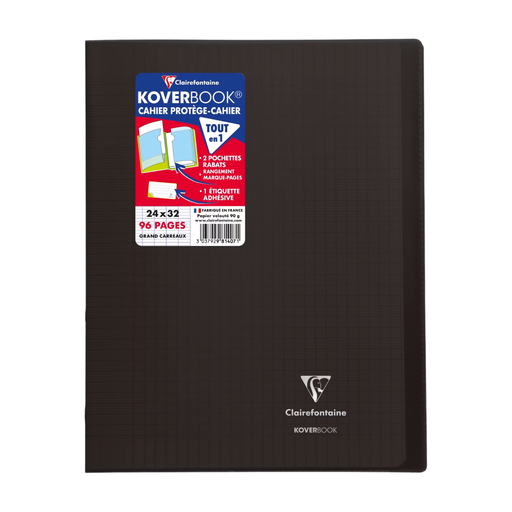
Why this choice? The Koverbook is the ultimate all-in-one solution for secondary school students. Its 24x32 format is perfectly suited to teachers' requirements, and its smart design meets the demands of intensive daily use.
Its integrated protective cover made of durable polypropylene solves the problem of flimsy covers. The 90g Clairefontaine paper ensures that ink won't bleed through, even with a fountain pen.
The 2-in-1 concept (notebook + cover) is as cost-effective as it is practical. The flaps serve as both a bookmark and a storage pocket.
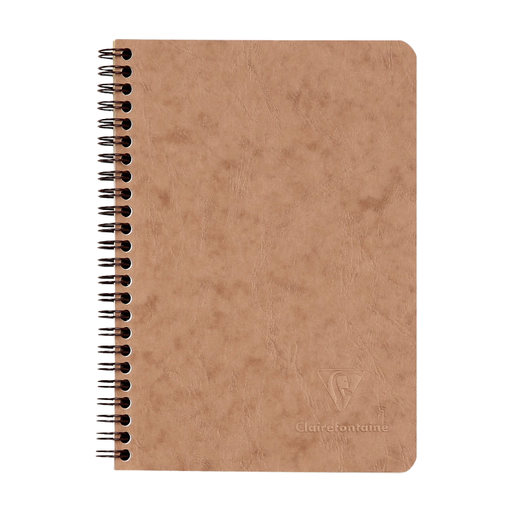
Why this choice? For those who need to organise, archive, and share their notes, this A5 notebook is a true productivity tool. Its understated design and functional construction make it a natural fit for professional and academic settings.
Thanks to micro-perforations, the pages are cleanly detachable, which prevents damage to the binding. The 90g paper and rigid cover are guarantees of quality and durability.
Its 3 storage pockets and detachable pages make it a complete, portable organisation system.
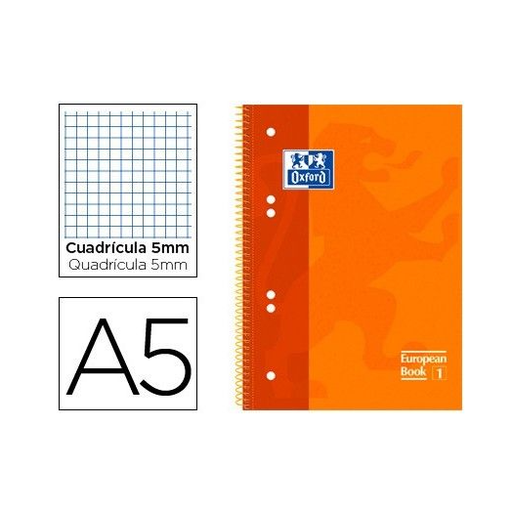
Why this choice? This Oxford notebook is designed for structured note-taking. Its graph ruling and spiral binding make it the tool of choice for scientists, architects, developers, and *bullet journal* enthusiasts.
Its robust spiral binding allows for a 360-degree fold-over without risk of damage. The Optik Paper is specially designed so that ink doesn't feather and remains invisible on the reverse side : a major asset for double-sided use.
The 5x5 graph ruling is perfect for diagrams, plans, and sketches. Its large 120-sheet capacity makes it ideal for long-term, intensive use.
Discover our complete and up-to-date selection of notebooks and notepads that all meet our quality criteria and current standards.
The 24 x 32 cm format is a French specialty, used primarily in schools. It is slightly larger than the A4 format (21 x 29.7 cm), which allows A4 documents handed out in class to be glued in without overhanging. The A4 notebook, on the other hand, is the international standard, more common in professional and higher education settings.
90g paper offers an excellent compromise. It is thick enough to prevent most inks from showing through on the reverse side (a phenomenon known as ghosting), ensuring optimal writing comfort on both sides of the page. It is also more tear-resistant than 70g or 80g paper, while remaining flexible enough not to make the notebook too heavy.
It all depends on your use case. Saddle-stitching (stapled) is suitable for notebooks with a low page count: they are thinner, lighter, and easy to store. Spiral binding is more versatile: it allows the notebook to be folded back 360° for writing with minimal support, which is very practical in a meeting or a lecture hall. It is also more durable for thick notebooks.