
Livraison le jour même ou le lendemain

Qualité garantie

Débloquez vos offres de bienvenue: Livraison GRATUITE | Jusqu'à -80 % | 30 jours d'essai gratuits à JoyPlus
Téléchargez l'application
Whether for a new project, the back-to-school season, or simply the need to organise your thoughts, choosing a notebook is a simple joy. But be warned: a beautiful cover can sometimes hide a real disappointment. Paper that tears, ink that bleeds through, binding that gives out after a few weeks... To ensure your notebook becomes a true ally and not a source of frustration, selecting the right model is crucial.
Our mission at the editorial desk is to help you see clearly and find the notebook perfectly suited to your needs. Let's skip the marketing jargon and focus on what really matters. Here are the pitfalls to avoid and the essential criteria to check before you buy.
The 2 Pitfalls to Avoid When Buying a Notebook
To make the right choice, you need to master a few technical concepts. These will determine the writing comfort, durability, and practicality of your future companion.
The paper weight, expressed in grams per square metre (g/m? or GSM), is the key indicator of the paper's thickness and opacity.
The way the pages are assembled has a direct impact on the strength and ergonomics of your notebook.
There's an ideal notebook for every use. Here is our selection for different profiles, chosen based on the quality criteria we've just discussed.

Why we love it: In meetings or on the go, style and durability are paramount. This hardcover notebook projects a professional image while protecting your notes. Its integrated accessories (bookmark, elastic closure) also make it very practical for daily use.
Its 100 g/m? paper prevents ink from showing through, ensuring clean, readable notes on both sides. Its textured hardcover stands up to the rigours of transport without a problem.
The combination of a sturdy cover and quality paper for a smooth writing experience and rock-solid durability.
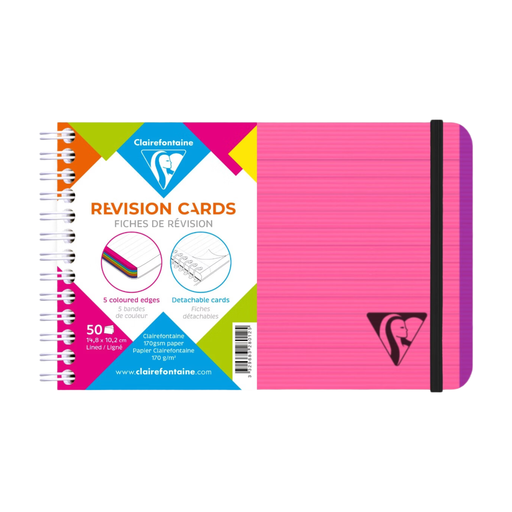
Why we love it: For studying, you need a medium that can withstand repeated handling. This block of revision cards is designed for exactly that, with its ultra-thick paper and organisational features.
With its 170 g/m? Clairefontaine paper, there's no risk of ghosting, even with highlighters. The polypropylene cover protects the cards from wear and stains.
Card-stock paper and coloured tabs to organise by subject: a true productivity tool for exams.
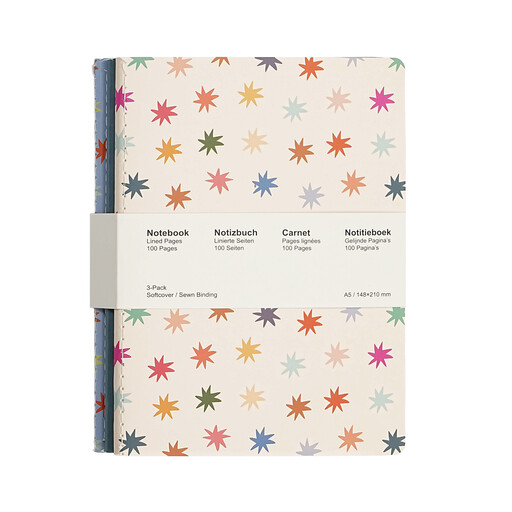
Why we love it: Perfect for those who like to compartmentalise: one notebook for ideas, one for work, one for a personal journal. This lightweight notebook set is easy to carry and offers great organisational flexibility.
Its stitched binding is much stronger than simple glue. It guarantees a perfect lay-flat opening, avoiding the pitfall of a notebook that falls apart or is simply uncomfortable to use.
The flexibility of a three-pack, combined with a durable, lay-flat binding. All in a lightweight and portable A5 format.
Discover our complete selection of notebooks and notepads, all tested and approved by our editors according to our quality criteria.
What paper weight should I choose for a fountain pen? For a perfect glide with a fountain pen and to prevent ink from bleeding or ghosting, aim for paper that is at least 90 g/m?. A paper of 100 g/m? or more is a safe bet. The intrinsic quality of the paper (like the famous velvety vellum from Clairefontaine) also plays a crucial role.
Is a hardcover notebook really more durable? Generally, yes. A hardcover better protects the pages from creases and provides a stable writing surface, which is very handy when you don't have a desk nearby. That said, a good softcover notebook with a stitched binding can be just as durable, with the added benefit of being lighter. It all depends on your priority: maximum protection or portability.
How can I tell if a notebook can open flat? Look for terms like "stitched binding," "sewn binding," or "smyth-sewn." These techniques allow the notebook to open 180° without forcing it. Spiral-bound notebooks also open perfectly flat, but the spiral can interfere with writing, especially for left-handers. Simply glued bindings are the most fragile: they don't hold up well to being opened wide and often end up breaking.