
Livraison le jour même ou le lendemain

Qualité garantie

Débloquez vos offres de bienvenue: Livraison GRATUITE | Jusqu'à -80 % | 30 jours d'essai gratuits à JoyPlus
Téléchargez l'application
Changing a light bulb sounds simple enough… until the new one doesn't fit your fitting, flickers on a dimmer switch, or triggers an error message on your dashboard. To avoid wasted purchases, it's worth looking beyond the stated wattage and checking a few essential specifications.
A GU10 LED bulb is usually fitted by pushing it in and giving it a quarter turn. An E27 LED bulb, on the other hand, screws in. These two types are not interchangeable. You also need to consider the diameter and length, especially in a recessed spotlight, a narrow wall light, or a decorative pendant.
For a car, the logic is different. An H7 LED headlight bulb, an H4 LED bulb, and a T10 W5W LED bulb each correspond to very different locations and uses. Always check the reference number printed on your old bulb or listed in your vehicle's manual before placing an order.
Watts indicate power consumption, not directly the amount of light produced. To compare two LED bulbs, you should focus on the luminous flux, measured in lumens. A low-wattage bulb might be perfectly fine for a reading lamp, but it won't provide enough light for the main lighting in a room.
The beam spread also matters. A 36° angle works well for directional lighting or highlighting a specific area, whereas a wide diffuser spreads light more evenly across the whole room.
A dimmable LED bulb must be compatible with the dimmer switch you already have. A bulb not designed for dimming may flicker, stay slightly lit, or behave erratically. Conversely, an older dimmer switch may struggle to handle the low power draw of LEDs.
So, check for the "dimmable" label on the product page, as well as the compatibility of your dimmer. Non-dimmable models should only be used with a standard on/off switch.
For a household light fitting, check:
GU10 spotlights are common in ceiling lights and track lighting. A GU10 PAR16 bulb at 4.7 W, for example, can deliver 345 lumens with a colour temperature of 2,700 K and a 36° beam. This setup is good for accent lighting, but not necessarily for lighting an entire room.
Colour temperature is measured in kelvins:
A warm white LED bulb or a 2700K LED bulb creates a soft, cosy atmosphere. Models at 6,500 K produce a visually cooler light that doesn't suit all household light fittings.
A decorative LED bulb is designed to be seen. Amber glass models with visible filaments often give off a softer light, but their luminous flux can be limited. They naturally suit open pendants, wall lights, and ambient lamps.
A smart LED bulb adds remote control, scheduling, and, depending on the model, adjustable colour temperature. However, you need to check the network it requires. The Konyks model shown below works on 2.4 GHz Wi-Fi and Bluetooth, without needing a dedicated hub.
For automotive use, don't just rely on the brightness figures quoted. Check compatibility with your vehicle, the beam pattern, the cooling system, the space available behind the headlight, and the regulations for lighting used on the road. After installation, check the beam alignment so you don't dazzle other drivers.
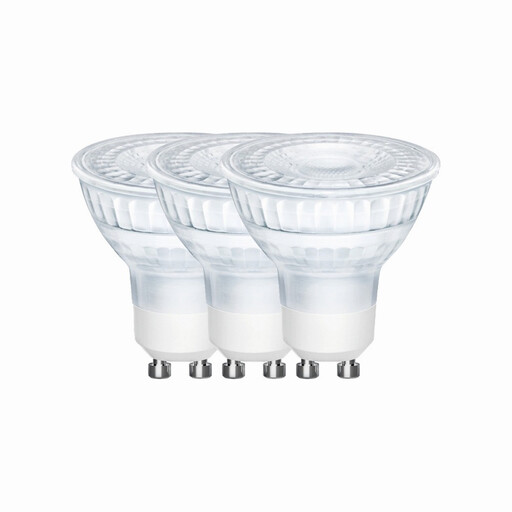
Why this choice suits this profile: This pack of three bulbs lets you replace several GU10 spotlights in one go. With their 2,700 K colour temperature, they give off a warm light, ideal for a living room, hallway, or bedroom.
The product page clearly states the GU10 cap, the 36° beam, and that it is not dimmable. So you'll know straight away if this model isn't suitable for a dimmer-equipped installation.
Pack of 3, 450 lumens per bulb, 4.9 W, clear glass, and an advertised lifespan of up to 15,000 hours.

Why this choice suits this profile: This smart LED bulb combines decorative amber glass with control via an app or voice assistant. It's designed for those who want to schedule their lighting and change the atmosphere from their phone.
The adjustable range from 2,700 to 6,500 K is stated, as is the need for a 2.4 GHz Wi-Fi network. These details prevent an unpleasant surprise with a network limited to 5 GHz.
E27 cap, 806 lumens, dimmable, scheduling, and compatibility with the Konyks, Smart Life, and Tuya apps.
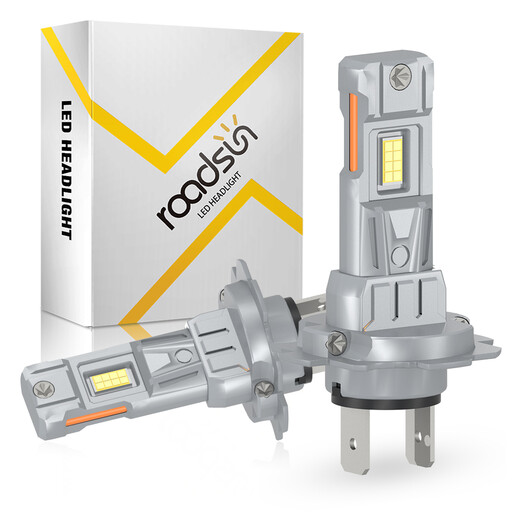
Why this choice suits this profile: This model is aimed at drivers looking for an H7 bulb for regular journeys, whose vehicle accepts this format. According to the product page, its design includes active cooling and an aluminium alloy housing.
The H7 reference and the advertised 1:1 format should be compared with your original bulb. It's still essential to check the beam pattern, available space, and compliance with your vehicle before using it on the road.
Advertised colour temperature of 6,000 K, described as "plug and play" installation, built-in fan, and claimed water and dust protection.
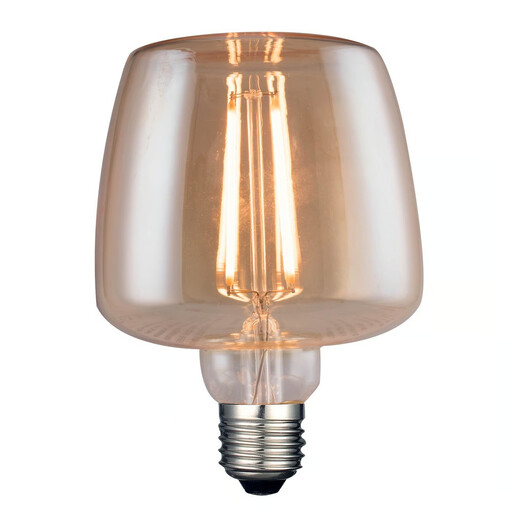
Why this choice suits this profile: This E27 LED filament bulb is designed for pendants and open light fittings, where design matters as much as the light itself. Its 2,700 K colour temperature suits rooms where you want a warm glow.
The product page specifies compatibility with a dimmer, the E27 cap, and the 400-lumen output. This means you can check the bulb suits your needs, rather than relying solely on its retro look.
Clear glass, visible filament, 4.1 W power, 400 lumens, and an advertised lifespan of up to 15,000 hours.
We've put together a comprehensive, real-time list of products that fully meet these strict selection criteria and European safety regulations.
Start by identifying the cap, then compare the luminous flux, shape, and colour temperature. For an E27 fitting, an E27 LED bulb will work if its dimensions are compatible with the light fixture. For a spotlight, check the GU10 reference as well as the beam angle.
The lifespan depends on the quality of the components, the ventilation of the light fitting, and how often it's used. Some product pages advertise up to 15,000 hours for household models. This figure is a manufacturer's estimate and may be lower in an enclosed fitting or one exposed to high heat.
At a comparable luminous flux, an LED generally uses less electricity. To estimate running costs, compare the wattage, the daily hours of use, and your electricity tariff. Choosing a bulb that matches your needs also avoids having to add extra light sources or picking an unnecessarily powerful model.