
Livraison le jour même ou le lendemain

Qualité garantie

Débloquez vos offres de bienvenue: Livraison GRATUITE | Jusqu'à -80 % | 30 jours d'essai gratuits à JoyPlus
Téléchargez l'application
Choosing a pair of headphones might seem straightforward… until you start comparing connectivity, battery life, comfort and microphone quality. Amid the promises of immersive sound, noise cancellation and long-lasting battery, some features are often highlighted without their limitations being clearly explained.
To avoid a purchase you’ll regret, start by identifying your main use: listening to music on the commute, working from home, following online courses, gaming on PC or console, or making calls.
A pair of noise-cancelling headphones uses microphones and electronic processing to reduce certain ambient sounds. Passive isolation, on the other hand, depends mainly on the shape of the ear cushions and how they fit around your ears.
Active noise cancellation is particularly useful on trains or planes, but it doesn’t eliminate all noise and relies on battery power. In the office, a well-fitted over-ear headphone can already block out a good deal of external sound without needing any extra power.
Battery life typically varies depending on listening volume, Bluetooth usage and whether active noise cancellation is switched on. A model advertised with a maximum duration may therefore last less time in real-world conditions.
Also remember to check:
A pair of wireless headphones must be compatible with the Bluetooth profiles used by your devices. On a desktop PC, a USB model can be simpler to set up than a Bluetooth headset. With a console, check for a 3.5 mm jack socket and compatibility with the controller.
If you take part in meetings or online gaming sessions, don’t confuse speaker quality with call quality. A pair of headphones with a microphone built in or mounted on a boom will generally be better suited to this use than a pair designed purely for listening to music.
Bluetooth headphones are ideal for smartphones, tablets and laptops, as they avoid the need for a cable between the device and you. However, the stated range is measured in open space: walls and interference can reduce it.
Wired headphones don’t need charging and offer a direct connection. Models with a 3.5 mm jack socket work with many consoles, computers and mobile devices, provided they have the right port. As for USB headphones, often used for remote working, they are usually recognised automatically by a computer.
On-ear headphones rest directly on your ears. They are often more compact, but the pressure can become noticeable during prolonged use. Over-ear headphones completely surround your ears and can improve passive isolation, provided the ear cushions are wide enough.
Pay particular attention to:
Comfort is very personal: a lightweight model won’t necessarily suit every head shape.
Frequency range, impedance and sensitivity provide technical pointers, but they aren’t enough to predict the listening experience. The Sony MDR-ZX110, for example, has a frequency range of 12 to 22,000 Hz, an impedance of 24 ohms and 30 mm dynamic drivers. Its 1.2 m cable and foldable design make it easy to carry.
For gaming, the driver size, the presence of a microphone and console compatibility are often more important than the frequency range alone.
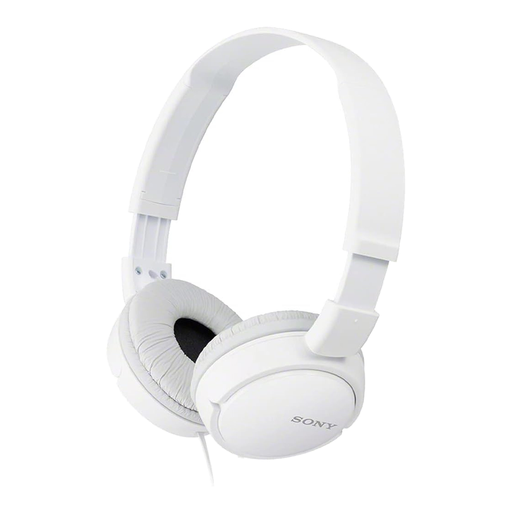
Why this choice suits this profile: At just 120 g, these lightweight wired headphones are ideal for everyday listening on a computer, tablet or any device with a 3.5 mm jack socket. Their foldable design makes them easy to stow in a bag.
The wired connection removes any concerns about battery life. The key specs are clearly stated: 1.2 m cable, 24 ohms impedance and 30 mm drivers.
Foldable design, 120 g weight, closed-back construction and stated frequency range of 12 to 22,000 Hz.
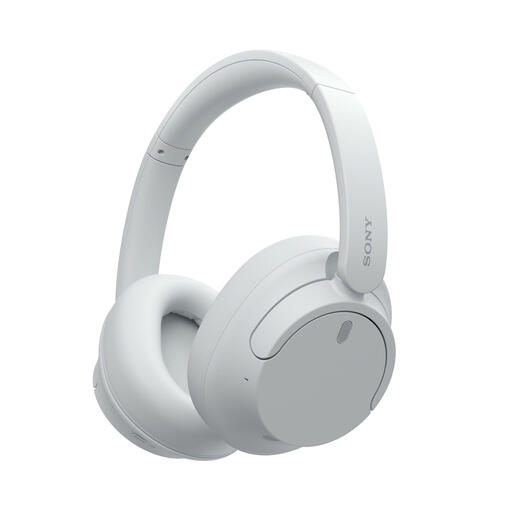
Why this choice suits this profile: These over-ear headphones combine Bluetooth, a 3.5 mm jack socket and active noise cancellation. They work equally well for commuting, calls and long listening sessions at home.
The spec sheet distinguishes between battery life with ANC (up to 35 hours) and without ANC (up to 50 hours). The audio cable also lets you use them in wired mode.
Bluetooth 5.2, dual-device connection, USB-C port, built-in microphone and stated weight of 192 g.
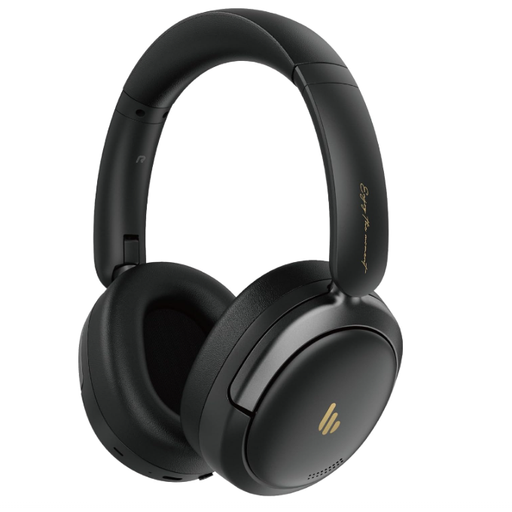
Why this choice suits this profile: These foldable wireless headphones are designed for people who switch between remote working, travel and personal listening. Their dual-device connection means you don’t have to manually switch between your computer and phone.
The spec sheet clearly lists the different advertised features: Bluetooth 5.4, hybrid ANC, built-in microphone and wired USB-C listening. This helps you focus on the features that are genuinely useful, rather than fixating on a single marketing claim.
Stated battery life up to 45 hours, 40 mm drivers, noise cancellation rated up to -44 dB and customisation via an app.
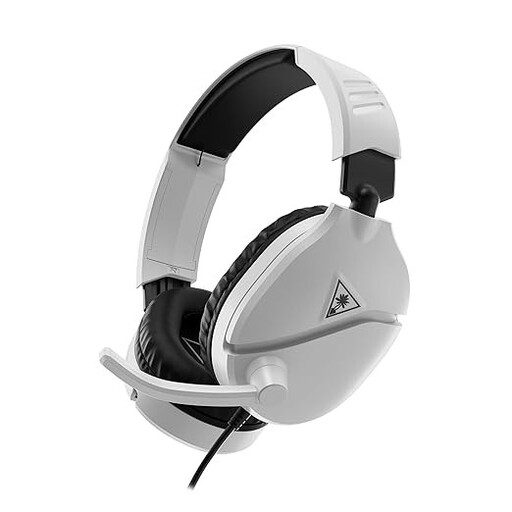
Why this choice suits this profile: This wired gaming headset plugs in via a 3.5 mm jack to PC, PlayStation, Xbox, Nintendo Switch and compatible mobile devices. It’s ideal for gamers who regularly switch between platforms.
The analogue connection eliminates pairing and battery issues. The microphone mutes when you flip the boom up – a simple, handy control during an intense game.
40 mm speakers, flip-to-mute microphone, built-in volume wheel and stated multi-platform compatibility.
We’ve put together a comprehensive, real-time selection of products that meet these demanding criteria, while complying with European safety regulations.
To keep your gear in good condition, avoid pulling on the cable and always unplug a wired model by holding the plug, never the cord. Clean the ear cushions with a soft cloth, without using any liquid or solvent. Store foldable headphones in a dry place away from excessive heat.
Increase the volume gradually and take breaks during long listening sessions. Don’t use headphones when you need to stay aware of surrounding sounds, especially when cycling or driving.
Yes, provided the computer has Bluetooth. If not, you may need a compatible adapter. For professional calls, a USB or wired headset can offer a more straightforward setup.
Their lifespan depends on the quality of the materials, how often they are carried around and how well they are maintained. The ear cushions, cables and battery are the parts that wear out fastest. A wired model avoids battery degradation, while a wireless model needs to be charged with the correct cable and stored away from moisture.
Go for a comfortable pair of headphones with a microphone, easily accessible controls and a connection that works with your computer. For switching between calls and music, a Bluetooth model with multipoint connection can be very handy. If you want a simple, pairing-free solution, a USB headset like the Logitech H340 is also worth considering.