Start by choosing a format that fits your kitchen and a capacity suited to your food-storage habits, then compare kWh/year, usable capacity by compartment and the exact model’s dimensions. ADEME reminds us that a fridge runs continuously, and that choosing a larger appliance or one with unnecessary features can increase your energy bill. For an integrated model, check the housing, hinges and ventilation before comparing energy consumption.
Which households is it for?
Households replacing an energy-hungry appliance
You want to reduce continuous energy use without sacrificing the capacity you genuinely need. Compare kWh/year with usable litres rather than relying on the energy rating alone; ADEME highlights that refrigeration appliances run continuously.
Households that regularly freeze food
If weekly shopping or batch-cooked meals require proper freezer space, look at the fridge and freezer capacities separately, as well as the chosen model’s annual energy consumption.
Owners of a fitted kitchen
When replacing an integrated appliance without altering the units, the housing dimensions, door fitting and installation requirements should take priority over convenience features.
Buying priorities
First compare appliances that meet the same storage needs and suit the same type of installation. The European energy label is a useful guide, but kWh/year, capacity by compartment and overall dimensions will help you make a choice that is better suited to your needs.
| Priority |
What to check |
Household needs |
| Comparable energy consumption |
Compare kWh/year between models with similar capacity and compartment layouts. Read the A–G rating alongside the fridge and freezer usable litres. Check the exact model’s details on its label and product sheet. |
I want to limit the cost of running an appliance that never stops, without choosing a capacity that is too small for my usual shopping. |
| Capacity and installation |
Measure the height, width, depth and door-opening clearance. For an integrated model, also check the housing dimensions, fitting system and ventilation. Look at the capacity of each compartment, not just the total. |
My kitchen needs to accommodate the appliance without obstructing movement, while still leaving enough room for fresh food and frozen items. |
| Food storage and maintenance |
Check the noise level in dB(A), especially in an open-plan kitchen. See whether a NoFrost or LowFrost system suits your freezing habits. Review the alarms and temperature settings where specified. |
I would rather avoid a build-up of frost and reduce situations that make the appliance work harder after installation. |
Mistakes to avoid
-
Choosing based on the energy rating alone
The energy rating should be considered alongside kWh/year, usable capacities and noise level. Two appliances with the same rating may meet very different storage needs.
Use the same benchmarks for every model: annual consumption, fridge litres, freezer litres and installation dimensions.
An unsuitable capacity or compartment layout can lead to unnecessary energy consumption over the long term.
-
Buying an appliance that is too large or choosing rarely used features
ADEME states that size and unnecessary features, such as a constant supply of ice, can increase the cost of running an appliance that operates continuously.
Choose the capacity and features according to your shopping habits, freezing needs and actual use of ice or chilled water.
An oversized appliance can increase your day-to-day electricity consumption.
-
Measuring only the width before ordering an integrated model
Installing an integrated appliance depends on the housing dimensions and fitting system, which may differ from its external dimensions.
Measure the housing’s height, width and depth, then check the door type, hinges and installation diagram for the model.
-
Overlooking placement, settings and frost
A nearby heat source, insufficient ventilation, an excessively cold setting or damaged seals will make the appliance work harder. UFC-Que Choisir states that a layer of frost thicker than 3 mm can lead to 30 % higher energy consumption.
Follow the ventilation guidance provided by the manufacturer, keep the appliance away from heat sources and maintain approximately 4 to 5 °C in the fridge and -18 °C in the freezer.
Regular maintenance and defrosting when necessary help prevent avoidable excess consumption.
Guidance on the brands mentioned
Bosch
Worth considering for a freestanding fridge freezer if you want detailed technical information on dimensions, capacities, energy rating, noise and cooling functions.
- For the KGN39EXCF, Bosch states 260 L of fridge capacity, 103 L of freezer capacity, a C rating, 35 dB(A), NoFrost and VitaFresh.
- These specifications are stated by Bosch for this particular model and do not represent the entire range.
Electrolux
A useful option for a fitted kitchen requiring an integrated appliance with clearly stated housing dimensions, capacities, annual consumption and cooling system.
- For the ETS3LE16S, Electrolux specifies a housing measuring 1 580 × 560 × 550 mm, a total capacity of 242 L, 183 kWh/year and LowFrost.
- The stated compatibility and consumption relate to this model and must be checked against your kitchen unit and actual requirements.
Liebherr
An option to consider if you are looking for a freestanding or integrated fridge freezer, taking usable capacity, noise level and frost management into account.
- For the CND2003-2, Liebherr states 371 L, 35 dB and NoFrost; the brand presents this system as protection against frost in the freezer.
- This is the manufacturer’s description. The SmartDeviceBox is only worth choosing if connectivity serves a clear purpose for you.
Joybuy products
These Joybuy options include freestanding and integrated fridge freezers for storing fresh and frozen food every day, with capacities and energy consumption figures to compare according to your kitchen.
 Image unavailable
LG GBBSJ1CCSW 333 L fridge freezer, C rating
Designed for daily shopping with fresh and frozen food, this fridge freezer offers 183 L of fridge space, a 37 L freshness compartment and 113 L of freezer space.
Stated consumption: 169 kWh/year; dimensions: 597 × 1 860 × 674 mm; stated noise level: 34 dB. Total No Frost, digital controls and Wi‑Fi are specified.
Check that 333 L suits your habits and that the specified 5 cm ventilation clearance, as well as the delivery access, is compatible with your chosen location.
Joybuy
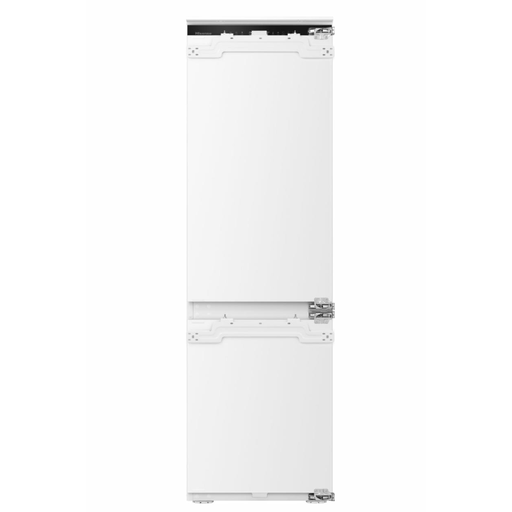 Image unavailable
Hisense RB3B250SAWC 252 L integrated fridge freezer, C rating
This integrated model suits a fitted kitchen requiring separate compartments with 176 L for chilled food and 76 L for frozen food.
Stated consumption: 150 kWh/year; external dimensions: 540 × 1 772 × 545 mm; stated noise level: 34 dB. No Frost, a reversible door and door-on-door fitting are specified.
Before buying, check the housing dimensions, ventilation and exact door compatibility with your unit and hinges.
Joybuy
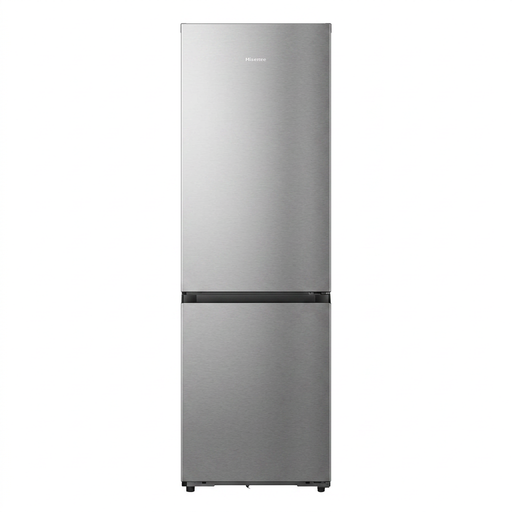 Image unavailable
Hisense RB3K330SAFC 330 L freestanding fridge freezer
This freestanding fridge freezer provides 215 L of fridge space and 115 L of freezer space for everyday use with fresh and frozen food.
Stated consumption: 165 kWh/year; dimensions: 59,5 × 185,6 × 60 cm; stated noise level: 35 dB. The frost-free system, digital controls and reversible door are specified.
Make sure that 330 L is not more than you genuinely need, then consult the manual for ventilation clearances and door-opening requirements.
Joybuy
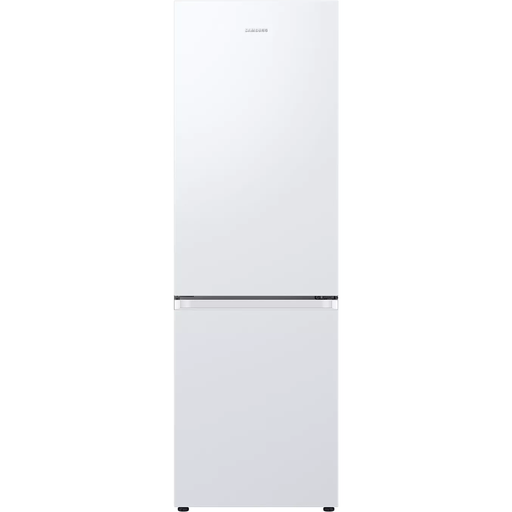 Image unavailable
Samsung RB38C600EWW 390 L fridge freezer, E rating
With a stated 276 L of fridge space and 114 L of freezer space, this large fridge freezer is aimed at households with regular storage needs.
Stated consumption: 264 kWh/year; dimensions: 59,5 × 203 × 65,8 cm; stated noise level: 35 dB. Automatic defrosting in both compartments and fast freezing are specified.
Compare its 390 L capacity and 264 kWh/year with your actual requirements, then check the height, depth and door-opening clearance in your kitchen.
Joybuy
 Image unavailable
AEG NSC6M18FES 249 L integrated fridge freezer, E rating
This integrated fridge freezer provides 186 L for fresh food and 62 L for frozen food, making it suitable for households with moderate freezer requirements.
TwinTech Total No Frost, MultiFlow, ECO mode, a reversible door and sliding-door installation are specified.
Check the energy label for kWh/year, as well as the housing dimensions, ventilation and compatibility with a sliding front, before comparing it with another integrated model.
Joybuy
Frequently asked questions
How do you compare two fridges of different sizes?
Compare annual consumption in kWh/year with the usable capacity of each compartment, then check the dimensions and noise level. The A–G rating is a useful guide, but it does not replace checking the available litres and the exact model’s energy consumption.
Is a very large capacity or ice dispenser always useful?
No. ADEME states that size and unnecessary features, particularly a constant supply of ice, can increase the cost of running the appliance. Choose these features when they match a frequent and genuine need in your household.
What should you check before replacing an integrated fridge?
Check the housing height, width and depth, the type of hinges or door-fitting system, ventilation requirements and the installation diagram. External dimensions alone do not guarantee that an appliance will fit into your existing unit.
How can you limit energy consumption after buying?
Install the appliance away from heat sources and allow sufficient air circulation. UFC-Que Choisir recommends setting the fridge between 4 °C and 5 °C and the freezer to -18 °C, while maintaining the seals and defrosting appliances that require it.


