Compact kitchens and smaller shops
First, check that the appliance will fit in your kitchen and that its door can open fully. Then work out whether the freezer space will meet your needs.


Start by checking the available space, how the doors open and any installation requirements. Then compare the usable fridge and freezer capacities separately, based on your shopping habits. A fridge freezer can suit a mix of needs, while a multi-door or American-style model is worth considering if its capacity and layout work for you without obstructing movement around the kitchen.
First, check that the appliance will fit in your kitchen and that its door can open fully. Then work out whether the freezer space will meet your needs.
You need enough room in both compartments between shopping trips. Compare their usable capacities separately rather than relying on the total capacity alone.
A wider appliance can make it easier to store a big shop, provided your kitchen, access routes and door clearance can accommodate it.
Measure the space and door clearance, then compare the fridge and freezer capacities. If several appliances are suitable, also check their kWh/year figures and noise levels.
| What matters | What to check | Who it matters most to |
|---|---|---|
| Size and installation | Measure the space, delivery route and door clearance. For an integrated model, check the niche, hinges and ventilation requirements specified for that model. | I need the appliance to fit in a compact kitchen and its door to open without getting in the way. Around 36 % of consumers would make space and installation their top priority. |
| Fridge capacity | Compare the usable capacity of the fridge compartment and the shelf layout with the food you usually buy. | If I shop less often, I want to store fresh food until my next trip. Around 29 % of consumers would put fridge capacity at the top of their list. |
| Freezer capacity | Check the freezer compartment capacity in litres and its layout on the label or product information page. | If I regularly buy frozen food, I want to make sure the compartment can hold it between shopping trips. Around 21 % of consumers would make freezer capacity their top priority. |
| Noise and energy use | Compare kWh/year, noise level in dB and noise class on the labels of models that fit your space. | Noise can make a difference day to day in an open-plan kitchen, and I also want to compare the stated energy use. Around 14 % of consumers would prioritise noise and energy use when buying. |
Two appliances with a similar total capacity may offer different amounts of space for fresh and frozen food.
Compare the capacity of each compartment separately and match it to the food you usually buy.
The niche, hinge type, ventilation and door clearance must all be suitable for the model you choose.
Measure the space and check the installation plan before ordering, especially when replacing an integrated appliance.
Depending on the model, a front-mounted water dispenser may need a mains water connection.
Check whether the appliance uses a tank or a water connection, then make sure its location works with the required installation.
Worth considering for a small integrated fridge with a freezer compartment, such as the ARG94312FR.
Worth considering for freestanding fridge freezers such as the KGN36NLEA, or for installation guidance on certain integrated models.
Worth considering for a fridge freezer such as the GBV3100EPY if capacity and stated noise level are among your priorities.
Worth considering for an integrated fridge freezer such as the ICNd 5133 Plus NoFrost if your kitchen plans already include a set niche.
Worth considering for a large freestanding model, such as the RQ768N4GBE multi-door fridge.
This selection includes freestanding and integrated fridge freezers, as well as a large American-style fridge freezer. Compare compartment capacities and installation requirements to find the right fit for your needs.
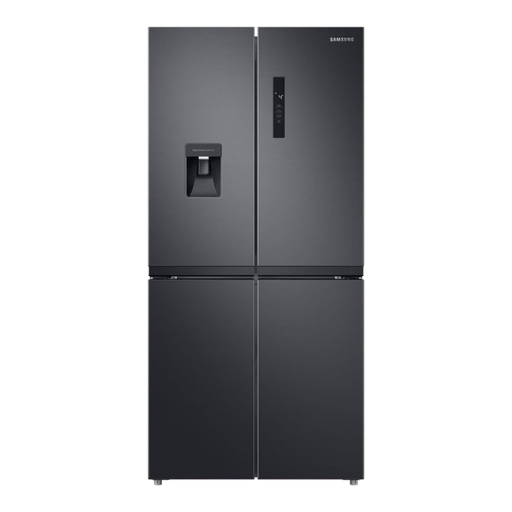 Image unavailable
Its multi-door design and separate compartments may suit you if you want space to store large quantities of fresh and frozen food.
Stated capacities : 329 l for the fridge and 159 l for the freezer. Twin Cooling, a water dispenser and an ice maker are listed in the description.
Stated energy use : 298 kWh/year. Stated noise level : 41 dB.
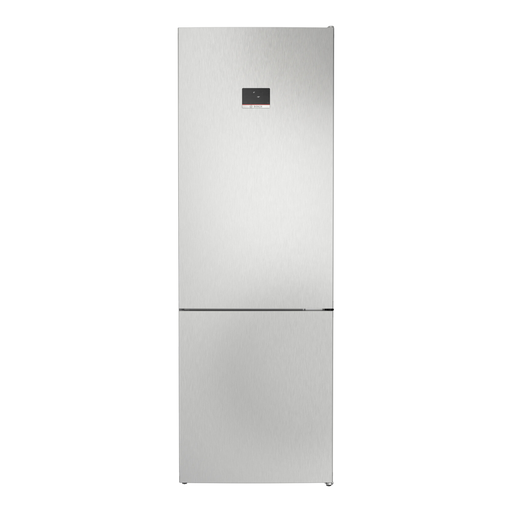 Image unavailable
This freestanding fridge freezer with a bottom freezer may suit you if you’re comparing capacity for a mix of fresh and frozen food.
Stated capacities : 311 l for the fridge and 129 l for the freezer. VitaFresh and NoFrost are listed in the product information.
Stated noise level : 35 dB. Stated energy use : 223 kWh/year.
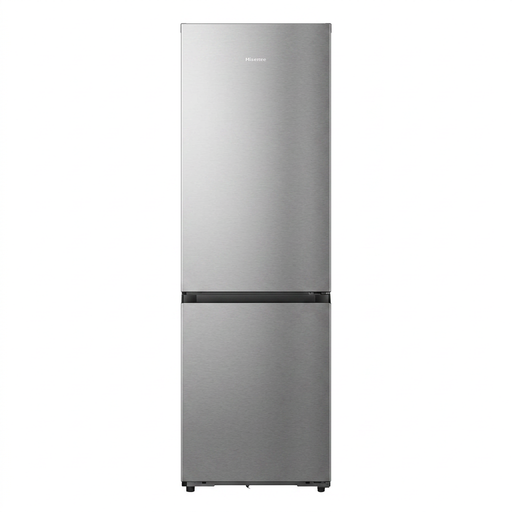 Image unavailable
This freestanding fridge freezer may be worth comparing if you want separate space for fresh and frozen food in a 330 l appliance.
Stated capacities : 215 l for the fridge and 115 l for the freezer. The product information lists No Frost, an Inverter compressor and a reversible door.
Stated noise level : 35 dB.
 Image unavailable
This integrated model with sliding door installation may suit a fitted kitchen, provided you check that it’s compatible with your cabinetry and installation setup.
The product information lists TwinTech Total No Frost, MultiFlow and an ExtraChill drawer. Stated noise level : 37 dB.
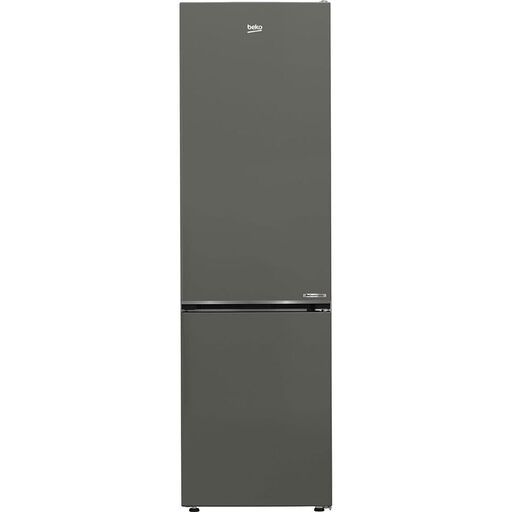 Image unavailable
This freestanding fridge freezer may suit you if you’re comparing appliances for fresh and frozen food shopping.
Stated capacities : approximately 249 l for the fridge and 106 l for the freezer. The product information lists Total No Frost and a reversible door.
Stated noise level : 35 dB. Stated energy use : 240 kWh/year.
UFC-Que Choisir gives a general guide of 100 to 150 l for one person, plus 50 l for each additional person. Adjust this guide to how often you shop and compare fridge and freezer capacities separately : it isn’t a required minimum or a guarantee that the capacity will suit your needs.
Don’t assume the two installation types are interchangeable. Check the dimensions, door clearance and ventilation requirements for the model you choose. Bosch says its under-counter integrated appliances ventilate through the plinth; niche dimensions vary by model.
Compare kWh/year, noise level in dB and noise class on the labels of models that already fit your space. The European Commission says that labels for relevant fridges include this information, as well as compartment capacities. The energy class alone won’t tell you how much your bill will be.
Anses recommends an ideal temperature between 0 and +4 °C at the coldest point in the fridge. Check the temperature regularly and avoid overfilling the appliance ; these usage tips don’t replace choosing a suitable capacity.
For purchases from a professional seller, DGCCRF says that the legal guarantee of conformity claim must be brought within two years of the goods being delivered; a commercial warranty is separate and optional. When a new appliance is sold, the free take-back of an equivalent used appliance is covered by the “one-for-one” scheme : ask the retailer about the practical arrangements before delivery.