
Livraison le jour même ou le lendemain

Qualité garantie

Débloquez vos offres de bienvenue: Livraison GRATUITE | Jusqu'à -80 % | 30 jours d'essai gratuits à JoyPlus
Téléchargez l'application
Condensation on windows, musty smells, laundry that takes ages to dry, or cold walls in a cellar: a dehumidifier can help reduce ambient humidity, provided you pick the right model for the room. The market is mainly split between electric models, non-powered moisture absorbers, and portable air conditioners with a dehumidifying mode.
Price alone isn’t enough to compare appliances. Here are the main pitfalls to avoid and the criteria to check before you order.
A capacity of 16, 20 or 25 L/day is usually measured in hot, very humid conditions – for example, at 30 °C with 80 % relative humidity. In a cooler bedroom, a chilly cellar or a garage, the amount of water actually collected can be significantly lower.
You need to weigh up the stated capacity, the room size, its temperature and its humidity level. A 12 L model will suit a medium-sized room, while a 20 or 25 L unit is better for a large room, basement or particularly damp utility room.
A small tank may need emptying several times a day when humidity is high. For a cellar, utility room or prolonged use, check for a dehumidifier with continuous drainage and that a hose is supplied.
Automatic shut-off when the tank is full is just as useful. It reduces the risk of overflow, but doesn’t let you off installing the appliance on a stable surface or checking it regularly.
Noise levels vary depending on the mode selected. An appliance can be discreet in night mode, then become noticeably louder when the compressor and fan are running at full power. Check the decibel value on the spec sheet and consider the room in question: a bedroom or office generally needs more quiet than a cellar.
To choose a dehumidifier for the home, compare the following capacities:
Take these figures with a pinch of salt, because the test conditions don’t always reflect those of a typical British home.
An appliance with a built-in hygrostat lets you set a target humidity level. The “standard”, “laundry drying”, “sleep” and “continuous” modes each suit different uses. For drying laundry, go for a model with sufficient airflow and a dedicated programme. In a bedroom, prioritise automatic adjustment and a clearly documented noise level.
An electric dehumidifier with automatic defrost will perform better in a cool room than a model without it. The refrigerant R290, found in several appliances, must be used in line with the manufacturer’s instructions: keep the unit upright, ensure the grilles are unobstructed and plug it into a suitable socket.
The washable filter needs regular cleaning – often every two weeks, depending on how much dust is around. A clogged filter reduces airflow and can make the appliance run for longer.
To estimate running costs, multiply the power in kilowatts by the operating time, then by your electricity tariff. A 200 W model used for 5 hours consumes around 1 kWh. The timer, automatic shut-off and maintaining a target humidity level all help cut down unnecessary running hours.
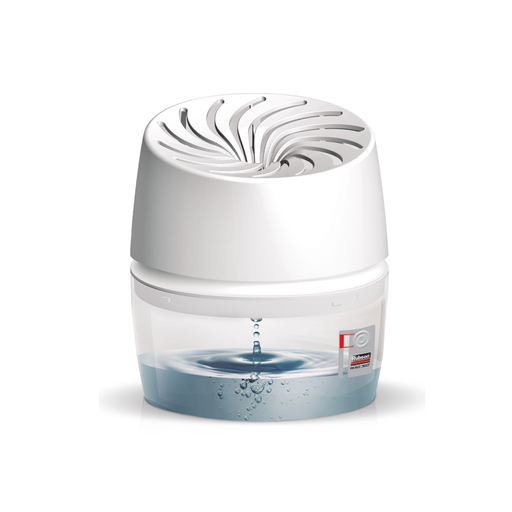
Why this suits this profile: This moisture absorber runs without electricity and works in rooms up to 20 m², cupboards, caravans or small bathrooms.
The stated coverage area and the level indicator help you understand the product’s limits.
Quiet operation, no plug needed, with a 450 g refill included and a pouring spout.
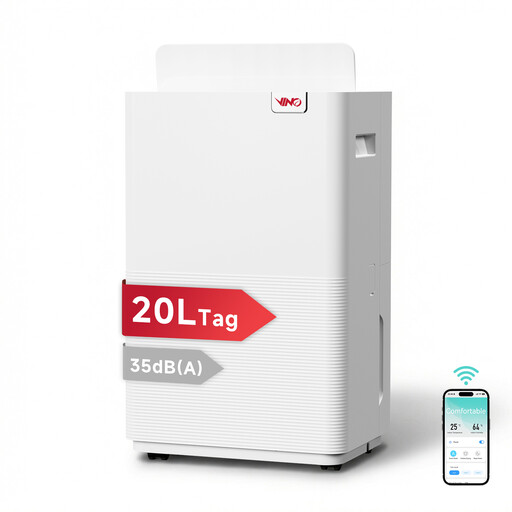
Why this suits this profile: App control, 24-hour scheduling and sleep mode are ideal for fans of a connected home.
The spec sheet separates the sleep-mode noise level from the figure given for normal operation.
Stated capacity of 20 L/day, 2.5 L tank, Wi-Fi, continuous drainage and a laundry drying function.
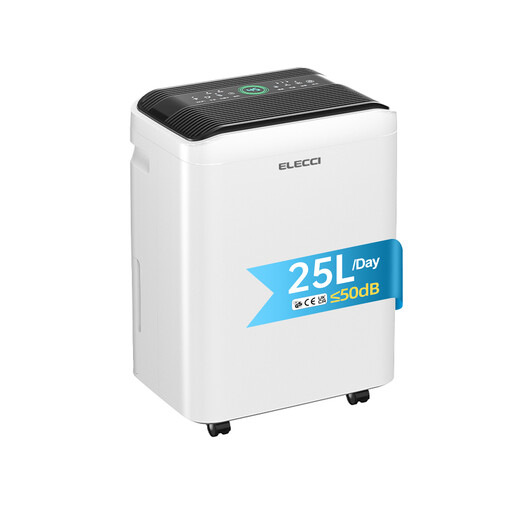
Why this suits this profile: Its stated capacity and large tank make it ideal for cellars, basements, utility rooms and homes with high humidity.
The 4.8 L tank and drainage hose reduce the need for frequent emptying during prolonged use.
25 L/day stated under reference conditions, three speeds, 24-hour timer and automatic defrost.
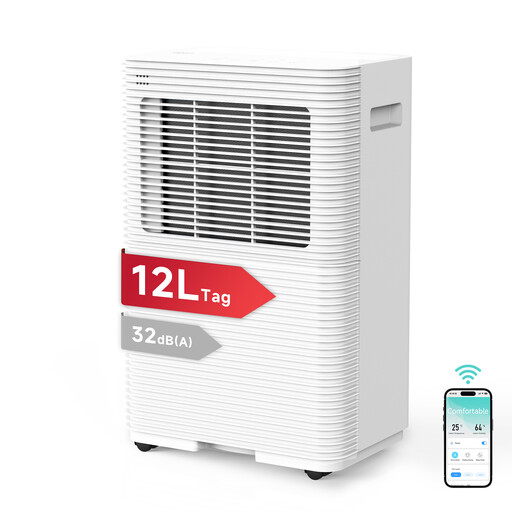
Why this suits this profile: This size is designed for rooms up to 24 m², with a sleep mode and remote control.
Its moderate capacity stops you choosing an oversized appliance for a bedroom or office.
12 L/day stated, 32 dB noise level in sleep mode, 24-hour timer and hose drainage.
We’ve put together a full, real-time selection of products that meet these demanding criteria and European safety standards.
Put it on a flat surface, away from walls and furniture, and make sure the air inlets and outlets aren’t blocked. Keep windows closed while it’s running, unless the manual says otherwise. In a cellar, check that the temperature is within the recommended operating range.
It all depends on the humidity level, temperature and room size. Start by running it for a few hours, then use the hygrostat or timer to stop it running constantly. To dry laundry, group it in a closed room and leave enough space around the appliance.
An absorber like the Rubson can work in a cupboard, small room or space with low humidity. It runs quietly, but its capacity is limited by the refill used. For a cellar, recurring condensation or frequent laundry drying, an electric appliance with continuous drainage will generally be far more practical.