Households replacing their hob
If you often cook with saucepans or frying pans, check that the new hob will work with your cookware and fit your existing installation.


First, replace or add the appliance that covers the cooking tasks you can’t currently do: a hob for saucepans, an oven for dishes that need an oven cavity, a microwave for frequent reheating or a countertop appliance for portions that suit its size. Then check the dimensions and installation requirements, and, for induction, make sure your cookware is compatible. Compare energy use only between appliances used in similar ways.
If you often cook with saucepans or frying pans, check that the new hob will work with your cookware and fit your existing installation.
Make sure the appliance fits the cabinet space, cut-out or worktop area available, and don’t forget to check the size of the dishes you use.
If you already have a cooking appliance, work out whether you need an oven, a microwave for reheating or a countertop appliance for cooking.
Start with the meals you make most often, then check that your chosen appliance can be installed and will accommodate your cookware or dishes.
| Criteria | What to check | Who it matters to |
|---|---|---|
| Cookware compatibility and installation | Check the bases and diameters of your cookware, the cut-out and the model’s connection requirements. Electrolux notes that the accepted diameters vary by hob. | If I’m replacing my hob, I want to make sure my saucepans and the installation are suitable before choosing. Around 31 % of consumers prioritise this compatibility. |
| Available space and practical size | Measure the cabinet space or worktop area, depending on the appliance, then compare these measurements with the dishes you plan to use. | In a kitchen where every bit of space matters, I want to avoid an appliance that leaves no room for the dishes I use regularly. Around 25 % of consumers prioritise a size and capacity that are genuinely useful. |
| The cooking function you need | List the meals you make often, how many cooking zones you need at once and which functions are actually specified for the model. | If my current appliances can’t handle certain meals, I look first for the function I’m missing rather than an appliance that does things I can already do. Around 25 % of consumers put this use first. |
| Electricity consumption | Compare figures for the same type of appliance and similar uses. ADEME provides reference figures in kWh/year for specific cycles; these don’t predict the consumption of every household. | If I cook often, I want to factor in electricity use without comparing appliances used for different types of cooking. Around 19 % of consumers put this criterion first. |
Cookware with an unsuitable base may not work on the hob. Whether the connection is suitable also depends on the model and your existing installation.
Before buying, check your cookware and the accepted diameters in the manual, then check the cut-out and installation requirements.
Replacing some cookware or adapting your installation may add to the cost of changing your hob. Check whether either is needed before finalising your budget.
A built-in oven needs to fit its cabinet space, while a freestanding appliance takes up a separate area on your worktop.
Measure the inside of the cabinet space or the area available, and check the dimensions and installation instructions for the specific model.
For hobs, ADEME gives reference figures of 200 kWh/year for ceramic hobs and 115 kWh/year for induction hobs, based on 409 cycles a year. These indicative figures don’t predict your household’s consumption.
Compare figures like for like, keeping the appliance type, units and calculation basis the same, then factor in how you use your appliance.
The size and features of a particular appliance don’t guarantee that it will suit every dish you cook in the oven.
Before ruling out another cooking option, check the usable capacity and stated functions against the meals you make often.
Worth considering if you’re looking at a compact induction hob, such as the LIT30231C domino hob, listed with two cooking zones and a width of 29 cm.
The AKT8090/NE is an example of an electric ceramic hob with four cooking zones.
The HBA534BS3 and FEL023MS2 illustrate two different formats: a built-in oven and a freestanding microwave.
The Easy Fry Compact EZ145820 is an example of a countertop cooking appliance, with a stated 3-litre basket capacity.
These appliances cover a range of ways to cook at home: a built-in oven, a freestanding microwave, a countertop air fryer, a ceramic hob and an induction hob.
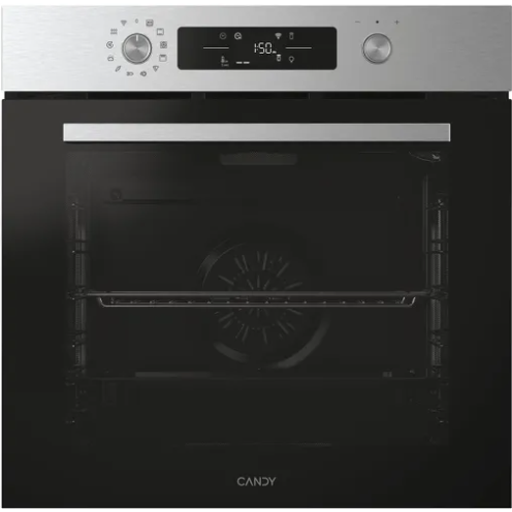 Image unavailable
Worth considering if your meals need a built-in oven cavity.
The model name lists a capacity of 78 L, Air Fry, Wi-Fi, hydrolytic cleaning and an A++ rating.
The specified cabinet space for this model measures 56 × 59 × 56 cm; check the manufacturer’s instructions and your kitchen unit dimensions.
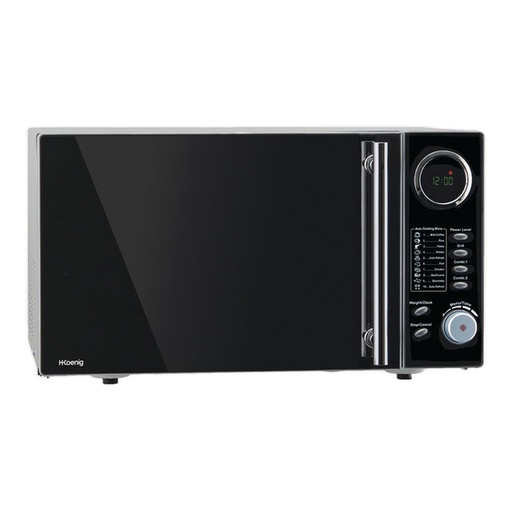 Image unavailable
Worth a look if you’re after a freestanding appliance for reheating and microwave cooking.
The model name lists a power rating of 1000 W and a capacity of 25 L.
It sits on a worktop; the product information recommends cookware suitable for microwave and grill use and lists a maximum setting time of 30 minutes.
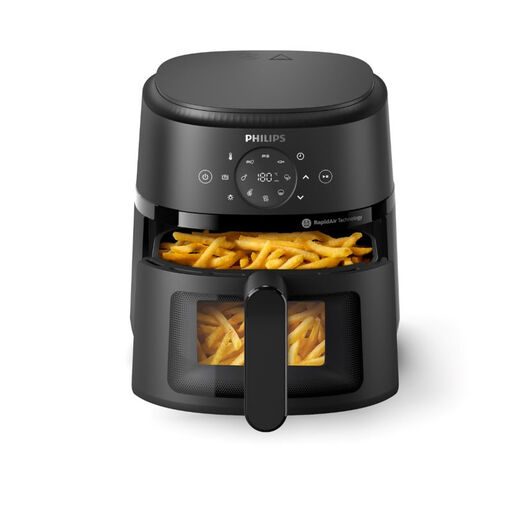 Image unavailable
Worth considering for dishes that suit a countertop cooking basket.
The model name lists a capacity of 3,2 L.
The product information specifies a minimum clearance of 100 mm on each side and a 220–240 V earthed socket; check the instructions before installing.
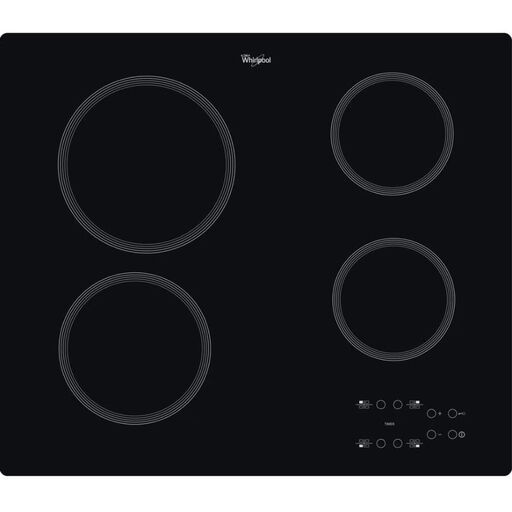 Image unavailable
Worth a look if you’re replacing an electric hob and need several cooking zones.
The model name lists four cooking zones.
The product information requires a hard-wired connection by a professional electrician and advises against using an extension lead or portable socket; check that your installation is suitable.
 Image unavailable
Worth considering if you cook on several zones and your cookware is suitable for induction.
The model name lists four zones and a Boost function.
The product information specifies a cut-out of 565 × 495 mm and a connection without a plug by a qualified electrician; check the instructions before buying.
Not necessarily. Check the base of each item of cookware and the accepted diameters in the manual for your chosen hob; Electrolux notes that these diameters vary by model.
Don’t assume so: Legrand describes a dedicated circuit suitable for an induction hob and a separate dedicated circuit for an oven. Compare your existing installation with the model’s instructions, and have the connection checked if you don’t know its specifications. This can’t confirm remotely whether your home is suitable.
Measure the inside of the cabinet space and check the model’s dimensions and installation instructions. Bosch distinguishes between the oven’s dimensions and those of the space it needs to fit into.
No. The European Commission states that energy labelling applies to domestic ovens, but there is no requirement for an energy label on hobs.
According to France’s Ministry of the Economy and Finance, you can claim under the legal guarantee of conformity from the professional seller for two years for a new product. This is separate from an optional commercial guarantee; keep your proof of purchase.