
Livraison le jour même ou le lendemain

Qualité garantie

Débloquez vos offres de bienvenue: Livraison GRATUITE | Jusqu'à -80 % | 30 jours d'essai gratuits à JoyPlus
Téléchargez l'application
Whether you're looking for school supplies, pencils for a sketchbook, or a set for illustration, the range on offer can quickly become difficult to compare. An attractive package or a long list of shades doesn't necessarily guarantee a tool that's right for your practice.
Here are the main pitfalls to avoid before buying coloured pencils and graphite pencils, along with the criteria to consider when choosing a format that suits your budget and needs.
A set of 72 colours might seem particularly appealing, but it doesn't always meet the needs of a beginner. For learning how to blend, create gradients, or work with values, a smaller assortment of well-distinct shades will often be easier to get to grips with.
Conversely, artists who layer several colours or create portraits may need a more extensive palette. The number of pencils should therefore match the technique you use, not just the price per pencil.
A hexagonal pencil generally won't roll off the table and works well for everyday drawing. A triangular model can help position your fingers correctly, especially for children learning to write. Larger-diameter pencils offer a different grip, which can sometimes be more comfortable for smaller hands.
The shape of the barrel also affects fatigue during long sessions. Check its diameter, whether it has any non-slip grooves, and whether it's compatible with your sharpener.
The hardness, diameter, and composition of the lead directly affect the result. A fine lead is good for details, while a wider lead lets you cover a surface quickly. A very soft lead produces darker areas but also wears out faster.
For HB graphite pencils, it's also worth checking the stated durability of the lead and the quality of the wood. Wood that's difficult to sharpen can cause repeated breakages, meaning you'll have to replace your pencils more often.
The HB grade is a common compromise between hardness and intensity. It's suitable for writing, light sketching, and many school exercises. Harder grades produce lighter lines, while softer leads allow you to achieve more pronounced shadows.
For artistic work, an assortment covering several hardness grades makes it easier to study volumes and create contrast. For technical drawing or note-taking, an HB graphite pencil or a 0.5 mm mechanical pencil can offer a consistent, easy-to-control line.
A 3 mm to 4 mm lead contains more material for colouring and is generally more resistant to breakage than a very fine lead. Children's pencils often have a thicker barrel and a reinforced lead, which reduces interruptions from sharpening.
Watercolour pencils should be used on suitable paper. They can be used dry, then activated with a slightly damp brush. It's best to apply water to the drawing rather than dipping the pencil in water, to protect the wood.
Professional oil-based coloured pencils are particularly well-suited to layering and gradual blending. Wax-based pencils are better for soft areas of colour and a variety of creative activities. In all cases, check the manufacturer's information on pigmentation, lightfastness, and composition.
A metal tin, a wooden box, or a roll protects the tips and makes storage easier. Keep pencils in a dry place, away from excessive heat and direct light. For children under 3, small parts and sharp points pose a choking or injury risk: always follow the safety instructions on the product.
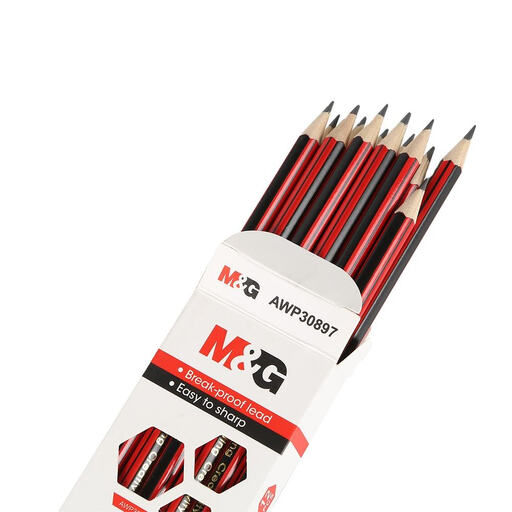
Why this choice suits this profile: This pack of 12 pre-sharpened HB pencils covers everyday needs at school, in the office, or at home, without multiplying the references.
The pack of 12 means you won't run out of pencils quickly. The hexagonal barrel also reduces the risk of them rolling off your desk.
HB lead, natural wood, integrated eraser, and a pack of 12 pencils.
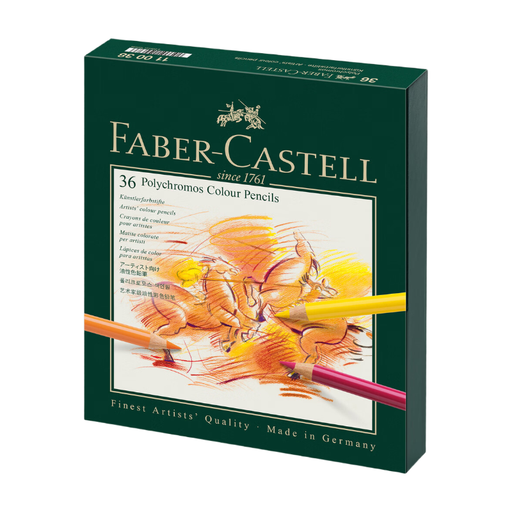
Why this choice suits this profile: This set is aimed at illustrators and colouring enthusiasts who work with layers, blends, and varied shades.
The 36 shades mean you don't have to achieve everything by mixing colours from a smaller set. The box protects the pencils and makes them easy to organise.
36 oil-based lead pencils, stated diameter of 3.8 mm, storage box, and SV bonding process as indicated by the manufacturer.
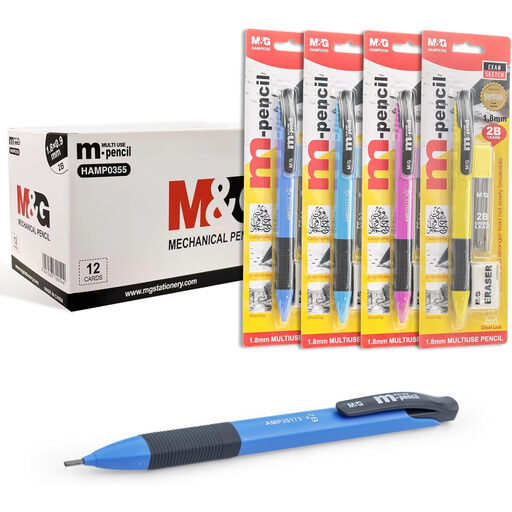
Why this choice suits this profile: This drawing mechanical pencil is suitable for sketching, schoolwork, and uses that require a supply of leads and an eraser.
The set includes 12 tubes of 2B leads and 12 erasers, so you don't have to buy these consumables separately if you draw often.
Mechanical pencil stated with 1.8 mm lead, 2B refills, and erasers included.
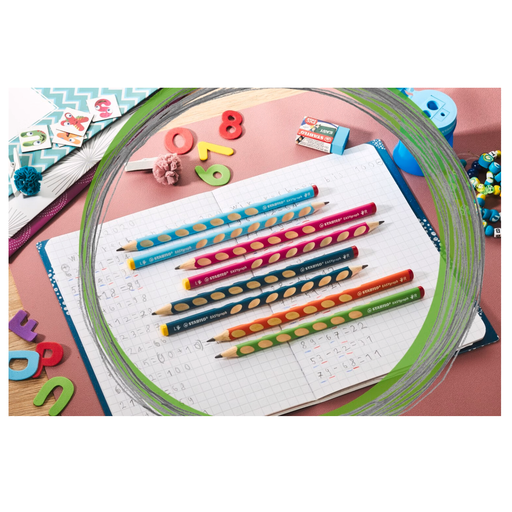
Why this choice suits this profile: The left-handed version has a wide triangular barrel, non-slip grooves, and a yellow tip for quick identification.
The triangular shape and grip zones show where to place your fingers, rather than leaving the child to find the correct position on their own.
3.15 mm graphite lead, HB hardness, six pencils, and wood from sustainably managed forests according to the product sheet.
We've put together a comprehensive, real-time updated selection of products that meet these demanding criteria and European safety regulations.
An HB graphite pencil uses a grey lead for writing, sketching, and shading. A coloured pencil contains a pigmented lead, usually wax or oil-based, which allows you to create areas of colour, blends, and coloured details.
The lifespan depends on how often you use them, the pressure you apply, and how many times you sharpen them. Storing them in a dry place, using a sharpener that matches the lead diameter, and handling them carefully will reduce breakage. Heavily used pencils are usually replaced individually when the tip or barrel becomes too short.
Yes, as long as you clearly distinguish their two uses: dry drawing and activation with water using a brush. Start with little water and use paper that's thick enough to prevent it from buckling. For a child, adult supervision is recommended when using the sharpener and brush.