Whether you're simmering a fragrant curry, thickening a velvety soup, or creating an exotic dessert, coconut milk has become a true pantry staple. But once you're in the grocery aisle, the confusion begins: organic, light, coconut cream… It's not easy to navigate this jungle of labels. Which one will truly elevate your dish??
As a Product Expert for Joybuy, I'm here to guide you. The goal of this guide is simple: to decode the labels and give you the keys to choosing the perfect coconut milk for every recipe, without falling for marketing traps.
How to Choose the Right Coconut Milk??
To make the right choice, two criteria are essential: the fat percentage and the ingredients list. This duo will determine the texture, taste, and therefore the ideal use for your coconut milk.
1. Decode the Fat Percentage
The fat content is the secret to creaminess. The higher it is, the richer and creamier your milk will be. It's that simple.
- Light Coconut Milk (around 5 to 9?% fat)?: Thinner in consistency, it's perfect for lightening up sauces, or for use in soups, smoothies, or marinades. It adds a subtle hint of coconut without the richness of a classic milk.
- Classic Coconut Milk (around 17 to 19?% fat)?: This is the ideal all-rounder, the go-to coconut milk for cooking. Its balance of flavour and creaminess is perfect. It's a must-have for a perfectly creamy coconut milk for curry, velvety soups, or slow-simmered dishes.
- Coconut Cream (over 20?% fat)?: Significantly thicker and richer, coconut cream is the queen of desserts. It's perfect for recipes that require structure, like mousses and ganaches, or as a substitute for traditional whipped cream.
2. Analyse the Ingredients: Organic, Additives, and Simplicity
A quick look at the ingredients list often tells you everything you need to know.
- The Bare Essentials?: Good coconut milk should only contain two things: coconut extract and water. Rule of thumb: the higher the percentage of coconut extract, the more concentrated and flavourful the product will be.
- The
organic coconut milk Option?: The organic label assures you of one thing: the coconuts were grown without synthetic pesticides or chemical fertilisers, in compliance with European regulations. It's a guarantee of quality and healthier farming practices.
- Should You Be Afraid of Additives?? You'll often see guar gum or xanthan gum on the list. Don't panic; these are natural thickeners. Their role?? To stabilise the mixture and prevent the fat from separating from the water (the dreaded 'separation'). The result: a perfectly smooth texture right out of the can.
Our Top Coconut Milk Picks
To put theory into practice, we've put three products to the test, each one a standout in its category.
AROY-D Coconut Milk for Cooking 19%

- Why we chose it?: Its high fat content (19?%) guarantees an unparalleled creaminess, perfect for recreating the rich, velvety texture of classic Asian dishes.
- Key strengths?: An ultra-simple ingredients list (60?% coconut extract, water, and that's it) and a creamy texture that doesn't separate when heated. It's the perfect partner for dishes that need to simmer.
- Who is it for?? For purists who want an authentic result in their curries, Thai soups (like Tom Kha Gai), and decadent desserts that demand a rich, enveloping texture.
Valcom Organic Coconut Milk
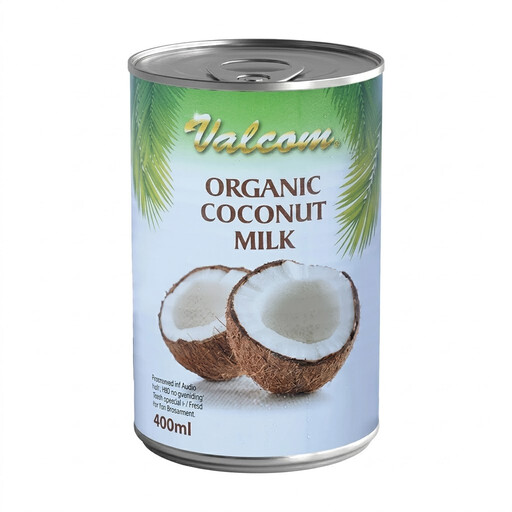
- Why we chose it?: For its organic certification, which guarantees environmentally friendly farming, and for the origin of its coconuts (Sri Lanka).
- Key strengths?: With 17.4?% fat, it's the Swiss Army knife of our selection. The touch of guar gum (a natural thickener) ensures a perfectly smooth and consistent texture, with no unpleasant surprises upon opening.
- Who is it for?? For anyone who makes organic a priority and is looking for an all-purpose organic coconut milk that is equally at home in savoury and sweet dishes.
CHAOKOH Light Coconut Milk 6%
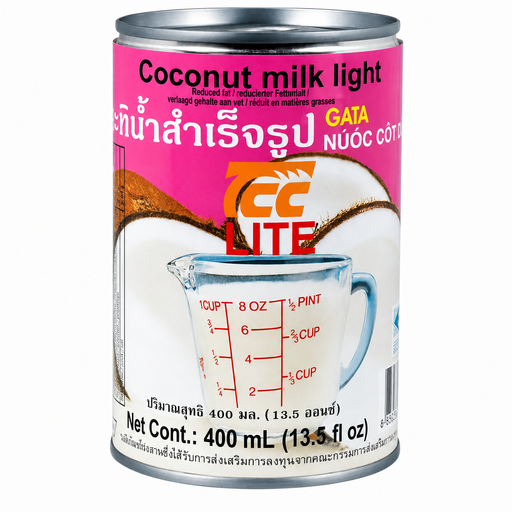
- Why we chose it?: This is the featherweight version in our lineup. With only 6.3?% fat, it's the perfect alternative for lighter cooking without sacrificing flavour.
- Key strengths?: It brings that great coconut taste to your dishes without weighing them down. Its ingredients list is minimalist: just coconut extract and water, with no thickeners.
- Who is it for?? For those who want a light coconut milk to thin out a sauce, make a light soup, a smoothie, or a marinade, without the richness of a classic coconut milk.
Looking for Other Options??
Our selection covers the main needs, but the world of coconut milk is vast?! Every recipe is unique, and your personal taste will always make the difference.
To explore other brands, sizes, or fat percentages, take a look at our complete range.
? Explore Our Full Range of Coconut Milk
Frequently Asked Questions About Coconut Milk
What's the difference between coconut milk and coconut cream??
The main difference lies in the fat concentration. To put it simply, coconut milk is a blend of pressed coconut pulp and water. Coconut cream, on the other hand, comes from the first pressing: it contains much less water, making it more concentrated in fat (often over 20?%), and therefore much thicker and richer.
Can you use light coconut milk for a curry??
Technically, yes. But be warned, the result will be completely different. Your curry will be much more liquid and will lose its creaminess. To achieve the velvety, coating texture of a truly great curry, nothing beats a classic coconut milk with a fat content between 17 and 19?%.
How should you store coconut milk after opening??
Once the can or carton is opened, coconut milk is perishable. The best practice: immediately transfer the remainder to an airtight glass or plastic container (never in the metal can!). Store it in the refrigerator and use it within 3 to 4 days. Don't be surprised if it thickens in the cold; this is completely normal.


