
Livraison le jour même ou le lendemain

Qualité garantie

Débloquez vos offres de bienvenue: Livraison GRATUITE | Jusqu'à -80 % | 30 jours d'essai gratuits à JoyPlus
Téléchargez l'application
Upgrading your car to LEDs promises better visibility and an instantly modernised look. The problem? The market is a jungle of options where it's easy to fall into expensive traps that compromise your safety and can even cause you to fail your vehicle inspection. As a product expert for Joybuy, my mission is to demystify the process for you. Here's how to make the right choice and avoid common rookie mistakes.
Before you start, keep these three pitfalls in mind, which too often turn a good idea into a real headache.
To avoid making a mistake, forget the marketing hype and focus on these three technical parameters.
This is fundamental. Each socket in your car (low beams, high beams, turn signals, dome light, etc.) has its own specific bulb type. The most common references for headlights are H7, H4, H1, HB3, and HB4. For parking lights or the licence plate, you'll often find W5W (T10). If your car is equipped with factory Xenon headlights, the references will be more like D1S, D2S, or D4S.
The smart move?: Before any purchase, check your vehicle's manual or, even better, remove the bulb you want to replace to read its reference number. A car LED kit with the wrong base is a 100% useless purchase.
The Canbus (Controller Area Network) is like your car's electronic brain. If your car is less than 15 years old, it's almost certainly equipped with one. To avoid annoying error messages or flickering worthy of a Christmas tree, you absolutely need an error-free Canbus LED bulb. These models integrate a resistor that mimics the power consumption of a classic halogen bulb, thus tricking the onboard computer.
Replacing a halogen bulb with an LED shouldn't come at the expense of safety. A good LED bulb isn't just powerful; it must perfectly replicate the geometry of the original beam pattern. The goal is to project light exactly where it's needed, with a sharp cut-off line to never dazzle other drivers. Models designed with a "1:1" ratio (same size and LED chip position as the halogen filament) are generally a safe bet.
As for colour, it's measured in Kelvins (K):
Rather than just a list of products, we've matched our recommendations to specific user profiles. Find the one that fits you!
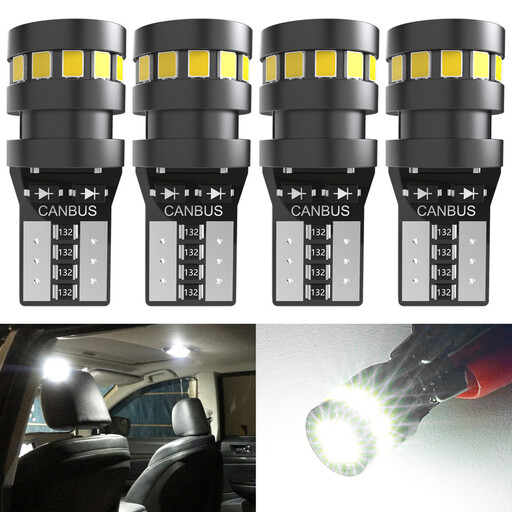
Why we chose it : The ideal entry point for upgrading to LEDs without breaking the bank or overcomplicating things. Perfect for interior lighting (dome light, glove box) or the licence plate, where the effect is immediate and the installation is risk-free.
Its integrated error-free Canbus system is designed for most vehicles. It spares you the classic trap of a dashboard error message, especially for a simple application like interior lighting.
A "plug-and-play" installation that literally takes seconds. Its aluminium body ensures better heat dissipation than a plastic bulb, guaranteeing a longer lifespan.
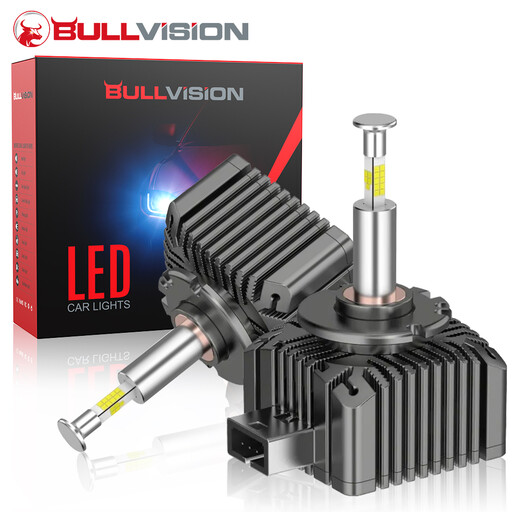
Why we chose it : For those who want to swap their original Xenon bulbs (like D4S) for a higher-performing, more durable LED solution, without making any compromises on beam quality or reliability.
Its 1:1 design compared to the original bulb guarantees a perfect beam pattern and eliminates the risk of dazzling others. The integrated fan (10,000 RPM) tackles the overheating problem head-on.
99% advertised Canbus compatibility and active cooling that promises a record-breaking lifespan (over 50,000 hours, according to the manufacturer).
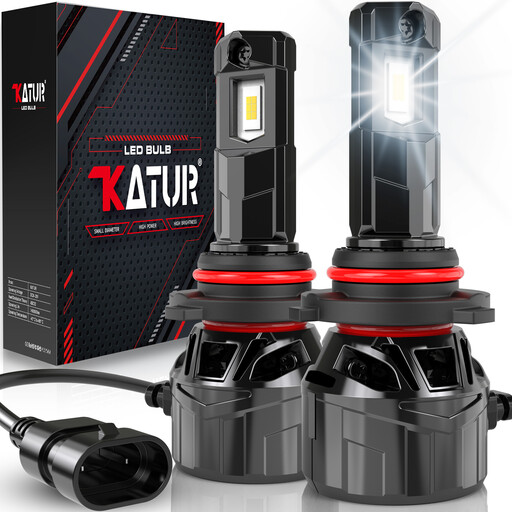
Why we chose it : Designed for someone who just needs to replace a simple HB3 halogen bulb and wants to upgrade to LED without getting into complex modifications of the headlight housing or dust cover.
Its "Mini Size 1:1" format is its best feature. It eliminates the very frustrating risk of ending up with an LED bulb that's too big to fit inside the headlight housing.
The lack of an external driver radically simplifies installation. Its cooling system, which combines a fan and copper heat pipes, is designed to efficiently dissipate heat and maximise lifespan.
Don't worry. If you need another type of bulb, like a D4S, we've prepared a full selection of products that meet our quality standards.
Regulations on this are strict and vary by region. To be 100% legal, the entire headlight unit must be approved for LEDs, not just the bulb. Therefore, a simple replacement (or "retrofit") is not technically permitted for road use in many places. In practice, however, they are often tolerated during vehicle inspections if the car LED kit is high-quality, the beam is correctly adjusted to avoid dazzling other drivers, and the colour remains white (up to 6500K). Caution is advised, but a well-done installation usually passes without issue.
It's simple: if your car was manufactured after 2005-2007, it's very likely to be multiplexed (with a Canbus system). The signs of incompatibility are easy to spot: a "bulb out" warning on the dashboard, or the bulb flickering. To avoid these hassles, choosing an error-free Canbus LED model is the peaceful solution.
Absolutely not—this is the most persistent misconception! The quality of lighting isn't just about raw power in lumens. What matters is the precision of the beam pattern. A 15,000-lumen bulb that shines light everywhere and nowhere (a diffuse beam) will be less effective and more dangerous than an 8,000-lumen bulb with a sharp, uniform beam that respects the cut-off line to avoid glare. Remember this: beam quality always trumps light quantity.