
Livraison le jour même ou le lendemain

Qualité garantie

Débloquez vos offres de bienvenue: Livraison GRATUITE | Jusqu'à -80 % | 30 jours d'essai gratuits à JoyPlus
Téléchargez l'application
Upgrading to LEDs to modernise your car's lighting promises a more current look and improved safety. But be warned: the project can quickly become a headache. Caught between manufacturer promises and harsh technical realities, many drivers end up with incompatible or even illegal headlights.
My role, as a product expert at Joybuy, is to guide you through this jungle. Together, let's break down the pitfalls to avoid and the key points to check for a successful purchase.
Before you fall for a stunning design, it's best to know the most common headaches that can turn a great deal into a wasted expense.
To avoid buyer's remorse and achieve a flawless result, here are the three technical points you absolutely must verify.
This is THE non-negotiable point. Before even eyeing the design, identify the type of headlights originally fitted to your car:
Scrutinise the product description to verify compatibility with your exact model, year, and trim level. A reputable seller will always specify whether the headlight replaces a halogen or xenon version.
A good LED automotive light isn't just about raw lumen output. The decisive factor is the sharp beam cut-off (the famous cut-off line). A well-defined beam illuminates the road, not the eyes of oncoming drivers. Favour projector-style models, which focus the light with precision. And of course, the presence of the ECE mark (or equivalent local certification) remains the essential ticket for safe road use.
Modern headlights are true Swiss Army knives and often integrate several functions:
Double-check that all these functions are compatible with your vehicle's electrical harness. Be aware that installing a complete LED headlight assembly almost always requires removing the front bumper. If the task seems daunting, consider budgeting for a professional installation.
Here are a few models that check all the boxes, designed for different needs and vehicles.
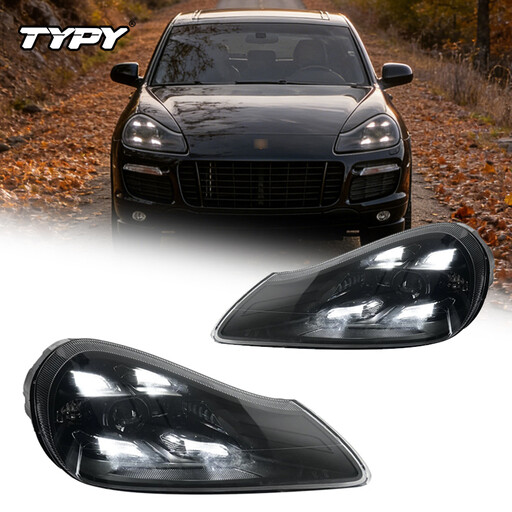
Why this model? Perfect for giving a first-generation Porsche Cayenne (957) a facelift with a look inspired by recent models, while respecting its original lines.
Custom-designed for the Cayenne 957 (2007-2010), it virtually eliminates any risk of physical or wiring incompatibility. It's a direct replacement for the original unit.
It incorporates a Matrix LED-style design and modern daytime running lights into a single unit. The result: a radical and perfectly integrated aesthetic transformation.
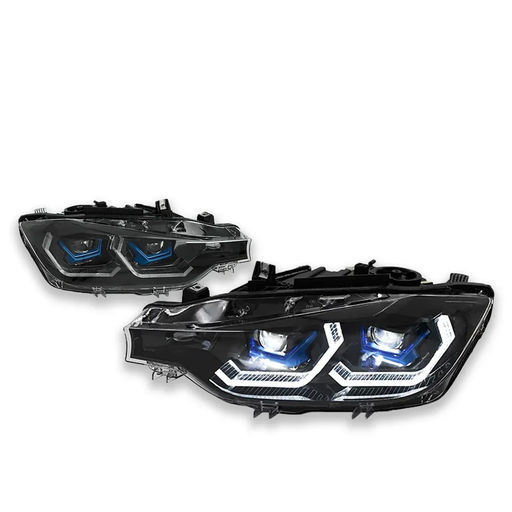
Why this model? For the driver of a BMW F30 (a bestseller!), who wants a reliable upgrade that incorporates the latest trends: dynamic turn signals and sharp-looking daytime running lights.
The product page is transparent about compatibility (F30/F35, 2012-2019) and doesn't hide potential issues (coding sometimes needed if the car has factory AFS). You know what to expect.
An all-in-one solution (low beam, high beam, DRL, sequential turn signal) that gives the front end a real facelift. Its IP67 rating is a guarantee of longevity against the elements.
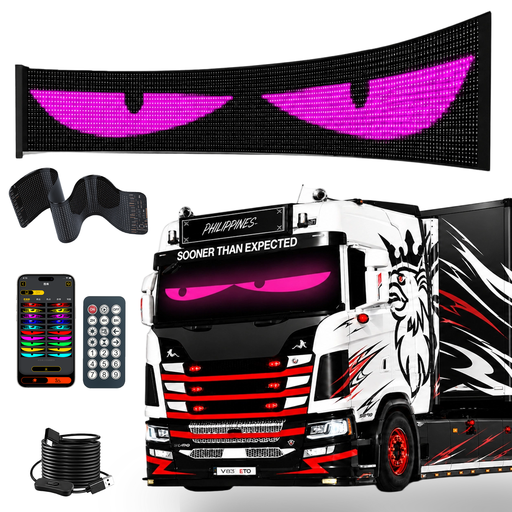
Why this product? For those who see beyond simple lighting and want to turn their car into a canvas for self-expression. Ideal for car meets and tuning fans looking for a head-turning look.
This isn't a headlight, but a cosmetic accessory. It therefore bypasses all the electronic compatibility headaches. Its installation is universal (simple USB plug) and its purpose is purely visual.
Full control via an app and remote lets you display text, patterns, and RGB animations at will. Flexible and waterproof (IP65), it's ready for any creative installation you can dream up.
Explore our full selection of products that meet our strict quality and compliance criteria.
Are aftermarket LED headlights road-legal? It all depends on their certification. To be used on public roads, the headlight must carry the ECE approval mark (e.g., E1, E4...). Without this mark, its use is restricted to racetracks or private property. It will fail a technical inspection regardless. Always check for this before buying.
Should I have them professionally installed? It's highly recommended. Installing a complete LED headlight assembly often involves removing the bumper, mastering the wiring, and sometimes "coding" the vehicle. A professional will guarantee a secure installation, a perfect seal, and, crucially, a properly aligned beam to avoid dazzling other road users.
Will I get a dashboard error? It's a risk, especially on German cars. The onboard computer (OBC) interprets the low power consumption of LEDs as a faulty bulb and triggers a warning light. Fortunately, there are solutions: install an error-cancelling module (CAN bus decoder), often included with the kit, or have the car coded with a diagnostic tool to accept its new eyes.