
Livraison le jour même ou le lendemain

Qualité garantie

Débloquez vos offres de bienvenue: Livraison GRATUITE | Jusqu'à -80 % | 30 jours d'essai gratuits à JoyPlus
Téléchargez l'application
Buying a spool of 1.75 mm 1 kg PLA filament for your 3D printer might seem straightforward. Yet one poorly chosen product can lead to uneven prints, disappointing colours, or a spool that’s a pain to use. Whether you’re a hobbyist, a student, a maker, or a prototyping professional in the UK, a few simple checks are all it takes to avoid nasty surprises.
A claim like “print speeds up to 300 mm/s” usually refers to a very specific setup: nozzle type, volumetric flow rate, temperature, cooling, and compatible printer. On a standard FDM machine, that figure doesn’t guarantee a clean result at all.
A high-speed PLA filament can be a good fit with a modern printer, but first check the maximum flow rate your extruder and nozzle can handle. On an entry-level machine, a Basic PLA used at moderate speed will often be far easier to control.
PLA Silk, matte PLA, and metallic shades change the visual appearance, but they can also affect how the filament behaves during printing. A glossy filament may lose some of its effect if the walls are printed too quickly. A matte finish hides layer lines better, but may need different settings depending on the brand.
So your choice should start with what you’re making: a decorative figurine, a functional part, a prototype, a vase, or an object to be painted.
Even a good 1 kg PLA spool can become difficult to print with if it has absorbed moisture or if the filament has tangled on the spool. The result: under-extrusion, extruder clicking, and incomplete layers.
Choose a spool that’s vacuum-packed with a desiccant sachet, then store it in an airtight bag after each use. Also remember to feed the filament end into the small hole provided on the spool to prevent knots.
For an FDM printer designed for 1.75 mm 3D filament, the diameter must be clearly stated. Too much variation can disrupt flow and compromise layer consistency.
Some products claim a tolerance of ± 0.02 mm, like the JOYBUY x ANYCUBIC Basic PLA filaments featured in this selection. This spec helps you compare product pages, but it doesn’t replace the need to adjust temperature and flow rate for your own machine.
PLA is valued for its ease of 3D printing, low shrinkage, and limited warping compared to more technical materials. However, the recommended temperature varies depending on the formulation, colour, and print speed.
Start with the values printed on the packaging, then run a small temperature tower if needed. Keep an eye on:
Silk PLAs often require slower outer walls to keep their glossy finish. As for PLA, it isn’t designed for parts exposed to high temperatures for long periods. For outdoor or demanding mechanical use, another material will usually be more suitable.
A 1 kg spool of FDM printer filament is ideal for regular users. It saves you from buying lots of small packs and makes project planning easier. To work out the cost of a part, factor in the filament weight shown by your slicer, plus supports and any test prints.
Coloured PLA can reduce the need for painting and finishing, but the colour you see on screen may look different under indoor lighting. For decorative objects, choose the finish first, and only then the colour.
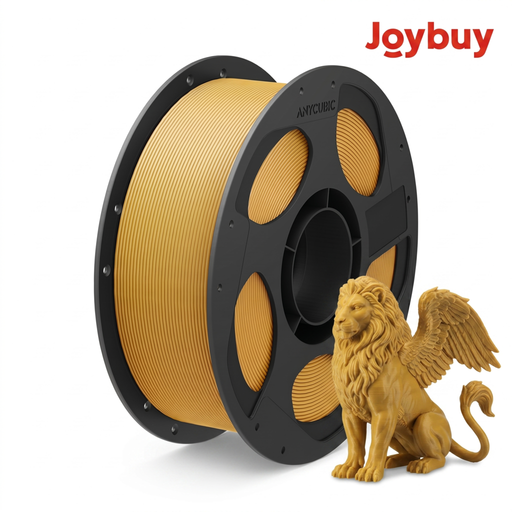
Why this suits this profile: With its 1.75 mm diameter and stated tolerance of ± 0.02 mm, this filament gives you simple benchmarks to start with a compatible FDM printer.
The product page mentions a Basic PLA formulation designed for smooth extrusion and low warping, without requiring a high-speed printer.
A 1 kg format, 1.75 mm diameter, and a gold shade suitable for decorative models.
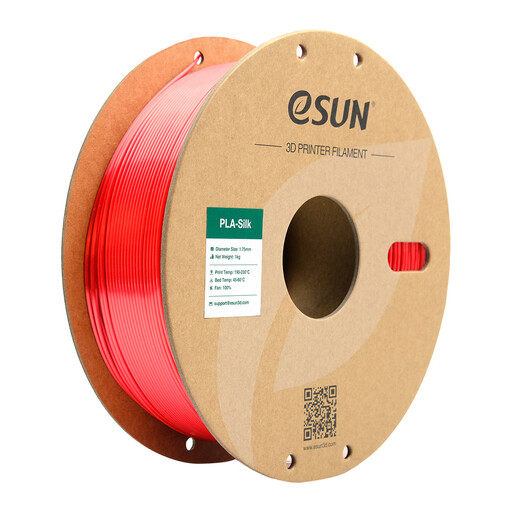
Why this suits this profile: Its satin texture is ideal for vases, figurines, and artistic creations where surface finish matters as much as the shape.
The product page notes that too high a wall speed can reduce the gloss. A useful detail so you don’t confuse a Silk finish with fast printing.
A glossy finish, vacuum-packed packaging mentioned, and a 1 kg spool.

Why this suits this profile: This product is aimed at users with a fast printer who regularly make prototypes, accessories, or batch parts.
The stated values — up to 35 mm³/s flow rate and 300 mm/s speed — apply to specific conditions. You’ll need to confirm them with your own printer.
A formulation stated for high speed, a 1 kg format, and a red colour.
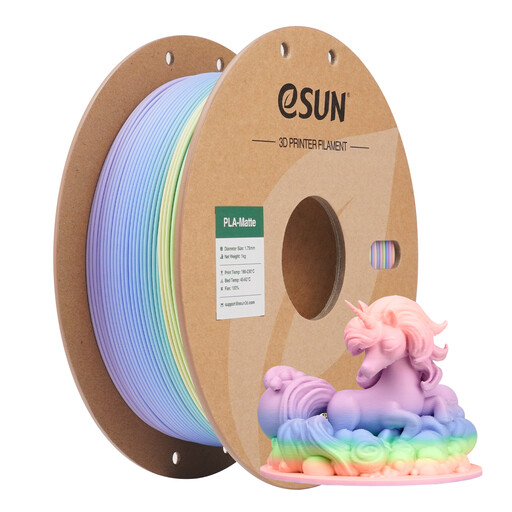
Why this suits this profile: Its colour transitions and matte surface are ideal for creative objects, figurines, and DIY projects, without having to manually swap spools.
The finish was chosen for its visual appeal, not for a speed or strength promise that wouldn’t suit PLA.
A matte texture, a colour gradient, and stated compatibility with FDM 3D printers.
We’ve put together a full, real-time selection of products that meet these demanding criteria, while also taking European safety regulations into account.
It depends on the formulation, colour, and printer. Start with the range printed on the spool, then adjust in small steps. A temperature that’s too low can reduce layer adhesion; a temperature that’s too high can increase stringing and blobs.
The lifespan depends on how often you print and the weight of your models. To keep the filament in good condition, store the spool in a dry place, away from dust and heat. If the PLA becomes brittle or produces uneven extrusion, drying it according to the manufacturer’s instructions may help.
No. Check that your printer uses 1.75 mm filament, that it supports PLA, and that the spool diameter is compatible with its holder. Also check the nozzle diameter, whether you have a heated bed, and the profiles available in your slicer software.