Parents comparing recipes
You want to check the ingredients and nutritional information per 100 g, particularly the sugars, rather than choosing based on the packaging alone.


To hand out chocolate to several children without breaking it on the spot, choose mini bars, bite-sized pieces or individually wrapped portions. If an adult can prepare the portions, a multipack of bars is also a good option. Whatever the format, check the allergens on the exact product and compare the sugars per 100 g of similar recipes.
You want to check the ingredients and nutritional information per 100 g, particularly the sugars, rather than choosing based on the packaging alone.
You’re preparing a snack for a group whose dietary requirements may rule out certain recipes. Check the ingredients list and any ‘may contain’ warnings on each product you’re considering.
You want to count the portions before handing them out, and need to choose between ready-separated portions and bars that need preparing in advance.
For a shared snack, first rule out any recipes that don’t meet the group’s needs. Then compare the ingredients and choose a format that suits how you’ll serve the chocolate.
| Criteria | What to check | Who is it for? |
|---|---|---|
| Nutritional composition | Compare sugars and other nutritional values per 100 g across similar recipes, then decide how much to serve. | When choosing a recipe for a snack, I want to compare its nutritional composition before deciding on portions. Around 42% of consumers would make this their top priority. |
| Allergens | Check the allergens highlighted in the ingredients list and any ‘may contain’ warnings on the exact packet. | If a child in the group needs to avoid an ingredient, the recipe may be unsuitable whatever its format. Around 33% of consumers would make checking allergens their priority. |
| Serving | Check the number of pieces, how they’re packaged and the total weight. Plan to portion bars before serving. | To serve several children without breaking a bar on the spot, I look for portions that are easy to count. Serving would be the top priority for around 25% of consumers. |
According to Santé publique France, displaying Nutri-Score is voluntary. If it’s shown, that doesn’t replace checking the sugars, ingredients and allergens; if it’s not shown, that alone doesn’t mean a product is non-compliant.
Compare the nutritional values per 100 g and check the ingredients list. If Nutri-Score appears on the packet, use it as additional information.
Recipes vary: Carrefour France product listings mention milk and soya in Milka mini bars, and hazelnuts and almonds in Côte d’Or praline bites. You can’t tell which allergens a product contains from its format.
Check the labelling on the exact packet before serving it to the group, and don’t assume that one recipe’s ingredients apply to an entire brand.
A bag of bites, a box of individually wrapped pieces and a multipack of bars are all served differently. The total weight also doesn’t tell you how many pieces are ready to hand out.
Check the weight, the stated number of pieces and how much preparation is needed to serve the portions you have in mind.
Carrefour France lists a bag of 20 milk chocolate mini bars, weighing 200 g in total.
The formats listed by Carrefour France include a box of eight bags of praline bites, weighing 200 g in total, and a multipack of two hazelnut bars, each weighing 180 g.
Carrefour France lists, among other options, a 140 g bag of chocolate balls and a multipack of three 100 g milk chocolate bars.
These products show a few different ways to serve chocolate at snack time: a sharing bag, individually wrapped portions and bars to portion yourself. The selection also includes chocolate sweets, which aren’t bars.
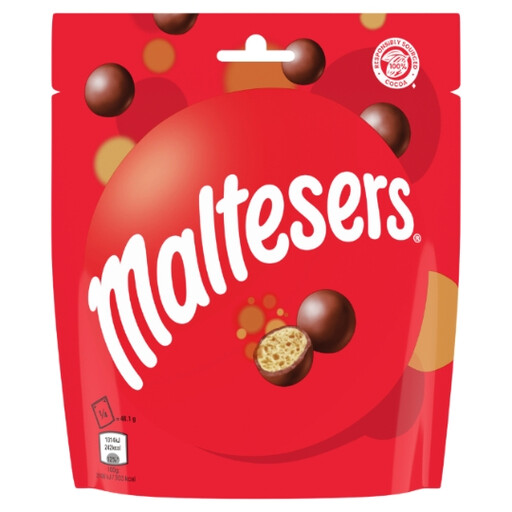 Image unavailable
A bag of chocolate sweets to share at a group snack; the number of pieces isn’t specified. The product information gives 53 g of sugars per 100 g and lists milk, wheat and barley malt extract, among other ingredients. The stated weight varies between 192 g and 192.5 g depending on the information shown, so check the packet you buy.
 Image unavailable
This multipack of three bars is a good choice if an adult can prepare the portions before handing them out; they aren’t individually wrapped, ready-to-serve portions. The product information gives 60 g of sugars per 100 g and lists almonds. Check the allergens on the exact packet.
 Image unavailable
The six tubes of chocolate sweets make it easy to count the portions to hand out; this isn’t a bar format. The product information lists milk and gluten, as well as possible traces of other allergens depending on the production site. Check the allergens and nutritional values on the packet before choosing.
 Image unavailable
This single bar needs to be broken into pieces before serving; it isn’t individually wrapped in portions. The product information gives 15 g of sugars per 100 g. If a child has an allergy, check the labelling on the exact packet rather than inferring the ingredients from the bar’s name.
 Image unavailable
The nine individually wrapped mini bars are easy to count for a group snack, but they’re chocolate and wafer bars rather than traditional chocolate bars. The ingredients include milk, wheat and soya, among other things. Check the allergens, sugars and saturated fat on the packet’s nutrition panel.
No. According to Santé publique France, displaying Nutri-Score is voluntary. The DGCCRF states that nutrition labelling is mandatory for most pre-packed foods. Check the sugars and fats per 100 g in particular, whether or not Nutri-Score is displayed.
No. The French Ministry of the Economy describes this levy as applying to sugary drinks, not chocolate bars or bags of solid chocolate. Sugar content is still worth comparing across recipes, regardless of this tax.
Read the ingredients list and any ‘may contain’ warnings on every packet intended for the group. The DGCCRF states that allergenic ingredients must be highlighted in the ingredients list on pre-packed foods. Don’t assume that two recipes from the same brand have the same ingredients.