Parents preparing lunchboxes
Separate bars make it easier to spread your supply over several days. Before adding chocolate to a lunchbox, check the weight of each bar, how much you plan to serve and the allergens in the recipe you’ve bought.


If you’re sharing chocolate between several lunchboxes or over several days, choose a multipack by checking the number of bars and the weight of each one first. Several 100 g bars are easier to portion out than one 200 g bar. A larger pack may work well for sharing at home, but the pack size alone doesn’t tell you how much to serve. Check the exact recipe, particularly the sugars per 100 g, ingredients and allergens.
Separate bars make it easier to spread your supply over several days. Before adding chocolate to a lunchbox, check the weight of each bar, how much you plan to serve and the allergens in the recipe you’ve bought.
The number of bars and their individual weights matter just as much as the total weight of the multipack. They determine how much you can keep sealed until the next time you want to share.
Compare the nutritional values per 100 g and read the ingredients list for each product. Santé publique France explains that displaying the Nutri-Score is voluntary; seeing it on pack doesn’t replace reading the label.
A multipack of 100 g bars makes it easier to share between days or people; a 200 g bar needs more portioning for a lunchbox. In either case, a bar’s weight isn’t automatically a serving size.
| What to consider | What to check | Who is it for? |
|---|---|---|
| How the bars are divided | Number of separate bars and the weight of each one; number of portions stated, if available. | When preparing snacks for several days, I want to be able to keep some bars sealed and decide how much to put in each lunchbox. This ease of portioning would be the main priority for around 42% of shoppers. |
| Recipe and label | Sugars per 100 g, ingredients list and allergens for the exact product. | If a recipe needs to meet specific requirements, I need to check its label rather than rely on the brand name. Around 33% of shoppers would put nutritional information and allergens first when choosing. |
| How much to keep | Total weight of the multipack and how many bars will still be sealed after opening the first one. | At home, I’m looking for a multipack that suits how often we share chocolate, without having to open the whole supply at once. Managing how much we keep would be the top priority for around 25% of shoppers. |
A pack of 3 × 200 g contains several bars, but you may still need to portion each one for a lunchbox.
Check the weight of each bar and decide how much to add to each snack.
According to Santé publique France, producers display it voluntarily. A score on pack doesn’t tell you everything about the ingredients or allergens.
Also read the nutritional information and ingredients list for the recipe you choose.
Ingredients and possible traces vary by product. Information on a milk chocolate bar won’t necessarily apply to every other recipe from the same brand.
If you have an allergy or specific requirements for a lunchbox, check the packaging of the product you’ll actually be using.
Worth considering if you’re looking for a larger multipack: Auchan lists a milk chocolate product in a 3 × 200 g pack, for example.
A single bar may suit you if you’d rather choose a recipe without building up a large supply. Lindt France lists L’Authentique Lait in a 100 g bar, for example.
The company offers a range of chocolate recipes, including Galak. Choose by checking the specific product rather than relying on the manufacturer’s name alone.
The Carrefour range we checked includes 240 g milk chocolate squares and a 200 g L’Original bar, among other products.
The Carrefour range we checked includes Classic’ milk chocolate bars in 2 × 100 g and 3 × 100 g multipacks.
E.Leclerc lists milk chocolate in a 3 × 100 g pack and a milk-filled recipe in a 2 × 100 g pack, among other products.
These products include two Milka multipacks of 100 g bars and a Toblerone multipack of 50 g bars. The number of pieces can help you decide how to share the chocolate. For a lunchbox, also check how much to serve and read the recipe’s label.
 Image unavailable
To share your supply between several days or people, this multipack contains three 100 g bars, weighing 300 g in total. A whole bar isn’t automatically the right serving size; check the sugars and allergens on the packaging.
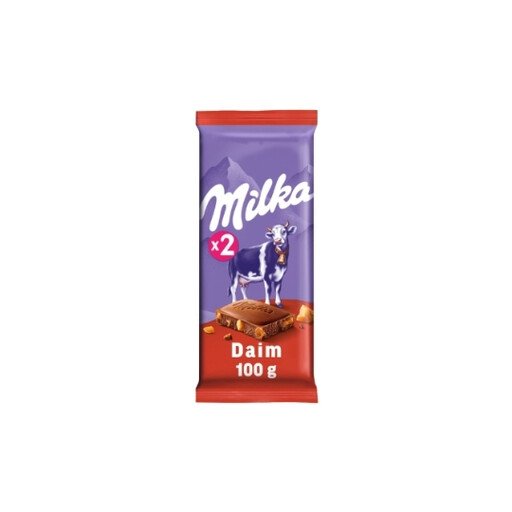 Image unavailable
If two separate bars suit your sharing occasions, this multipack contains 2 × 100 g, weighing 200 g in total. Decide how much to serve and read the ingredients and allergens for this product before adding it to a lunchbox.
 Image unavailable
If you prefer bars to traditional chocolate slabs, this multipack contains three 50 g bars, weighing 150 g in total. Check the packaging to see how the bars are wrapped, and read the ingredients and allergens for the recipe.
Check the weight of the bar and decide how much to serve. Then read the sugars per 100 g, ingredients and allergens on the packaging for the exact product. A multipack of several bars doesn’t necessarily contain individually portioned servings.
No. Santé publique France says producers can display it voluntarily. If it appears on a bar, also check its nutritional information and ingredients list.
The tax on sugary drinks described by the French Ministry of the Economy in 2025 applies to drinks, not chocolate bars. When choosing a bar, check the sugar content in the nutritional declaration.
Not necessarily, if the date shown is a best-before date, or DDM. Anses distinguishes this from a use-by date. Check the exact wording, the condition of the packaging and how the chocolate has been stored.
Follow the instructions on the packaging for each product. The listing for the Milka bar we checked at Auchan says to store it away from heat and moisture. Once a bar is open, check the instructions for that specific product.