Anyone serving several guests
You might want to open the biscuits as you go, or arrange them straight on the table. Individually wrapped portions are handy for the first option, but they do mean more packaging.


For coffee with friends, choose a format that suits how you’ll serve the biscuits: individually wrapped portions let you open only some of them, while a larger pack can be arranged on a plate. If you’re looking for chocolate on the outside of the biscuit, check that it’s described as “chocolate-coated” or “covered”, then check the allergens and nutritional information on the exact pack. Nutri-Score is optional in France, according to the DGCCRF, and doesn’t replace this information.
You might want to open the biscuits as you go, or arrange them straight on the table. Individually wrapped portions are handy for the first option, but they do mean more packaging.
You’re looking for an outer layer of chocolate, rather than a filled centre. Look for “chocolate-coated” or “covered” on the pack to tell these recipes apart before you buy.
If a guest needs to avoid certain ingredients, keep the pack handy so you can check the allergens and any precautionary “may contain” statements. The nutrition table also lets you compare products per 100 g.
When serving coffee to a group, start with how you’ll serve the biscuits, then check how the chocolate features in the recipe and read the label on the pack you plan to open.
| What to consider | What to check | Who is it for? |
|---|---|---|
| Sharing format | The number of individual packets and how much you’ll need to open for your guests. | If I’m serving coffee to a group and don’t want to open the whole pack, I prefer individually wrapped portions; around 45% of consumers put this serving need first. |
| Chocolate coating | Look for “chocolate-coated” or “covered” in the product name and description. | If I want chocolate on the outside of the biscuit, a filled centre won’t satisfy the same craving; around 33% of consumers put this texture preference first. |
| Label | Allergens, any precautionary “may contain” statements and nutritional information per 100 g. | Before serving a guest with an allergy, I need to check the exact pack; around 22% of consumers prioritise reading the label and checking nutritional information. |
In France, the DGCCRF describes Nutri-Score as a voluntary label. Its presence alone doesn’t tell you what the ingredients or allergens are.
If it appears on the pack, use it as an extra guide and also read the ingredients list, allergen information and nutritional values per 100 g.
A filling is inside the biscuit, while a coating covers the outside. BN, for example, describes one of its products as a chocolate-filled snack biscuit; that description alone doesn’t mean it’s chocolate-coated.
If an outer layer matters to you, look for an explicit “chocolate-coated” or “covered” description on the product you choose.
Recipes listed by St Michel and Carrefour France include ingredients such as wheat, milk or soya; some also warn that other allergens may be present. These statements vary by product.
Ask guests what they need to avoid and keep the exact packaging until you’ve served the biscuits.
Heat can affect the appearance of the chocolate before you serve the biscuits.
Follow the storage instructions on the pack you’ve bought and keep it away from heat before serving with coffee.
The 180 g soft galette with a milk chocolate coating comes in individually wrapped portions, making it a handy option for serving.
The Pépito milk chocolate-coated biscuits listed by Carrefour France combine a crunchy biscuit with an outer chocolate coating.
The 200 g product described by Carrefour France is labelled as a biscuit coated in milk chocolate.
BN describes one of its snack biscuits as chocolate-filled. The chocolate is presented differently, so it may suit you if an outer coating isn’t essential.
For coffee with friends, these options include wafer-thin crêpes, biscuit sticks and chocolate biscuits in a range of formats. If you specifically want an outer chocolate coating, check that it’s present on the pack you choose, particularly for PEPITO.
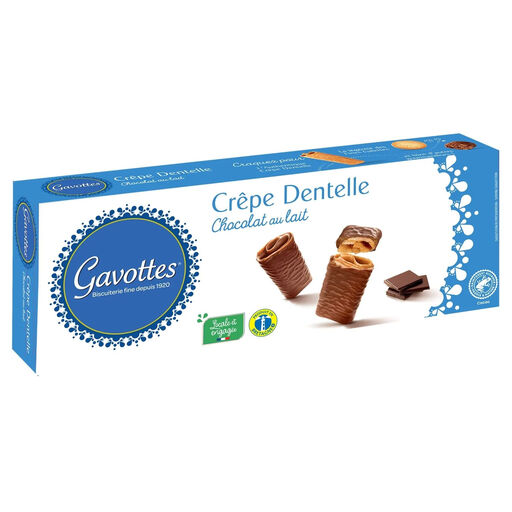 Image unavailable
These milk chocolate wafer-thin crêpes can be served with coffee. The title states that it’s a pack of 6 and weighs 90 g: check the packaging to see whether this weight is for each item or the whole pack, and check the allergens before serving.
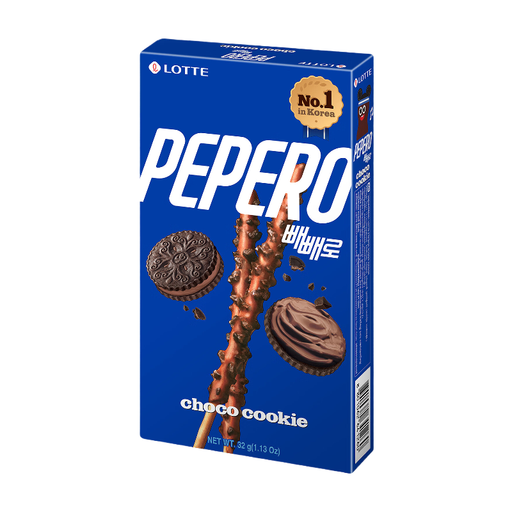 Image unavailable
If you’d rather serve small biscuit sticks, this Chocolate Cookie variety comes in a 32 g pack. Check the ingredients and allergen information on the packaging you’ll be serving.
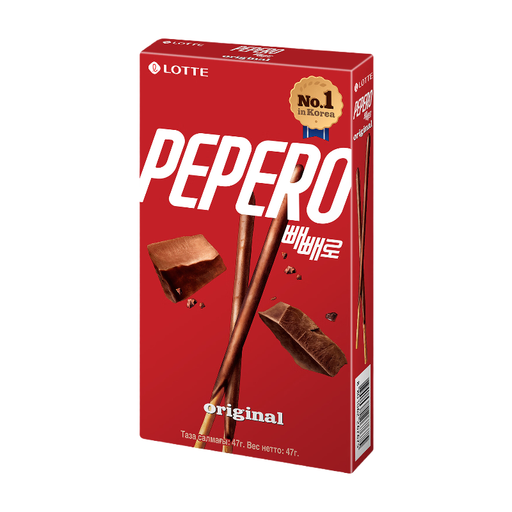 Image unavailable
The Original variety is another pack of biscuit sticks to serve with coffee, weighing 47 g. Check the storage instructions and allergen information on the exact pack.
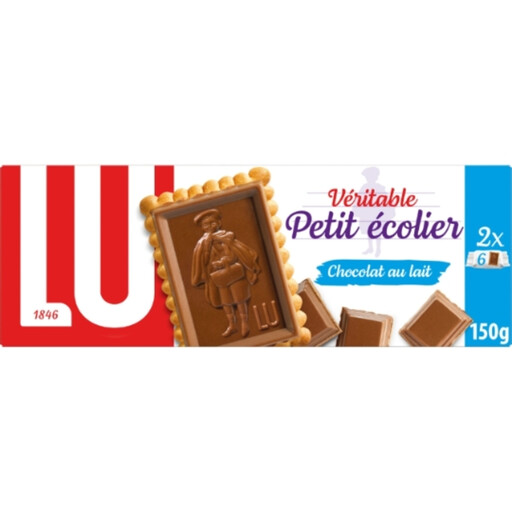 Image unavailable
These butter biscuits covered in milk chocolate are ideal for arranging on a plate to serve with coffee. The pack is labelled 150 g; check how many biscuits it contains and check the allergens against the number of guests.
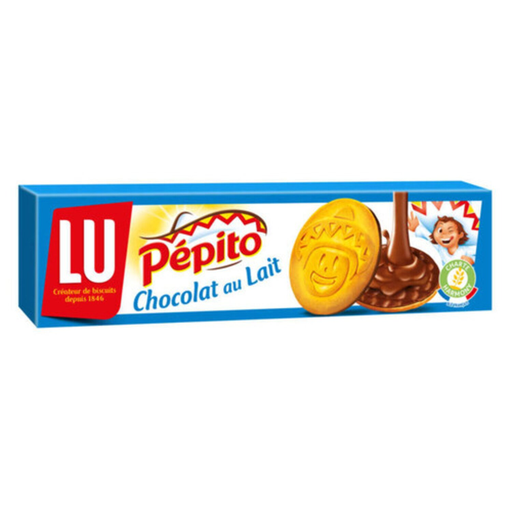 Image unavailable
This 192 g pack can be arranged on a plate for a group. If you’re specifically looking for a chocolate-coated biscuit, check that this is stated on the packaging. Also read the allergen and nutritional information for this product.
No. The DGCCRF describes it as a voluntary labelling system. When it appears on a pack, it can complement the nutritional information, but its absence alone doesn’t mean the pack is incorrectly labelled.
First, compare the product name and ingredients to identify the type of biscuit, then compare the nutritional information on the same basis, usually per 100 g. The DGCCRF says that nutrition declarations apply to prepacked foods, subject to certain exceptions. Check the allergens for each recipe separately.
Look for “chocolate-coated” or “covered” in the product name or description. “Chocolate-filled” means the filling is inside; it doesn’t confirm there’s a layer of chocolate on the outside.
First, check the exact packaging for the allergens that person needs to avoid, including any precautionary “may contain” statements. Service-Public.fr reminds consumers that relevant allergens must be declared on processed foods; ingredients vary from one product to another.
Follow the instructions on the pack you’ve bought and don’t leave it near a heat source. For its soft galette with a chocolate coating, St Michel recommends storing it in a dry place, away from heat and light.