Fans of chocolate-coated biscuits
You want chocolate on the outside of the biscuit, not just a filling or chocolate chips. Checking the exact product description helps you tell the difference before choosing a pack.


If you’re looking for a chocolate coating on the outside, choose a product explicitly described as ‘chocolate-coated’: a filled biscuit, one with a chocolate topping or one with chocolate chips may not meet your needs. When comparing products online, also check the pack size, ingredients, allergens and nutritional values per 100 g. If shown, the Nutri-Score can be useful alongside this information, but it isn’t mandatory in France, as the DGCCRF explains.
You want chocolate on the outside of the biscuit, not just a filling or chocolate chips. Checking the exact product description helps you tell the difference before choosing a pack.
You want to compare ingredients, allergens and nutritional information for specific products, whether or not a Nutri-Score is shown.
You’re looking for a pack to share or individual portions to take with you. Net weight and the number of biscuits or sachets matter more than the product photo alone.
First, make sure it’s the type of biscuit you want. Then check the ingredients and packaging details for the product you plan to order.
| What to check | Look for | Who it matters to |
|---|---|---|
| Chocolate coating | Look for ‘chocolate-coated’ in the product description and confirm it in the ingredients list. | If you want chocolate around the biscuit, ‘filled’ or ‘with chocolate chips’ isn’t enough. Around 30% of consumers prioritise an outer chocolate coating. |
| Ingredients and allergens | Compare the nutritional values per 100 g and check the allergens highlighted in the ingredients list. | To choose between two recipes or avoid an ingredient you’re allergic to, check the exact product. Ingredients and allergens are the top priority for around 30% of consumers. |
| Pack size | Check the net weight and, where stated, the number of biscuits or sachets. | A sharing pack and portions to take on the go suit different needs. Around 20% of consumers prioritise packaging that suits how they plan to use the product. |
| Ordering and delivery | Read the product information again before placing your order, then check the date and labelling on the packaging when it arrives. | If you’re ordering several packs to store, check the date on each one when your delivery arrives. For around 20% of consumers, order-related checks come first. |
A filling, chocolate chips or a topping don’t necessarily mean there’s a layer of chocolate on the outside of the biscuit.
If the coating is what matters most to you, look for it in the product description and check the ingredients for the specific product you’ve chosen.
In France, the DGCCRF describes the Nutri-Score as a voluntary label. Most prepacked foods must include a nutrition declaration, subject to certain exemptions.
If a product displays a Nutri-Score, use it alongside the nutritional information, including energy, sugars, fat, saturated fat and salt per 100 g.
A weight shown alongside a number of units doesn’t always make it clear straight away whether it refers to one pack or the whole multipack.
Before choosing a multipack, check the number of packs and the total quantity in the product information.
Check the ingredients and allergens for the specific product you receive. The date on the packaging is also important if you’re planning to store several packs.
Before using the products, check the labelling, highlighted allergens and date on every pack you receive.
These examples show why it’s worth checking the recipe and pack size for each product, even within the same brand: ‘chocolate’ doesn’t always mean ‘chocolate-coated’.
Carrefour describes the 90 g LU Petits Cœurs Choco’Croc as biscuits coated in milk chocolate. Other LU products combine a filling and a coating, so check the full product description.
The Atelier St Michel shop features, among other things, dark chocolate galettes and galettes filled with milk chocolate.
Carrefour’s BN range includes chocolate biscuits, products with chocolate chips and a topping, and chocolate and vanilla sachets.
Carrefour lists a 150 g pack of chocolate-coated wafers.
These products include biscuits, a wafer and lace crepes described as coated in milk chocolate. Choose based on the type of biscuit and the pack size shown, then check the product information before ordering.
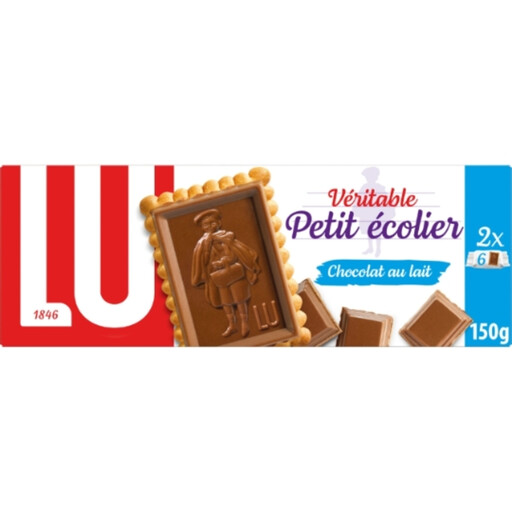 Image unavailable
For anyone looking for a biscuit with an outer layer of milk chocolate. This product comes in a 150 g pack. Check its ingredients, allergens and nutritional values before choosing.
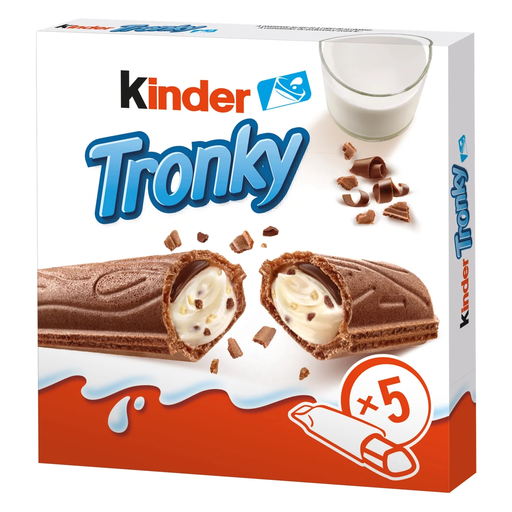 Image unavailable
For anyone who prefers a wafer to a traditional biscuit but still wants a chocolatey exterior. The stated pack size is 90 g. Check the number of pieces and the ingredients for the product you choose.
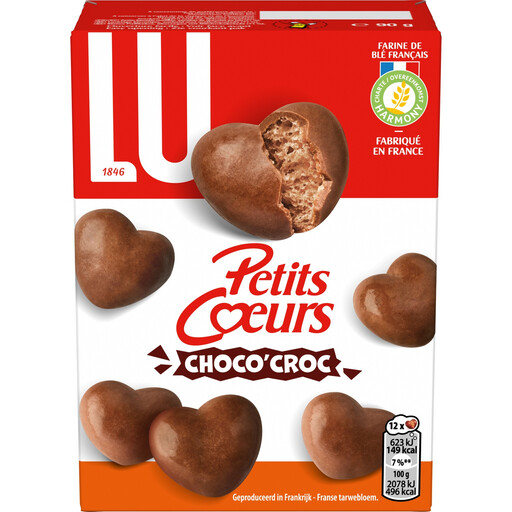 Image unavailable
For anyone looking for a biscuit that’s explicitly coated, rather than simply filled. This product comes in a 90 g box. Its ingredients and nutritional values per 100 g let you check the exact recipe.
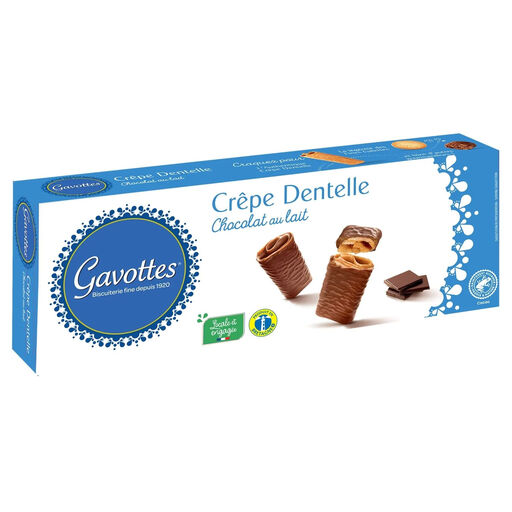 Image unavailable
For anyone looking for lace crepes coated in milk chocolate. The product title gives both ‘90 g’ and ‘pack of 6’, so check the total quantity before choosing this multipack.
No. The DGCCRF says the Nutri-Score is voluntary in France. Most prepacked foods must include a nutrition declaration, subject to certain exemptions. Compare the values per 100 g even if no Nutri-Score is shown.
Check the product description, net quantity, ingredients, allergens and nutritional information that applies to the product you’ve chosen. The DGCCRF explains that the mandatory information for food sold online must be provided before the sale is completed and again on delivery.
Look for an explicit mention of an outer coating in the product description. ‘Filled with chocolate’ describes what’s inside the biscuit and doesn’t, by itself, confirm that there’s a layer of chocolate around it.
Read the ingredients list for the exact product and look for highlighted allergens, as set out in the labelling guidance described by the DGCCRF. Don’t assume that another recipe or pack size from the same brand has the same ingredients. Check the packaging you receive, too.
Check the number of packs and the total weight, especially if the product title gives a weight alongside several packs. When your order arrives, also check the date on each pack if you plan to store them.