For a secondary school lunchbox, start by choosing a biscuit that’s genuinely wrapped in an individual portion. A national or own-label brand may fit the bill, but the brand name alone won’t tell you which recipe is best. Check the allergens and nutritional information on the specific pack, along with the school’s rules and, if applicable, the pupil’s Individualised Welcome Plan (PAI). If a Nutri-Score is shown, use it as an additional guide, not a substitute for checking the other information.
Who is this guide for?
Parents packing several lunchboxes
You’re looking for ready-wrapped portions that are easy to spread across several days. Carrefour and Auchan, for example, list boxes of 10 and 6 individually wrapped portions. Check the quantity shown for the product you’re buying.
Families managing an allergy or intolerance
The exact recipe and any requirements that apply to the pupil come before convenience. The products described by Carrefour and Auchan include wheat and milk; other allergens and precautionary ‘may contain’ statements vary by product. Check the pack and follow the school’s rules or any applicable PAI.
Families comparing everyday snacks
You want to compare sugars, saturated fat and salt in similar biscuits, rather than judging a recipe by its individual wrapping alone. Manger Bouger recommends limiting foods high in fat and sugar and, when it comes to biscuits, particularly advises avoiding those with a Nutri-Score E.
What should you check before buying?
For a secondary school lunchbox, start with the pupil’s school rules and dietary needs, then check the packaging and recipe of the product you’re considering.
| What to check |
Check that... |
Who is this useful for? |
| Allergens and school rules |
Read the ingredients and any ‘may contain’ statements on the pack; check the school’s rules and any applicable PAI. |
If an allergen or school requirement rules out a recipe, the ingredients matter more than the format. Around 31% of consumers prioritise this dietary and school compatibility. |
| Individual portions |
Check that the biscuits come in separate sachets and confirm how many portions are in the box. |
If you’re packing several lunchboxes and don’t want to repackage the biscuits, choose portions that are already wrapped individually. Convenient packaging is the main priority for around 31% of consumers. |
| Nutritional information |
Compare sugars, saturated fat and salt per 100 g across similar products, then check the portion size. |
If the snack is a regular part of your child’s lunchbox, comparing recipes matters more than choosing by how the pack looks. Around 25% of consumers consider this their top priority. |
| Recipe and number of portions |
Compare the ingredients and number of portions in each product, whether it’s a national or own-label brand. |
When choosing between two multipacks, a family may want a recipe and number of portions that suit their routine. Around 13% of consumers put this choice first. |
Common mix-ups to avoid
-
Assuming the ‘soda tax’ applies to biscuits
According to the French Ministry of the Economy, the so-called ‘soda tax’ applies to sugary drinks, not biscuit bars.
To compare these biscuits, check the sugars, saturated fat and salt listed on the packaging instead.
-
Assuming Nutri-Score labelling is compulsory
Santé publique France says that displaying the Nutri-Score is voluntary. If it’s not shown, that doesn’t mean the mandatory nutritional information for a prepacked food is missing.
If it’s on the pack, use it to compare similar products, but check the nutritional information and ingredients too.
-
Confusing individual wrapping with allergy suitability
Separate packaging doesn’t change the recipe. The examples described by Carrefour and Auchan include wheat and milk; other allergens and ‘may contain’ statements vary.
Check the exact product and follow the school’s rules, as well as any applicable PAI.
-
Relying only on an online product listing
Auchan notes that a temporary recipe change may mean the product differs from the information on its website.
Before putting the biscuits in the lunchbox, check the ingredients, allergens and number of portions on the pack you receive.
Brands to compare
LU
Carrefour describes LU Pépito Pockitos as a chocolate-filled biscuit bar with milk chocolate, sold in a box of 10 individually wrapped portions.
- The number of individually wrapped portions is specified for this product.
- The ingredients include wheat, milk, egg and soya. Check the pack if you’re choosing it for a pupil with an allergy or intolerance.
Auchan
Auchan describes its chocolate-filled biscuit bars as coming in 6 individual sachets, with a total weight of 125 g.
- The packaging makes it easy to identify the separate portions.
- The product listing mentions milk, wheat and soya, and possible traces of nuts, eggs and sesame. Check the pack you receive.
P'TIT DELI / Marque Repère E.Leclerc
E.Leclerc describes P'TIT DELI milk-filled chocolate bars as coming in a pack of 5.
- The number of bars makes it easy to compare the pack with other portioned options.
- The product listing mentions milk, wheat, soya and eggs, and shows a Nutri-Score E.
Carrefour Sensation
Carrefour describes Carrefour Sensation as a box of 6 cookie-style chocolate bars.
- This format lets you compare a cookie-style texture with other individually portioned chocolate bars.
- The product listing mentions milk and wheat, with possible traces of nuts, sesame and eggs.
Joybuy products to consider
This selection includes chocolate biscuit bars and biscuit sticks to consider for a lunchbox. For the sticks in particular, check whether the packaging gives you the individual portion you want to take with you.
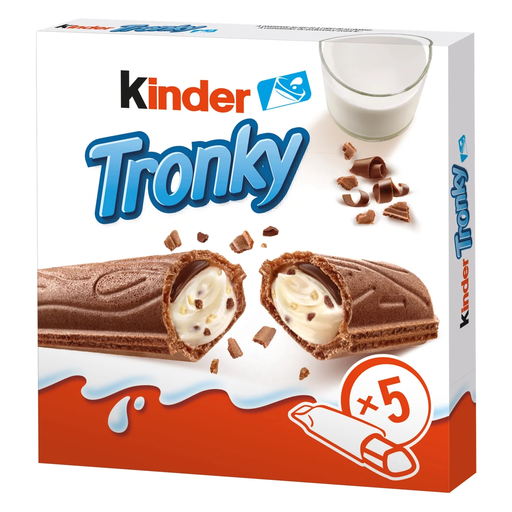 Image unavailable
Kinder Tronky, milk chocolate wafers, 90 g
Worth considering if you’re looking for a chocolate wafer for the lunchbox. Check how the portions are packed and, if choosing it for a particular pupil, look for wheat, milk, soya and hazelnuts in the ingredients list on the pack.
View on Joybuy
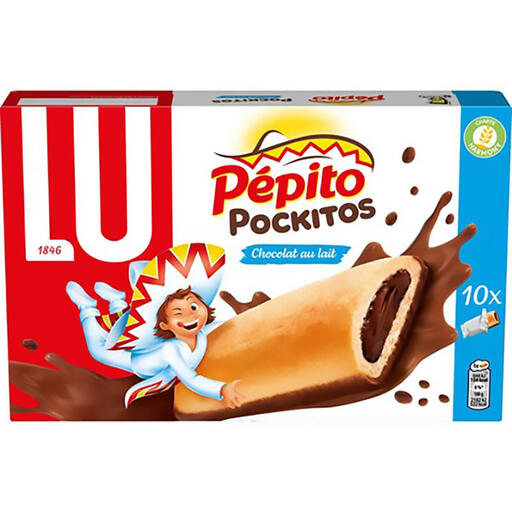 Image unavailable
LU Pépito Pockitos, milk chocolate-filled biscuits, 295 g
This product may suit you if you’re looking for ready-to-share portions for several lunchboxes: Carrefour describes the 295 g pack as containing 10 individual bars. The recipe includes wheat, milk, soya and egg, and may contain nuts. Check the pack before choosing it for a pupil with any of these allergies.
View on Joybuy
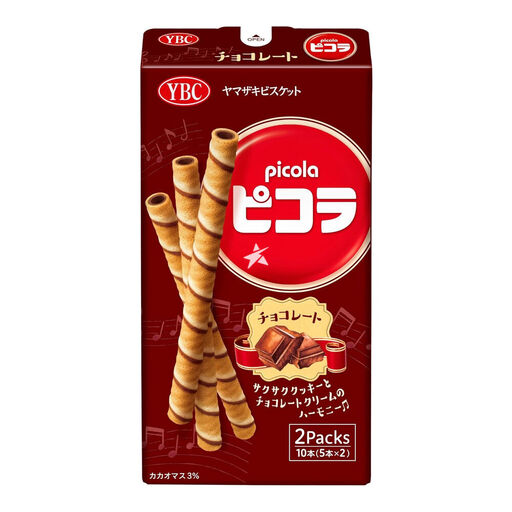 Image unavailable
YAMAZAKI Picola, chocolate biscuit sticks, 49 g
These are biscuit sticks, not a single bar, so check that the sachet format works for your lunchbox. To compare the recipe and account for the pupil’s needs, read the full nutritional information and check the pack for details about wheat, milk, eggs and soya.
View on Joybuy
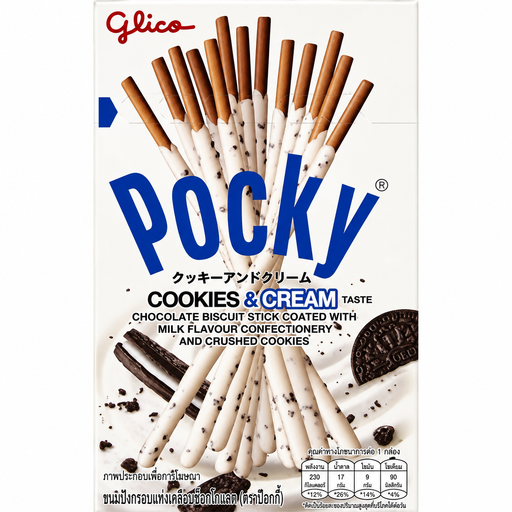 Image unavailable
Glico Pocky Cookies & Cream, biscuit sticks, 40 g
This pack of biscuit sticks is another snack option to consider, rather than a single biscuit bar. Before taking it to school, check the packaging and look for details about wheat, milk and soya.
View on Joybuy
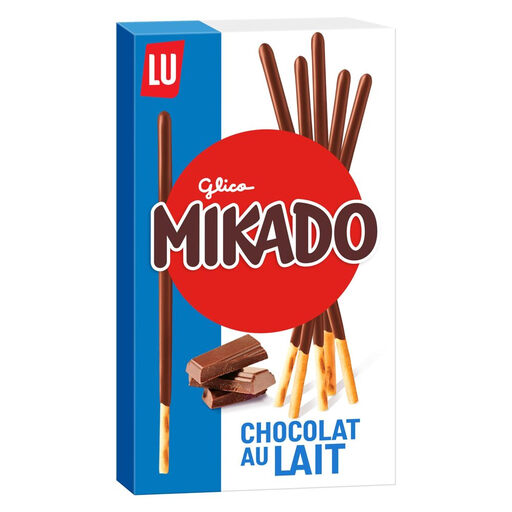 Image unavailable
Mikado Pocket, milk chocolate-coated biscuit sticks, 39 g
The Pocket format may appeal to families looking for a small pack of biscuit sticks, but it’s not the same as a single individually wrapped bar. Check whether the portions are separated, and read the pack for details about wheat, milk, soya and possible traces of nuts.
View on Joybuy
Frequently asked questions
Does the ‘soda tax’ apply to chocolate biscuit bars?
No. The French Ministry of the Economy describes this contribution as a tax on sugary drinks. To compare biscuit bars, check their nutritional information instead, particularly the sugars, saturated fat and salt.
Is Nutri-Score compulsory on these biscuits in France?
No. Santé publique France says that displaying the Nutri-Score is voluntary, unlike the nutritional declaration required for prepacked foods. If it’s shown on the pack, it can help you compare similar products; check the ingredients and allergens too.
Is a ‘may contain traces’ statement suitable for a secondary school pupil with an allergy?
On its own, this statement isn’t enough to decide whether the product is suitable for the pupil. Read the label on the pack and follow the guidance that applies to them. The French Ministry of National Education says a PAI can set out adjustments to meet a pupil’s needs.
How can you compare chocolate biscuits for regular snacks?
Compare the nutritional information per 100 g for similar products, and take account of the portion you’ll actually pack. Manger Bouger recommends limiting foods high in fat and sugar and, among biscuits, particularly advises avoiding those with a Nutri-Score E.


