Who is this a good choice for?

Cyclists planning their fuelling during a ride

If you’d like to take chocolate as an extra, count the carbohydrates in your portion rather than relying on the weight of the whole block. The recommendation published by World Athletics applies to endurance efforts lasting 1 to 2.5 hours.

Anyone after a chocolate break for one

Squares you can count or a smaller format can help you prepare the amount you want. Check the stated weight, though, and if it matters for carrying, make sure the pieces are actually individually wrapped.

Shoppers who check ingredients

Compare the ingredients and allergen information for the specific product you’re considering. These can vary between recipes, even within the same brand.

What should you check?

When taking a block of chocolate on a bike ride, first decide how much you plan to eat. The format and ingredients will then determine what to look for on the label.

What matters What to check Who it matters to
Carbohydrates in your portion The weight of the squares you’re taking and their corresponding carbohydrate content, compared with your other planned fuelling. For endurance efforts lasting 1 to 2.5 hours, World Athletics recommends 30 to 60 g of carbohydrates per hour. If I’m relying on chocolate during a ride, I want to know how much it actually contributes to my fuelling. Around 44% of shoppers put this carbohydrate calculation first.
Single-serving format and transport Net weight, stated serving size and type of packaging; protection from heat and moisture in line with the product’s instructions. For a solo snack on a bike ride, I prefer to prepare a small amount without assuming that every square is individually wrapped. Getting the portion right is the priority for around 33% of shoppers.
Ingredients and allergens Ingredients list, highlighted allergens and any ‘may contain’ warnings for the exact product. If a recipe needs to meet my dietary requirements, its ingredients come before the format or carbohydrate calculation. This is the top consideration for around 23% of shoppers.

Mistakes to avoid

  • Relying on chocolate as your only ride fuel

    According to Milka, a stated 16.7 g serving of Milka milk chocolate contains 9.5 g of carbohydrates. That’s less than the 30 to 60 g per hour recommended by World Athletics for 1 to 2.5 hours of endurance exercise, so this serving alone won’t meet that recommendation.

    Work out the carbohydrates in the squares you plan to eat, account for your other sources of fuel and try out your plan in training before an important ride.

  • Assuming squares are individually wrapped portions

    Squares make it easy to count what you take, but they don’t tell you how well the chocolate will be protected once the block is open.

    Check the packaging for the specific product and take a suitable container for the amount you’re carrying.

  • Choosing based only on cocoa content or Nutri-Score

    The cocoa percentage doesn’t tell you how many carbohydrates are in your portion. Santé publique France and the DGCCRF describe Nutri-Score as a voluntary label that complements nutritional information.

    Check the carbohydrates, ingredients and allergens for the exact product. Use Nutri-Score as an additional guide if it appears on the packaging.

  • Assuming every product from a brand has the same allergens

    The Côte d’Or product described by Carrefour contains milk and soya and may contain nuts. A Carrefour dark chocolate block checked separately carries different ‘may contain’ warnings.

    Check the label on the product you buy, even if you’re already familiar with another chocolate block from the same brand.

Brands to consider

Milka

The milk chocolate block described by Milka weighs 100 g and is divided into squares.

  • Its stated 16.7 g serving provides 9.5 g of carbohydrates, giving you a figure to use when planning that specific amount.
  • The recipe checked contains milk and hazelnuts. Its ingredients and nutritional values don’t apply to every Milka chocolate block.

Lindt

Lindt France offers chocolate blocks in a range of recipes and cocoa percentages, including its Excellence range.

  • The range lets you compare dark, milk and white chocolate recipes to suit your preferences.
  • For the carbohydrate content of a portion and its allergens, check the specific product rather than relying on the range description.

Côte d’Or

The milk chocolate product described by Carrefour comes as two 200 g blocks.

  • This pack could suit a purchase for enjoying at home or sharing.
  • It isn’t an obvious choice for a single serving to take with you. The recipe checked contains milk and soya and may contain nuts.

Carrefour

The Carrefour Classic’ product checked is a pack of three 100 g dark chocolate blocks.

  • Its ingredients list lets you check this recipe before choosing a portion.
  • The product carries ‘may contain’ warnings for nuts, milk and cereals containing gluten.

E.Leclerc / Marque Repère

The Marque Repère range includes dark chocolate blocks in several formats and recipes.

  • The Tablette d’Or product described by E.Leclerc lists 47% cocoa, 55 g of carbohydrates and 51 g of sugars per 100 g.
  • These figures apply to this product. Check the values for any other recipe before calculating your portion.

Nestlé Dessert

Nestlé France presents this range of chocolate blocks for making desserts at home.

  • It could be used to make a homemade snack if you want to choose the recipe and portion yourself.
  • Its intended use in cooking doesn’t, by itself, tell you whether it’s individually wrapped or suitable for taking on a bike ride.

Chocolate blocks and smaller formats on Joybuy

These products include a 100 g dark chocolate block and two smaller chocolate bars to consider for a solo serving or as an extra to take on a bike ride. Their weights don’t replace calculating the carbohydrates in the amount you eat.

Lindt Excellence 85% cocoa dark chocolate, 100 g

Lindt Excellence 85% dark chocolate, 100 g

This block could suit you if you’d rather prepare a few squares before setting off. Weigh your chosen portion to calculate its carbohydrates and protect it in transit; the squares don’t mean it’s individually wrapped.

View on Joybuy

Lindt Excellence Mini 70% cocoa dark chocolate, 35 g

Lindt Excellence Mini 70% dark chocolate, 35 g

The 35 g format lets you enjoy a small chocolate break without carrying a 100 g block. Check the carbohydrates for the amount you’ll eat, the allergens listed on the packaging and how to protect it from heat.

View on Joybuy
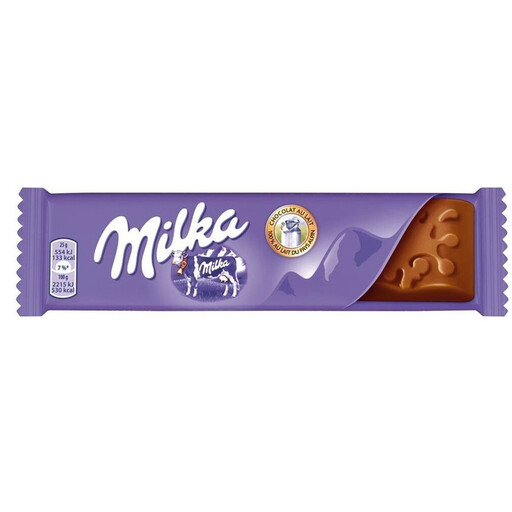
Milka milk chocolate bar, 25 g

Milka milk chocolate, 25 g bar

This 25 g bar suits anyone looking for a smaller chocolate treat for a solo break. Before taking it on a bike ride, check the carbohydrates in the bar, its exact ingredients — particularly any information about hazelnuts — and its packaging.

View on Joybuy

Frequently asked questions

Can one block of chocolate be enough for a 1 to 2.5-hour ride?

Don’t assume so based on its format. Calculate the carbohydrates in the amount you’ll eat and in your other planned sources of fuel. World Athletics recommends 30 to 60 g of carbohydrates per hour for endurance exercise of this duration. For comparison, Milka states that a 16.7 g serving of its milk chocolate provides 9.5 g of carbohydrates.

What should you check before taking chocolate squares on a bike ride?

Check the portion weight, its carbohydrate content, the ingredients, allergens and storage instructions for the product you’ve chosen. Loose squares aren’t necessarily individually wrapped, so make sure they’re protected in transit.

Is Nutri-Score compulsory on chocolate blocks in France?

No. Santé publique France and the DGCCRF say that displaying it is voluntary. For prepacked food, check the ingredients list and nutritional information. If Nutri-Score is shown, it doesn’t replace checking the carbohydrates in your portion or the allergens.

Does the French tax on sugary drinks apply to chocolate blocks?

No, not within the scope of drinks and liquid drink preparations described in the provisions published on Légifrance. A solid chocolate block shouldn’t be treated as a sugary drink when deciding what to check before buying; instead, read its nutritional information and ingredients list.