To enjoy with coffee, choose milk chocolate if you’re looking for a recipe with a milky flavour, a bar combining dark chocolate and milk if you want to keep that sweetness while enjoying a different expression of cocoa, or dark chocolate if the stated cocoa content is your priority. Before buying, compare the cocoa content of the finished product, the nutritional information per 100 g and the allergen information. The recipe name alone won’t tell you everything.
Who is it for, and what are you looking for?
For those looking for more cocoa with their coffee
If classic milk chocolate tastes too milky to you, a recipe combining dark chocolate and milk could be worth trying. Be sure to check the stated cocoa content for the whole bar, rather than relying on the percentage in its name alone.
For those who prefer a milky treat
A milk chocolate bar is a good choice if you prefer a smooth, creamy recipe. Sugar content and allergens vary by product, so compare the labels rather than making assumptions about the whole category.
For those who check the label first
If there are ingredients you need to avoid or you’re comparing nutritional values, check the ingredients list, allergen information and per-100 g figures for the exact variant. This information is useful whether or not a Nutri-Score is displayed.
What should you check before buying?
Start with the recipe you prefer with coffee, then compare the bars using their labels.
Milk chocolate
Choose this: if you’re mainly looking for a milky recipe to enjoy with coffee.
Bear in mind: Lindt France’s product information for L’Authentique Lait states a minimum cocoa content of 30%. This figure doesn’t apply to all milk chocolate bars.
Dark chocolate and milk
Choose this: if you’d like to try a recipe that combines dark chocolate with a milky character.
Bear in mind: Lindt France states a minimum cocoa content of 45% for its EXCELLENCE Noir 70 % & Lait bar. The “70%” in the name isn’t the stated cocoa content of the finished product.
Dark chocolate
Choose this: if you prioritise a bar with a high stated cocoa content for the product.
Bear in mind: the Côte d’Or Noir Bio bar featured by Carrefour states a minimum cocoa content of 70%, but warns that it may contain milk.
| What to consider |
What to check |
Who is it for? |
| Cocoa intensity |
The stated cocoa content for the whole bar and the ingredients list, especially for a recipe combining dark chocolate and milk. |
With my coffee, I want to choose between a milky flavour and a more pronounced cocoa taste. Around 46% of consumers put this balance first. |
| Nutritional information |
For the same quantity, compare sugars, fat (including saturates) and energy per 100 g. |
Before choosing between two recipes, I want to compare what their labels say rather than guess their nutritional values from their colour. This is the top priority for around 36% of consumers. |
| Ingredients and allergens |
Highlighted allergens, “may contain” warnings and the ingredients for the exact variant. |
If I need to avoid an ingredient, the list for the specific bar matters more than whether it’s labelled “dark” or “milk”. This is the top priority for around 18% of consumers. |
Label pitfalls to avoid
-
Assuming “70%” applies to the whole bar
In a recipe combining dark chocolate and milk, the highlighted percentage may refer to the dark chocolate used, rather than the finished product. For example, Lindt France states a minimum cocoa content of 45% for EXCELLENCE Noir 70 % & Lait.
Check the cocoa content stated for the exact product before comparing bars.
-
Guessing sugar or fat content from the intensity
Lindt France’s product information gives the following figures per 100 g: 55 g of sugars and 19 g of saturates for L’Authentique Lait, compared with 42 g and 21 g for EXCELLENCE Noir 70 % & Lait. So these two nutritional values don’t follow the same pattern across the recipes.
Compare sugars, saturates and energy per 100 g separately for the products you’re considering.
-
Assuming Nutri-Score is compulsory
In France, the DGCCRF states that Nutri-Score is voluntary, while nutrition information is generally required for pre-packed foods.
Whether or not there’s a logo, check the nutritional information, ingredients and allergens.
-
Assuming dark chocolate is milk-free
The Côte d’Or Noir Bio bar featured by Carrefour doesn’t list milk as an ingredient, but does carry a warning that it may contain milk. A recipe with biscuits or a filling may also include other ingredients you’ll need to check.
If you have an allergy, check the ingredients and trace warnings on the packaging for the relevant variant and batch.
Brands to consider by recipe
Lindt
Two Lindt France products show the difference between classic milk chocolate and a recipe combining dark chocolate and milk.
- L’Authentique Lait states a minimum cocoa content of 30%; EXCELLENCE Noir 70 % & Lait states a minimum of 45% for the finished bar.
- For EXCELLENCE Noir 70 % & Lait, the “70%” in the name doesn’t replace the cocoa content stated in the detailed product information.
Milka
A milk chocolate bar to consider if you prefer a milky recipe with your coffee.
- Joybuy’s product information for the 200 g Milka milk chocolate bar lists the ingredients and gives a sugar content of 58.5 g per 100 g.
- This figure and the allergen information for this bar don’t apply to all Milka recipes or pack sizes.
Côte d’Or
The products reviewed illustrate two different choices: dark chocolate and a milk chocolate bar filled with Biscoff biscuits.
- Carrefour’s product information for the Noir Bio bar states a minimum cocoa content of 70%; the Biscoff milk chocolate recipe has a biscuit filling.
- The Noir Bio bar warns that it may contain traces of milk and nuts. For the Biscoff bar, check the warnings for wheat, milk and soya in particular.
Joybuy chocolate bars to enjoy with coffee
This selection includes dark chocolate for those who prioritise cocoa and milk chocolate for a creamier break. The features and precautions listed apply to each product, not to its entire category.
 Image unavailable
Lindt Excellence 70% dark chocolate mini bar, 35 g
A small format to consider if you prefer dark chocolate with coffee. The title states 70% cocoa; if allergens inform your choice, check the packaging for warnings that it may contain milk, nuts and soya.
View on Joybuy
 Image unavailable
Poulain Fine 70% dark chocolate, 100 g
A dark chocolate bar to consider if cocoa content is your main priority. The product information mentions maltitol and warns that excessive consumption may have a laxative effect. Check the label too if you need to avoid soya.
View on Joybuy
 Image unavailable
Carré Suisse organic dark chocolate with lemon and green pepper, 100 g
Worth considering if you’d like a flavoured dark chocolate bar rather than plain dark chocolate with your coffee. The product information combines chocolate with lemon and green pepper. Check which part of the bar the stated cocoa content applies to, and look out for allergen information.
View on Joybuy
 Image unavailable
Milka Alpine Milk, 3 x 100 g bars
A pack of milk chocolate for those who prefer a milky treat. If you compare recipes by cocoa content, check the figure for this pack on the packaging. Also check the warnings relating to milk, nuts and soya.
View on Joybuy
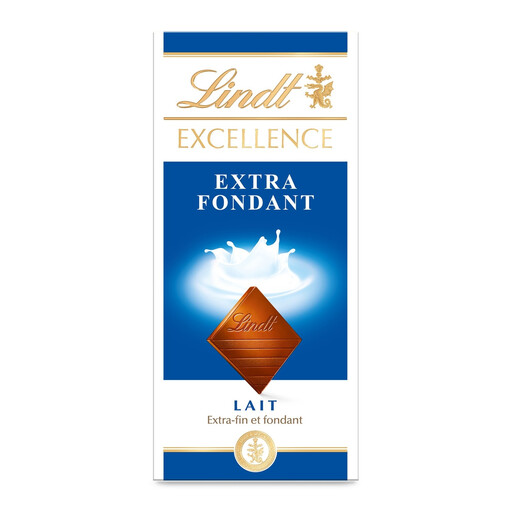 Image unavailable
Lindt Excellence Extra Creamy milk chocolate, 100 g
A milk chocolate recipe to consider if you’re looking for a bar described as creamy to enjoy with coffee. To compare it with dark and milk chocolate or dark chocolate, check its cocoa content on the packaging. The product information also lists milk, barley and soya, which may be relevant depending on your needs.
View on Joybuy
Frequently asked questions
Is Nutri-Score compulsory on a chocolate bar in France?
No. The DGCCRF says Nutri-Score is voluntary, while nutrition information is generally required for pre-packed foods. With or without the logo, compare energy, sugars and fat per 100 g in particular.
Does the levy on sugary drinks apply to a chocolate bar?
No, it doesn’t apply to a solid bar. Article 1613 ter of the General Tax Code, published by Légifrance, covers drinks and liquid preparations for drinks that meet the conditions set out in the legislation, including those relating to added sugars.
Does “70% dark chocolate & milk” mean that the whole bar contains 70% cocoa?
Not necessarily. For EXCELLENCE Noir 70 % & Lait, Lindt France states a minimum cocoa content of 45% for the finished product. Check the stated cocoa content for the exact product rather than interpreting the percentage in the name on its own.
Is dark chocolate with no milk in the ingredients suitable for someone with a milk allergy?
Not automatically: the packaging may warn that the product could contain milk. This is the case for the Côte d’Or Noir Bio bar featured by Carrefour. If you have an allergy, check the labelling for the relevant batch.


