What should you check before choosing?
For a mid-morning snack, start with what matters most to you, then compare the figures per bar and per 100 g. These two ways of looking at the information answer different questions.
| Criteria |
What to check |
Who is it for? |
| Protein per bar |
The grams of protein and the weight of the portion you’ll actually eat. |
Between activities or around a workout, I want to know how much protein the bar I’m taking with me provides. Around 31% of consumers put this measurable amount at the top of their needs. |
| Chocolate flavour and sugar |
The sugar per bar and the ingredients list; ‘no added sugar’ doesn’t tell you the total sugar content. |
I want to enjoy a chocolatey snack while choosing based on its sugar content per portion. This is the top priority for around 31% of consumers. |
| Ingredients and dietary suitability |
Allergens, ‘may contain’ statements and, if relevant to you, sweeteners or polyols. |
When a recipe needs to meet my dietary requirements, flavour alone isn’t enough to make a decision. Around 23% of consumers put suitability first. |
| Overall nutritional profile |
The nutritional information per 100 g, then per bar: energy, fat, sugars, protein and salt. |
When choosing a snack, I prefer to look at several nutritional values rather than relying on a single claim on the front of the pack. This overall view is the main concern for around 15% of consumers. |
Brands to know
The differences below apply to specific products; they don’t describe every bar from each brand.
Barebells
The brand offers several ranges of protein bars, including a Peanut Caramel option and a plant-protein version.
- Barebells France states that its 55 g Peanut Caramel bar contains 16 g of protein and 2.1 g of sugar; the Original range is listed as containing 20 g of protein, depending on the product.
- Check the exact recipe: allergens, sweeteners and warnings can vary from one bar to another.
Andros Sport
Carrefour France presents its 55 g chocolate and peanut bar as a snack to enjoy, in particular, after exercise.
- Carrefour France’s product information states that each bar contains 20 g of protein.
- The recipe lists ingredients derived from milk and wheat, as well as peanuts and soya. Check the label if any of these ingredients are a concern for you.
PowerBar
Protein Plus 30% Chocolate is a 55 g protein bar.
- Carrefour France’s product information states that this bar contains 17 g of protein per portion.
- Check the flavour, allergen information and warnings about excessive consumption on the packaging you choose.
Carrefour Sensation
The chocolate bar featured by Carrefour France combines sunflower seeds, pumpkin seeds, almonds and dark chocolate.
- Its ingredients may appeal to consumers specifically looking for a bar with seeds, almonds and chocolate.
- Don’t assume from its name that it contains a similar amount of protein to a sports bar: check the figures for the portion you choose.
Snickers
The classic peanut, caramel and chocolate bar is used here as a point of comparison with protein bars.
- Auchan France’s product information states that a 50 g bar contains 4.3 g of protein, which is useful for comparing this specific portion.
- The same product information states that each bar contains 26 g of sugar and lists peanuts, milk, soya and egg among the allergens.
Chocolate bars and formats available on Joybuy
This selection includes chocolate-flavoured protein bars for an on-the-go snack, as well as a chocolate bar presented as a meal. Check the format you want before comparing them as mid-morning snacks.
 Image unavailable
nu3 Fit Protein Bar Salted Caramel 55 g
This single bar, with its salted caramel flavour, is worth considering if you want to take a protein bar with you as a snack. If ingredients or sweeteners affect your choice, check the ingredients and warnings for the product you receive.
View on Joybuy
 Image unavailable
Optimum Nutrition Whipped Protein Bar Peanut & Salted Caramel, 10 × 60 g
This pack is a good choice if you’re looking for several individual bars in peanut and salted caramel flavours. Check the ingredients, allergens and consumption warnings on the packaging before making them a regular snack.
View on Joybuy
 Image unavailable
Andros Sport, chocolate and peanut bar 55 g
This single bar is for anyone looking for a chocolate and peanut snack with a stated protein content: Carrefour France lists 20 g of protein for this 55 g product. Check the allergens and energy content on the packaging of the product being sold.
View on Joybuy
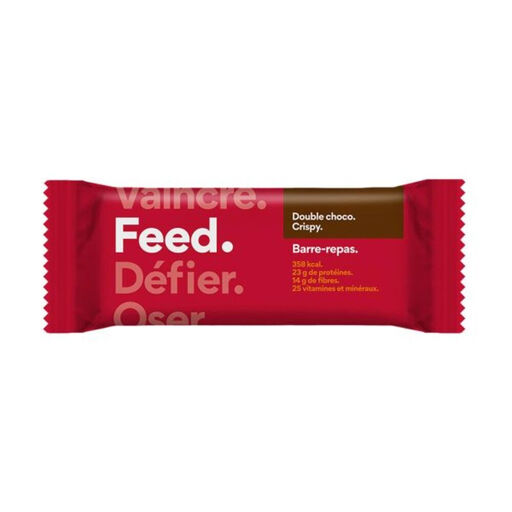 Image unavailable
FEED Chocolate Meal Bar 100 g
This chocolate bar is presented as a 100 g meal format, rather than a small mid-morning snack. If you’re planning a quick bite, bear the portion size in mind before choosing.
View on Joybuy
Frequently asked questions
Is Nutri-Score compulsory on a chocolate bar sold in France?
No. The DGCCRF describes Nutri-Score as a voluntary label in France. Nutrition declarations are generally compulsory for pre-packed foods; the table lets you check information such as sugar, protein and energy.
How do you compare two bars of different sizes?
Start with the figures per 100 g to compare them on the same basis, then check the figures for each whole bar to see what the portion you plan to eat provides. The DGCCRF states that nutrition declarations are given per 100 g or 100 ml.
Is a plant-protein bar automatically suitable for someone with an allergy?
No. The Barebells Vegan Caramel Choco Chip featured by Barebells France contains, among other things, wheat and soya proteins; its product information also warns of possible traces of other allergens. Check the ingredients and trace warnings for the specific product.
Why should you read warnings about certain sweeteners?
Some protein bars carry a warning that excessive consumption may have a laxative effect. Read the recommended portion and the warning for the product you choose, especially if you plan to eat more than one bar.
Does the French levy on sugary drinks apply to chocolate bars?
No, not to solid chocolate bars: Article 1613 ter of the General Tax Code, published by Légifrance, applies to drinks and liquid preparations for drinks. However, a bar’s sugar content is still useful information when comparing two snacks.


