People hosting guests
If you want to put chocolate on the table and share it easily, individually portioned squares, mini chocolates or bites save you from breaking up a bar when it’s time to serve.


For your weekly shop, choose a bar if you plan to break it up at home, or a bag of squares or bites if you want to serve several people without having to cut it up. Then compare the net weight and nutritional information per 100 g, and check the ingredients and allergens for the specific recipe. Individually portioned pieces are easier to hand out, but the number of pieces alone doesn’t tell you how much chocolate you’re buying.
If you want to put chocolate on the table and share it easily, individually portioned squares, mini chocolates or bites save you from breaking up a bar when it’s time to serve.
If the chocolate is for several occasions, check the net weight and packaging: a bar you break into pieces and a box of small chocolates aren’t shared in the same way.
If the chocolate is for someone who needs to avoid an ingredient, check the exact recipe and its allergen information. To compare nutritional information, use the per-100 g values on each pack.
Start with how you plan to use it — serving, sharing or keeping a bar to break up — then check the packaging against the net weight and the label on the product you’ve chosen.
| Criterion | What to check | Who is it for? |
|---|---|---|
| Sharing format | A bar to break up or individually portioned pieces; number of pieces and net weight. | I want to put chocolate on the table without having to prepare portions at the last minute. Around 31% of consumers prioritise this convenience when serving. |
| Nutritional information | Values per 100 g, particularly sugars and fat; Nutri-Score, if shown on the pack. | When comparing different chocolates, I want to be able to compare their nutritional values on the same basis. This is the main consideration for around 25% of consumers. |
| Ingredients and allergens | Ingredients list and allergen information, including any possible traces. | Before offering chocolate to someone with an allergy, I need to check the recipe on the pack I’ve bought. Around 25% of consumers put this check first. |
| Amount you need | Net weight and number of pieces that are actually suitable for the occasion. | For my weekly shop, I want to know how much is in the pack rather than judge by its apparent size. This is the priority for around 19% of consumers. |
In France, the DGCCRF states that prepacked foods must carry a nutrition declaration, while displaying the Nutri-Score is voluntary. So if a product doesn’t show a Nutri-Score, you should still check the nutritional information and ingredients.
The contribution described by the French Ministry of the Economy applies to sugary drinks. It isn’t a way to choose between a chocolate bar, a bag of squares and bite-sized chocolates.
For these products, compare the format, net weight and information on each pack instead.
According to the DGCCRF, displaying it is voluntary. Its absence doesn’t tell you the nutritional profile of a recipe.
Read the nutritional values per 100 g and use the Nutri-Score as an additional guide when it’s shown.
Ingredients vary between milk chocolate, praline and recipes containing nuts, even within the same brand. So a format designed for sharing won’t necessarily suit everyone at the table.
Check the ingredients, highlighted allergens and any warnings about possible traces on the pack you’re going to serve.
The examples below refer to specific products, not every recipe from each brand.
Carrefour lists a 200 g bag of 20 Milka mini milk chocolates.
Carrefour lists Lindt among its chocolates and confectionery, including Lindor products designed for sharing.
Carrefour lists a 200 g bag of milk chocolate squares with almond pieces.
Carrefour lists milk chocolate praline bites in eight bags totalling 200 g, as well as a box of 24 dark chocolate miniatures weighing 240 g.
Carrefour lists a 200 g bag of milk chocolate and hazelnut balls.
E.Leclerc offers a 180 g milk chocolate bar with caramelised almonds, which you can break up to share.
This selection includes a bag of chocolate confectionery, a hazelnut bar and KitKat pieces. Choose according to how you plan to share them and the quantity stated on each pack.
 Image unavailable
A bag of milk chocolate confectionery with a honeycomb centre, ideal if you’d rather serve individual pieces than break up a bar. The title states 192.5 g, while another product detail gives 192 g, so check the net weight on the pack before comparing quantities.
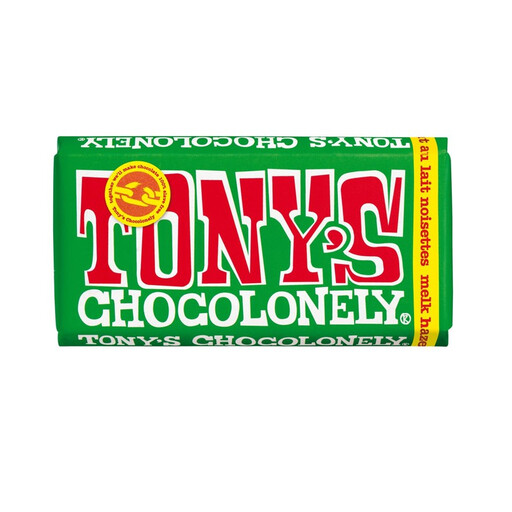 Image unavailable
This bar is a good choice for sharing at home if you can break it up when serving. It contains hazelnuts, so if you need to avoid other allergens too, check all the information on the pack you choose.
 Image unavailable
The nine pieces offer another way to share a chocolate treat, but the total quantity is 104.4 g, so bear that in mind when deciding how many people it will serve. If you need individually wrapped pieces or detailed allergen information, check the pack.
No. The contribution described by the French Ministry of the Economy applies to sugary drinks, not chocolate bars, bags or bites. When choosing between these formats, compare the net weight and the information specific to each product instead.
No. The DGCCRF says that displaying the Nutri-Score is voluntary, whereas a nutrition declaration is required for prepacked foods. If a Nutri-Score is shown, read it alongside the per-100 g values and ingredients list. Don’t rely on it alone to decide whether a chocolate suits your needs.
First, check the ingredients list and allergen information for the specific product, including any warnings about possible traces if someone has an allergy. You can then compare formats using the net weight and nutritional information per 100 g. Check the best-before date and storage instructions on the pack you’ve bought.
Follow the best-before date and storage instructions on the pack you’ve chosen. Before serving it to guests, check the label again: ingredients and allergen information can vary between recipes, even within the same brand.