If you want a set amount with your morning coffee, choose an individual serving of spread. If you prefer to portion it yourself, a mini jar or compact jar lets you enjoy spread just as you would from a regular jar. Check the exact product category, then compare the nutrition information per 100 g and the ingredients: the size of the container doesn’t tell you what’s in it.
Who are these formats for?
Anyone who wants to keep an eye on their portion at breakfast
If you don’t want to leave a large jar open on the table, an individual serving makes the amount available clear straight away. A mini jar still contains spread that you portion yourself, unless you choose to use the whole contents.
Anyone who pays close attention to ingredients
If sugars, fat, ingredients or allergens influence your choice, compare the labels on the specific products you’re considering. Neither a small format nor a Nutri-Score label is a substitute for checking the details.
Households that prefer a compact jar
If you want spread for several breakfasts without buying a large jar, a compact container could be a good fit. Its total weight doesn’t determine how much you serve each morning, though.
What should you look for before buying?
Ready-to-eat single serving
Choose this if: you want a pre-portioned serving without opening a jar.
Bear in mind: a filled biscuit or a product with dipping sticks isn’t a serving of spread on its own.
Mini jar of spread
Choose this if: you want a small amount of spread to serve from its own container.
Bear in mind: you may use the jar more than once, so you decide how much to spread.
Compact jar
Choose this if: you have spread over several breakfasts and prefer a smaller jar.
Bear in mind: a compact jar, such as the 220 g Nutella jar listed by Carrefour, isn’t an individual serving.
For your morning coffee, first decide whether you want a set serving or spread that you can portion yourself. Then compare the recipes on a like-for-like basis: the DGCCRF states that nutrition information is given per 100 g to make comparisons easier.
| Criterion |
What to check |
Who this matters to |
| Serving size |
The product category and the weight of each unit: a serving of spread, a mini jar to spread yourself, or a product made up of several items. |
When I’m having a quick coffee, I want to see straight away how much spread is available, without mistaking a small jar for a set serving. Around 42% of consumers would put having a clearly defined portion first. |
| Ingredients |
Sugars, energy and fat per 100 g, followed by the ingredients and allergens for the product you’re considering. |
When comparing two recipes, I want to understand what they contain rather than rely on the jar size or a claim on the front. Around 33% of consumers would prioritise this. |
| Jar size |
The net weight and whether it’s intended for several breakfasts; a compact jar doesn’t set the amount you spread. |
At home, I prefer a small jar that I can use more than once. Around 25% of consumers would make a size suited to their needs their top criterion. |
Common mix-ups to avoid
-
Assuming “mini” means pre-portioned
A mini jar of spread may last for several servings. Nutella & Go, on the other hand, pairs spread with cereal sticks: it isn’t a jar of spread on its own.
Before choosing a format for breakfast, check the product category, the weight per unit and the number of units.
-
Assuming you know the score if there’s no Nutri-Score label
Santé publique France explains that displaying the Nutri-Score is voluntary. Carrefour says the brand owner doesn’t wish to provide one for the 220 g Nutella jar; its absence doesn’t mean you can assign a score to it.
If a score is displayed, read it alongside the nutrition information and ingredients list rather than using it as your only deciding factor.
-
Relying only on the “no added sugars” claim
Carrefour’s product listings for Dukan and Karéléa spreads mention maltitol. Check the ingredients and allergen information for the specific product you’re considering.
Compare the full ingredients list and values per 100 g. If you have an allergy, check the information on the packaging of the product you buy.
Brands to know
Nutella
The range includes both spread in a jar and a convenient snack with something to dip.
- Carrefour lists a 220 g jar of hazelnut and cocoa spread; Nutella also makes Nutella & Go, which comes with cereal sticks for dipping.
- These products aren’t interchangeable: you portion the spread from the jar yourself, while the on-the-go format includes other foods.
Dukan
A compact jar recipe worth considering if you’re comparing different ingredients lists.
- Carrefour’s listing for the 220 g jar mentions maltitol and displays a Nutri-Score A assigned by the brand owner.
- The listing includes ingredients derived from hazelnuts, milk and soya, among others; check the label on the product you buy.
Karéléa
Another spread recipe, sold in a 400 g jar rather than a mini format.
- Carrefour’s listing states that this product contains maltitol and 10% hazelnuts.
- It also warns of the possible presence of soya and other nuts. The 400 g format isn’t suited to the same needs as an individual serving.
Carrefour Classic'
A range of hazelnut spread jars to consider if you’re looking for a container you can use more than once.
- The Carrefour catalogue includes sizes from 400 g to 1 kg.
- These aren’t individual servings. Check the product listing and label for the ingredients in each recipe.
Joybuy products for these uses
These two products suit different ways of enjoying your morning coffee: spreading a 25 g portion of chocolate spread or having a filled wafer that’s ready to eat. The wafer isn’t a mini jar of spread.
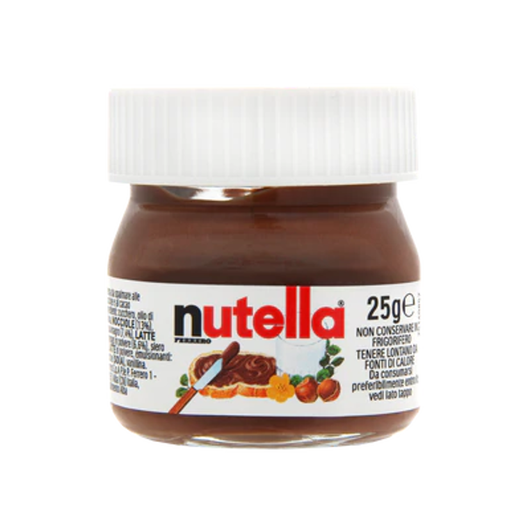 Image unavailable
Nutella hazelnut and chocolate spread, 25 g
A 25 g portion of spread for anyone who wants a pre-portioned amount to spread at breakfast.
Before choosing this product based on its ingredients or allergen requirements, check the ingredients list and nutrition information on the packaging.
View on Joybuy
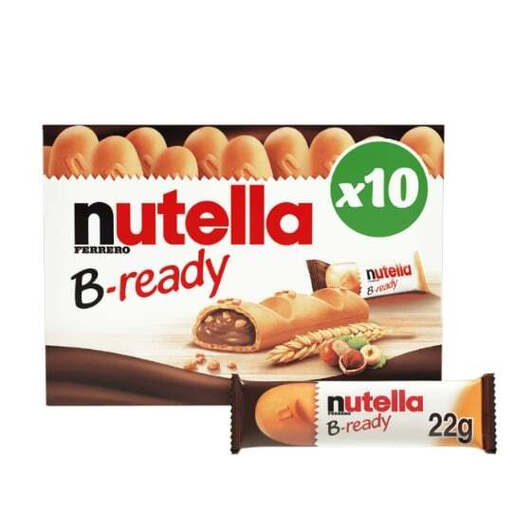 Image unavailable
Nutella B-ready, 10 wafers of 22 g
For a ready-to-eat snack with your coffee, the pack contains ten individually wrapped filled wafers, each weighing 22 g. This isn’t spread sold on its own.
The product description mentions hazelnuts, milk, soya, wheat and barley; check the allergen information on the packaging before eating.
View on Joybuy
Frequently asked questions
Is Nutri-Score mandatory on spread in France?
No. Santé publique France says that displaying it is voluntary for producers. When comparing two prepacked spreads, also check their nutrition information: the DGCCRF states that this is given per 100 g and is mandatory for most prepacked foods.
What should I check if I’m allergic to nuts, milk or soya?
Check the ingredients and allergen information for the exact product on its packaging. Carrefour’s listing for the 220 g Nutella jar mentions hazelnuts, milk and soya; its Karéléa listing warns of the possible presence of soya and other nuts, among other things. You can’t tell this information from the size of the jar.
Does a mini jar keep for as long as a large jar?
Follow the storage instructions and date shown on the packaging of the product you choose. Its small size alone doesn’t tell you how long it will keep after opening.


