Sharing a large jar
You’re planning to use it on several occasions or serve it as part of a dessert to share, and want to choose an amount you’ll actually get through.


For a Valentine’s Day treat, start by choosing an amount that suits the number of people and how you plan to use it, rather than automatically reaching for a large jar. Then compare recipes by checking the ingredients, allergens and nutritional values per 100 g. The Nutri-Score can be helpful when shown, but its absence is no reason to skip the label.
You’re planning to use it on several occasions or serve it as part of a dessert to share, and want to choose an amount you’ll actually get through.
You compare sugar content, the stated hazelnut percentage, ingredients and allergens before choosing a spread for yourself or someone else.
Whether it’s for pancakes, breakfast or a Valentine’s Day gift, you’d prefer a size that suits the number of people you’re serving.
First work out how much you’ll need for the occasion, then check the recipe and label if you’re sharing or giving the jar as a gift.
| What to consider | What to check | Who this matters to |
|---|---|---|
| Amount and how you’ll use it | Check the net weight and think about how many people will use the jar, and how often. | If I’m planning several desserts or a jar to share, I want an amount we’ll finish; around 50% of consumers might put this first. |
| Ingredients and allergens | Read the ingredients, highlighted allergens and sugar content per 100 g. Compare the hazelnut percentage where it’s stated. | When I’m giving a jar to someone with dietary requirements, I want to be able to check the recipe carefully; around 30% of consumers might make this a priority. |
| Size for the occasion | Choose the net weight to suit the dessert or gift you have in mind, and check the best-before date. | For a one-off occasion, I’d rather choose a portion that suits the number of guests than leave a jar open for a long time; around 20% of consumers might prioritise this size. |
The DGCCRF describes the Nutri-Score as a voluntary label in France. A jar without a score cannot be judged on that basis alone.
Check the nutritional information per 100 g, then read the ingredients and allergens.
An organic recipe or a claim that a spread contains no palm oil doesn’t mean it’s free from milk, soya or nuts. These claims don’t tell you everything about what’s in the jar.
Before giving or sharing the jar, read the full ingredients list and check the highlighted allergens.
A family-size jar may be more than you need for a few slices of toast, pancakes or a small Valentine’s Day gift.
Estimate how many people will be having it and how you plan to use it, then check the net weight and best-before date.
The sizes and recipes mentioned below are based on the products listed by the retailers. Check the label on the jar you choose.
A cocoa and hazelnut spread, available in an 825 g jar on Carrefour’s product page, among other sizes.
A Marque Repère spread listed in a 1 kg jar by E.Leclerc.
A hazelnut-flavoured spread listed in a 750 g jar by E.Leclerc.
A hazelnut spread listed in a 750 g jar by ALDI.
An organic cocoa and hazelnut spread by Rigoni di Asiago, described on Carrefour’s product page.
These Nutella sizes range from a 25 g portion to a 3 kg jar. Choose according to how much you’ll need for Valentine’s Day, then check the label on your chosen product if its ingredients matter to you.
 Image unavailable
This 1 kg jar could work well for several occasions or a dessert to share, if the amount suits your plans.
If someone has dietary requirements, check the ingredients and allergens on the packaging.
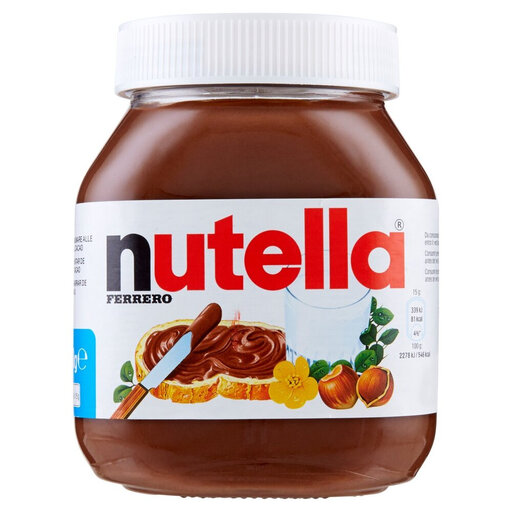 Image unavailable
Consider the 630 g jar if you’re planning to share the spread or use it on several occasions.
Compare its net weight with the other sizes before deciding how much you need.
 Image unavailable
This 750 g jar is better suited to sharing or using for more than one dessert.
If the ingredients will guide your choice, check the nutritional information and allergens on the jar.
 Image unavailable
Only consider the 3 kg jar if you’re planning to use a large amount; it may be too much for a small, one-off treat.
Check that this size suits how you plan to use it.
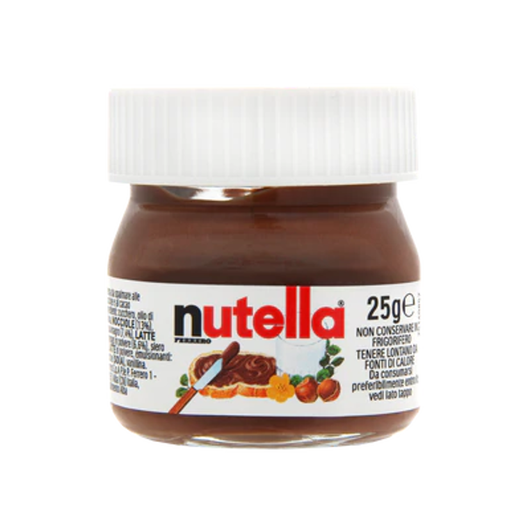 Image unavailable
The 25 g portion could be handy for an individual serving on the occasion, but don’t assume it comes in gift-ready packaging.
If you need to check the sugar content or allergens, read the label on this portion.
No. The DGCCRF confirms that the Nutri-Score is voluntary. Pre-packed foods generally need to carry a nutritional declaration, which lets you compare sugar and fat content per 100 g, among other things.
No. The absence of a score isn’t enough to judge what’s in the jar. Read the nutritional values per 100 g and the ingredients list. For example, Carrefour’s product page for the 825 g Nutella jar says the brand owner does not provide a Nutri-Score for this product.
Check the allergens listed for the specific recipe, especially nuts, milk and soya if they appear in the ingredients or in a ‘may contain traces’ statement. The DGCCRF reminds consumers that allergenic ingredients must be highlighted in the ingredients list, so check that rather than relying on the front of the jar.