Travellers avoiding added sugars
You’re looking for a chocolate and hazelnut spread labelled ‘no added sugars’, without assuming it is also ‘reduced in sugars’. The ingredients list and nutrition information can help you make your choice.


For a train journey, choose a jar labelled ‘no added sugars’ if that is your priority and you can bring something to eat it with. If you have no utensil and don’t want to prepare anything, a ready-to-eat snack is more practical, but that doesn’t make it a ‘reduced-sugar’ option. In either case, check the ‘of which sugars’ line, the ingredients, allergens and pack size: ‘no added sugars’ does not mean ‘reduced in sugars’.
You’re looking for a chocolate and hazelnut spread labelled ‘no added sugars’, without assuming it is also ‘reduced in sugars’. The ingredients list and nutrition information can help you make your choice.
You want something to eat on the journey without having to make a sandwich. A ready-to-eat snack could suit you, but remember to check its sugar content separately.
You need to check for hazelnuts, milk, other allergens or sweeteners. The ingredients in the specific product you choose matter more than the claim on the front of the pack alone.
When choosing chocolate spread to take on the train, first check the sugar claim and ingredients, then make sure the pack will be easy to enjoy on your journey.
| What to check | Look for | Who it matters to |
|---|---|---|
| Sugars | Tell the difference between ‘no added sugars’ and ‘reduced in sugars’; check ‘of which sugars’ per 100 g and, if listed, per portion. | If I’m mainly looking for a less sugary recipe, an appealing claim isn’t enough to decide. Around 42% of shoppers would make this their first check. |
| Convenience | Check whether it’s ready to eat or whether you’ll need something to spread it on and a utensil. | If I want to eat on the train without any preparation, I’d choose something I can open and eat straight away; around 33% of shoppers would put convenience first. |
| Ingredients | Read the ingredients, highlighted allergens and any ‘may contain’ statements; look out for sweeteners. | If there are ingredients I can’t have, I need to identify the exact recipe before buying. Around 25% of shoppers would make this their first check. |
A recipe with no added sugars can still contain naturally occurring sugars, particularly if it includes date powder. On its own, the claim doesn’t show that the product contains less sugar than a comparable one.
If you’re looking for a reduction in sugars, check the exact claim and compare the ‘of which sugars’ figure per 100 g, then for the amount you plan to eat. The DGCCRF distinguishes between claims about added sugars and claims about reducing sugars.
A jar of spread doesn’t come with bread or biscuits, or a utensil. A snack with breadsticks, on the other hand, needs no preparation, but that doesn’t guarantee a reduced sugar content.
If you choose a jar, bring something to eat it with and a way to carry it without making a mess in your bag. If you opt for a ready-to-eat snack, check the sugars on the label.
Recipes vary: Carrefour’s product listing for Gerblé’s no-added-sugars spread specifies maltitol and lists ingredients including hazelnuts and milk.
Read the ingredients list and allergen information for the exact product you’re considering, even if you already know the brand.
These examples refer to specific spreads: check the recipe and pack size of the one you choose.
A 400 g jar of chocolate and hazelnut spread labelled ‘no added sugars’—worth considering if you can bring something to eat it with and a utensil.
A 190 g jar of hazelnut spread labelled ‘no added sugars’.
A hazelnut and cocoa spread labelled ‘no added sugars’, for shoppers who are happy with a recipe containing a sweetener.
These two Nutella options are snacks to take with you, with no separate jar of spread. They’re a practical choice for the train, rather than a confirmed option for anyone looking for ‘reduced-sugar’ chocolate spread.
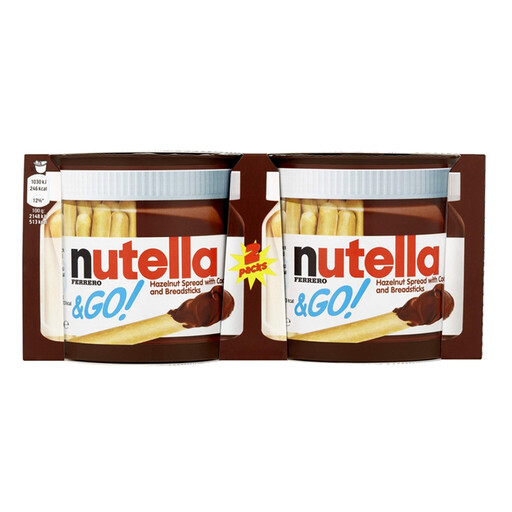 Image unavailable
This pack combines chocolate spread and breadsticks, so you can enjoy it on your journey without a utensil.
Its convenience doesn’t mean it should be considered ‘reduced in sugars’. Before choosing this 78 g product, check the sugars and allergens on the label.
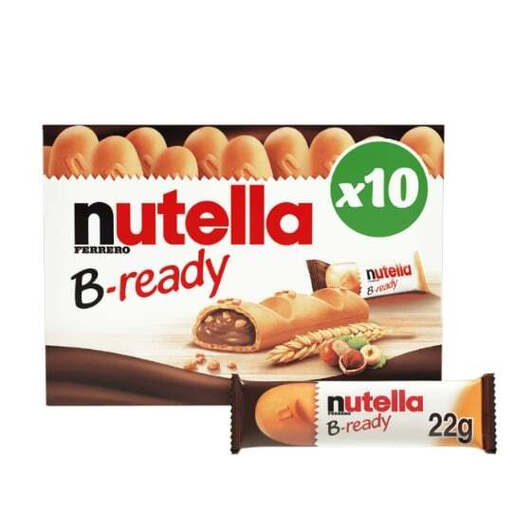 Image unavailable
This filled wafer is ready to eat on the train; it isn’t a standalone chocolate spread.
This pack contains 10 pieces and weighs 220 g. If you’re comparing it with a jar or another snack, check the sugars and allergens for this specific product.
No. The finished product may contain sugars that occur naturally in its ingredients. For example, Carrefour’s product listing for L’Amandaie spread specifies 25% date powder. Check the ‘of which sugars’ figure per 100 g; the ‘no added sugars’ claim also doesn’t prove that the spread contains less sugar than another one.
No. According to the European Commission, front-of-pack nutrition information, including Nutri-Score, is voluntary, while nutrition declarations are generally compulsory for prepacked foods. If a product displays a Nutri-Score, consider it alongside the nutrition values and ingredients list. Don’t rely on it alone to decide whether the product suits your needs.
No. The Bulletin officiel des finances publiques-Impôts describes a levy that applies to non-alcoholic drinks meeting the specified conditions, not to chocolate spreads. When choosing between spreads, check their nutrition labels and ingredients instead.
Check the ingredients list and any ‘may contain’ information for the exact product. The recipes mentioned here may contain hazelnuts or milk, for example. Carrefour’s product listing for Gerblé spread also states that it is made in a factory that handles peanuts, tree nuts, soya and gluten.