Travellers who want a set portion
If you’re making a slice of toast, a single-serve tub gives you a pre-measured amount of spread without having to open a jar on the train. However, the 15 g Nutella tub featured by CoffeeChoc is sold in a multipack.


If you’re preparing a portion to spread before your journey, a single-serve tub saves you having to take a jar on the train. However, the 15 g Nutella tub featured by CoffeeChoc is sold in packs of 25, 60 or 120. A jar is more suitable if you’re taking bread and a utensil. If you want something you can eat straight away, choose an individual snack instead – just don’t confuse it with a spread to put on your own bread.
If you’re making a slice of toast, a single-serve tub gives you a pre-measured amount of spread without having to open a jar on the train. However, the 15 g Nutella tub featured by CoffeeChoc is sold in a multipack.
A jar lets you spread the amount you want on the bread you’ve brought along, whether you’re making several slices or sharing with others. Take a utensil, and make sure you can reseal and carry the jar after opening it.
An individually wrapped filled wafer can be a handy, ready-to-eat snack. Nutella’s B-ready is one example, but it’s a wafer – not a portion of spread to put on your own bread.
First, decide whether you want to spread something on your own bread or have a ready-to-eat snack. If you want to make your own, compare single-serve portions and jars based on how many portions you need.
| What to consider | What to check | Who is it for? |
|---|---|---|
| Portion and ease of use | The tub’s weight and the number of tubs in the pack. | I want to plan for a slice of toast without measuring spread from a jar during my journey; around 42% of consumers would put a set portion first. |
| Putting your own meal together | How much you need, whether you’ll need to bring a utensil and whether the jar can be resealed after opening. | If I’m making several slices or sharing my meal, I’d rather choose how much to use; around 33% of consumers would prioritise this flexibility. |
| Ready-to-eat snack | What the product is: a filled wafer or a spread with something to dip into it. | If I don’t want to take bread or a knife, I’m looking for something I can eat straight away; around 25% of consumers would put this use first. |
The DGCCRF survey cited in relation to this tax covers non-alcoholic soft drinks, including fizzy drinks, not the choice of a chocolate spread.
When comparing spreads, look instead at the portion size, ingredients and nutritional information for the product in question.
According to Santé publique France, Nutri-Score is an additional label alongside the mandatory nutrition declaration, and displaying it is voluntary. Its absence isn’t enough to judge a product.
Compare the nutritional values and ingredients of products in the same category.
One portion may be right for a meal, while an entire multipack could be more than you need for an occasional journey.
Count how many portions you need before choosing between tubs and a jar.
The 15 g Nutella tub featured by CoffeeChoc is sold in packs of 25, 60 or 120, so you’ll need to store and keep track of any portions left over.
An individually wrapped wafer is ready to eat, but it won’t let you fill the bread you’ve brought along.
Choose a tub or jar if you want to make your own; go for a wafer if a ready-to-eat snack is what you’re after.
Two different formats could work for a train journey: the 15 g tub of spread featured by CoffeeChoc and the individually wrapped B-ready wafer described by Nutella France.
The jars listed by Carrefour could be worth considering if you’re putting together a meal with bread and a utensil.
The product listed by E.Leclerc is a 1 kg jar of spread, better suited to several uses than as a single portion for a journey.
This hazelnut and cocoa spread is listed in Auchan’s catalogue in 400 g and 750 g jars.
Both products pair a chocolate treat with a ready-to-eat snack that doesn’t need a knife. The B-ready wafer and Nutella & Go dip format aren’t substitutes for a tub of spread to put on your own bread.
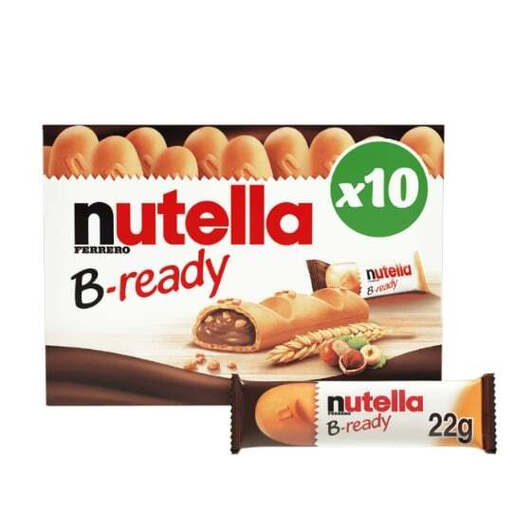 Image unavailable
This filled wafer is a good choice if you want a snack you can eat without bread or a knife; it isn’t for spreading on your own bread.
The product name gives a total weight of 220 g. Check the ingredients and nutritional information on the packaging supplied.
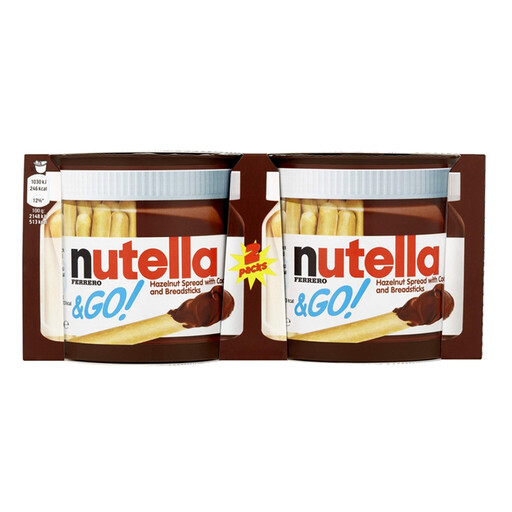 Image unavailable
This snack pairs cocoa and hazelnut spread with breadsticks for dipping, with no extra utensil needed. It isn’t a tub of spread on its own for topping your own bread.
The stated total weight is 78 g. If the number of portions matters to you, check the exact pack format before buying.
The tax mentioned in the DGCCRF survey applies to non-alcoholic soft drinks, not chocolate spread. When choosing a spread, check its ingredients, portion size and nutritional values instead.
No, displaying Nutri-Score is voluntary. Santé publique France describes it as an addition to the mandatory nutrition declaration. If the logo isn’t shown, you can check the nutritional values and ingredients for the specific product.
Check the ingredients list and allergen information on the packaging of the product you buy, as recipes vary. For example, the Nustikao product details from E.Leclerc mention hazelnuts and milk-based ingredients. Don’t assume another product has the same ingredients.
Not on every journey: SNCF Connect lists catering options for certain services and routes. Check what’s available on your train before deciding whether to bring your own food.