What should you look at first?
When choosing a spread for revision breaks, the choice between a no added sugars recipe and a classic recipe isn’t just about taste: declared sugar content, ingredients and portion size each meet different priorities.
No added sugars, no sweetener listed
Worth considering: if you’re looking for a no added sugars recipe and would rather avoid a sweetener listed in the ingredients. Check the ingredients on the specific jar.
Good to know: no added sugars doesn’t rule out naturally occurring sugars. Carrefour also notes that the 400 g Lucien Georgelin recipe may need stirring.
No added sugars, with a sweetener
Worth considering: if a recipe containing maltitol suits you. The Auchan product page for Gerblé spread lists 8.2 g of sugars per 100 g.
Good to know: the same product page lists 36 g of polyols per 100 g and mentions hazelnuts and milk.
Classic chocolate and hazelnut recipe
Worth considering: if you prioritise a familiar recipe over reducing the declared sugar content.
Good to know: the Auchan product page for 1 kg Nutella lists 56.3 g of sugars per 100 g. Don’t confuse this figure with the amount per serving.
| What to compare |
What to check |
Who is it for? |
| Sugar content |
Compare ‘of which sugars’ per 100 g across spreads intended for the same use, then consider the portion you plan to have. |
If I want to limit the sugars in my spread during a revision break, a claim on the front of the pack isn’t enough. Around 50% of consumers would put this comparison first. |
| Ingredients and allergens |
Read the ingredients list to spot sweeteners and polyols; check the allergens and warnings on the packaging. |
If certain ingredients don’t suit me, I need to know what’s in a recipe before choosing it. For around 30% of consumers, this would be their main concern. |
| Taste and portion size |
Compare sugars per serving when this information is provided, and choose a pack size that suits how much you use. |
I may prefer a familiar chocolate and hazelnut recipe while still being mindful of how much I spread. This would be a priority for around 20% of consumers. |
Spreads available on Joybuy
These spreads may be worth considering for a revision break. To choose according to your priorities, check the sugars per 100 g and the ingredients of the product listed. Don’t assume that a difference in recipe means it is labelled ‘reduced in sugars’.
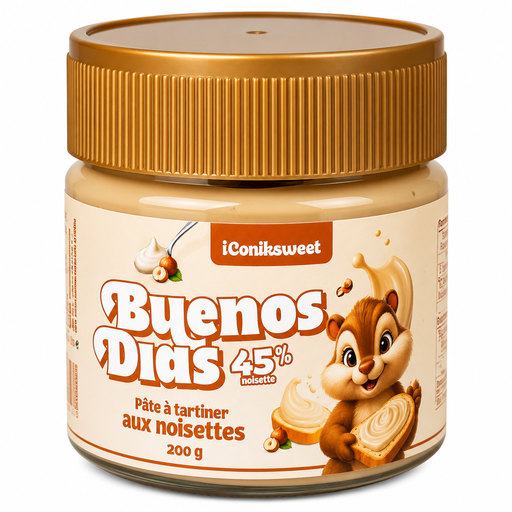 Image unavailable
BUENOS DIAS hazelnut cream 200 g
If you’re after hazelnut cream for a revision break, compare the sugars per 100 g and check the allergens listed on the packaging before choosing this jar.
View on Joybuy
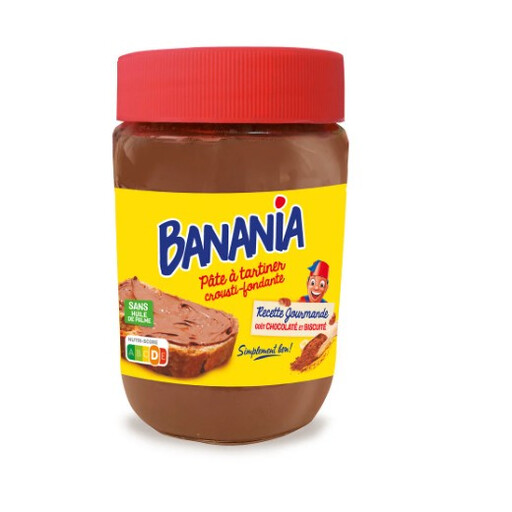 Image unavailable
Banania spread with no palm oil 400 g
If avoiding palm oil matters to you for a revision break, check the sugars per 100 g separately: this feature doesn’t tell you how much sugar the spread contains.
View on Joybuy
Frequently asked questions
Does ‘no added sugars’ mean ‘sugar-free’?
No: a spread with no added sugars can still contain naturally occurring sugars. Check the ‘of which sugars’ figure per 100 g in the nutrition table on the jar you choose.
Is Nutri-Score compulsory on spreads in France?
No, displaying it is optional, as the Ministry of the Economy explains. To compare spreads, check the nutrition table per 100 g; if Nutri-Score is shown, you can use it as additional information.
How should you store a spread after opening?
Follow the instructions on the jar you bought, as these relate to its recipe and pack size. For example, the Auchan product page for 1 kg Nutella says to store it in a cool, dry place and not to refrigerate it; the page for 280 g Lucien Georgelin spread says to use it within 30 days of opening.
Does the levy known as the ‘soda tax’ apply to spreads?
No: in France, the scope of the levy described by Légifrance covers drinks and liquid preparations for drinks containing added sugars, not spreads. To compare spreads, check their sugar content on the label rather than applying a rule intended for drinks.


