If you’re mainly comparing sugar content
For a chocolatey break while studying, you want to compare sugars, fat and serving size rather than choosing based on the jar’s appearance alone.


When choosing chocolate spread for a study break, compare the sugars and fat per 100 g, then consider how these figures relate to the amount you actually spread. Check the ingredients and allergens for the specific product. A displayed Nutri-Score can be a useful extra guide, but it shouldn’t replace these checks.
For a chocolatey break while studying, you want to compare sugars, fat and serving size rather than choosing based on the jar’s appearance alone.
You need to check for hazelnuts, milk, soya and any ‘may contain’ warnings before choosing a snack for yourself or someone else.
You’re looking for a spread in a size that suits how often you eat it while studying, with storage instructions you can follow.
For a study break, start by choosing the right product category: a jar of spread has different considerations from a gift box of chocolates. For a jar, check allergens first if relevant, then compare the nutritional values and size.
| What to consider | What to check | Who is this for? |
|---|---|---|
| Sugars and serving size | Compare the sugars and fat per 100 g, then relate them to the amount you spread. | If I want a clearer idea of what my chocolatey break involves, the per-100 g figures aren’t enough without knowing the serving size. Around 46% of consumers rank this nutritional comparison as their main concern. |
| Allergens | Read the ingredients and any ‘may contain’ warnings for the specific product, particularly for nuts, milk and soya. | If I need to avoid an allergen, the jar’s ingredients matter more than its taste or size. This is the main priority for around 27% of consumers. |
| Size and storage | Choose a jar size that suits how you’ll use it, and follow the storage instructions after opening. | If I only spread it occasionally, I want a size I can use in line with the instructions on the label. For around 27% of consumers, jar practicality is the main consideration. |
The contribution described by Légifrance applies to drinks and liquid preparations for drinks, not to a solid spread simply because it contains sugar.
To compare two jars, look at their nutritional values instead, particularly the sugars and fat per 100 g.
The European Commission distinguishes between the nutrition declaration generally required on prepacked foods and Nutri-Score, which is displayed voluntarily on the front of the pack. The absence of Nutri-Score isn’t enough, on its own, to judge a product.
If it appears on the products you’re considering, use it as an extra guide when comparing similar spreads, then check their nutritional values and ingredients.
Claims such as ‘organic’, ‘palm oil-free’ or ‘reduced sugar’ don’t tell you on their own whether a product contains hazelnuts, milk or soya.
If you have an allergy, check the ingredients and any ‘may contain’ warnings for the specific product and size you’re planning to buy.
For spreading on a study-break snack, the recipe, serving size and storage instructions matter. A gift box also raises questions about the selection and presentation.
First decide whether you’re looking for a spread for your breaks or chocolates to give as a gift, then compare products in that category.
A chocolate and hazelnut spread brand to consider among the options in this category.
The brand offers chocolate and hazelnut products, including an organic spread listed on Carrefour and a reduced-sugar version listed on Auchan.
The brand’s range includes a chocolate and hazelnut spread in a jar.
A chocolate and hazelnut spread from the brand is listed on Carrefour.
These hazelnut spreads are options to consider for a study break. Compare the size with how you plan to use the product, then check the label for the sugars and allergens in each specific product.
 Image unavailable
This 250 g jar could be a good size to compare if you’re looking for a spread for study breaks. Check the sugars per 100 g and the allergens for this specific product before choosing.
 Image unavailable
Consider whether the 400 g size suits how often you’ll use it. Before choosing this spread, also check the sugars, allergens and storage instructions after opening for the specific product.
 Image unavailable
With a 1 kg jar, it’s worth thinking about how much you’ll use and how it should be stored. Compare the per-100 g values with the serving you’ll actually have, and check the allergens on the label.
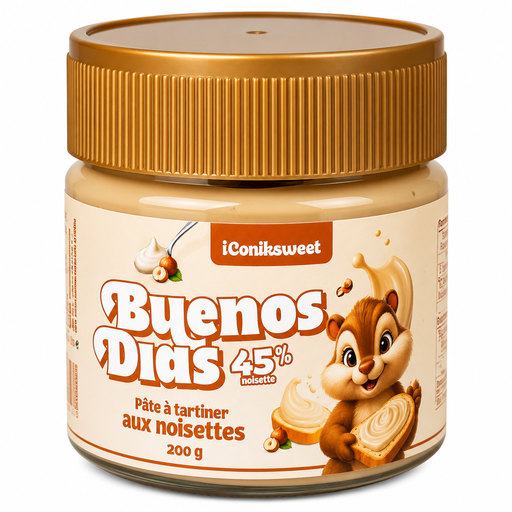 Image unavailable
The 200 g jar is a size to consider in relation to how often you use the product. The allergen information for this product isn’t entirely consistent across listings. If you have an allergy, rely on the label on the exact product rather than its online description alone.
Check for hazelnuts and other nuts first, then milk, soya and, depending on the product, peanuts. Read the ingredients and any ‘may contain’ warnings separately on the specific product, especially if the spread is for someone with an allergy.
No. Displaying Nutri-Score on the front of the pack isn’t a general requirement. The European Commission says that a nutrition declaration is generally required for prepacked foods. Use the nutritional values and ingredients list to compare jars, whether or not they display a Nutri-Score.
Follow the instructions for the product you’ve bought, as they can vary from one jar to another. For example, the Auchan listing for Jardin Bio étic reduced-sugar spread says not to refrigerate it and to consume it preferably within a month of opening.
No, not to a solid spread simply because it contains sugar. The text published by Légifrance applies to drinks and liquid preparations for drinks. When choosing a jar, check the sugars listed in its nutritional values instead.
For a prepacked food sold at a distance in the European Union, relevant mandatory food information must be available before you complete your purchase, according to the European Commission. If you need to check an allergen or nutritional value, look at this information before ordering, then check the label on the product you receive.