Families who buy it regularly
If you use the jar for several after-school snacks, its size should match how much you actually use. A larger jar is only useful if you expect to finish it while following the storage instructions.


For a classic after-school snack, start by choosing a size that suits how you’ll use it, then compare the sugars and saturated fat per 100 g, the ingredients and the allergens. If shown, Nutri-Score can help you compare similar products, but it’s optional in France according to the Ministry of the Economy. A plant-based recipe is not necessarily milk-free.
If you use the jar for several after-school snacks, its size should match how much you actually use. A larger jar is only useful if you expect to finish it while following the storage instructions.
To compare two recipes, check the nutritional information per 100 g and the ingredients list. The amount you spread on a slice of bread also contributes to the overall snack.
If you’re looking for a plant-based recipe or need to avoid an allergen, check the ingredients and precautionary statements on the jar you’re considering. A “plant-based” label alone isn’t enough to rule out the risk of milk.
Start with how much you’re likely to use, then check the label on the specific product. The DGCCRF states that the nutrition declaration on relevant prepacked foods gives values per 100 g, making it easier to compare recipes on a like-for-like basis.
| Criteria | What to check | Who this matters to |
|---|---|---|
| Size | Check the net weight and choose a size that suits how often you’ll use it. | If it’s for several after-school snacks, I look for a jar I can finish without choosing one that’s too large for my usual needs. Around 40% of consumers put finding the right size first. |
| Nutritional composition | Compare the sugars and saturated fat per 100 g, and consider the amount you’ll serve. | If I serve it regularly, I want to be able to compare recipes and decide how much to spread. For around 40% of consumers, nutritional composition comes ahead of other criteria. |
| Allergens and dietary requirements | Check the ingredients for allergens and read any “may contain” statements on each jar. | If I need to avoid an ingredient, the recipe’s suitability and any precautionary statements determine my choice. This is a priority for around 20% of consumers. |
The French Ministry of the Economy states that displaying it is optional in France. So its absence alone doesn’t tell you what a chocolate spread contains.
If two similar products display it, use it as an additional guide. Either way, check the nutrition information per 100 g and the ingredients.
Comparing labels won’t tell you how much you’ll spread on each slice of bread. Manger Bouger recommends limiting foods high in fat and sugar as part of your everyday diet and offering a variety of foods at snack time.
Choose a size that suits your habits and consider how much you’ll serve, as well as the other foods included in the snack.
Nutella states that Nutella Plant-Based may contain milk and isn’t suitable for people with a milk protein allergy. The plant-based label doesn’t replace the precautions needed for each specific allergy.
Before buying, check the ingredients and precautionary statements on the exact jar you’re considering.
These examples show some of the sizes and recipes available. Always check the label to choose a jar that suits your needs.
Carrefour listed Nutella hazelnut and cocoa spread in 220 g, 400 g, 630 g and 825 g jars. Nutella also offers a separate Plant-Based recipe.
Carrefour’s Classic' range includes a 400 g hazelnut, cocoa and vanilla spread.
ALDI lists a 400 g CUCINA XXL milk and hazelnut spread.
These Nutella jars let you compare several sizes for toast or baking, as well as a Plant-Based recipe if that’s what you’re looking for. Consider the size and the label on your chosen jar separately.
 Image unavailable
This size may suit you if you use hazelnut and cocoa spread regularly. Check that 1 kg matches your usual consumption.
Before choosing how much to serve, compare the sugars and saturated fat per 100 g on the label.
 Image unavailable
This 3 kg size is intended for high-volume use. For after-school snacks, make sure it suits how much you’ll actually use.
Check the nutrition information per 100 g and the storage instructions on the jar.
 Image unavailable
This 750 g jar is another size to consider for toast. Choose it based on how much you expect to use.
Check the sugars and saturated fat per 100 g on the jar’s label.
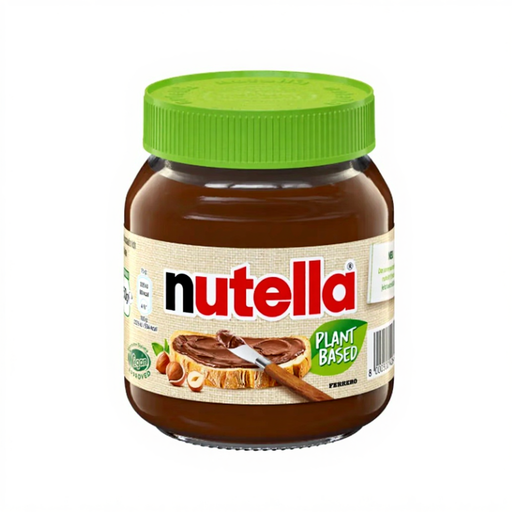 Image unavailable
This 350 g plant-based recipe may appeal if you’re looking for this type of spread for your after-school snacks.
According to Nutella, it may contain milk and isn’t suitable for people with a milk protein allergy. Check the ingredients, allergens and nutrition information on the specific jar.
No. The French Ministry of the Economy states that Nutri-Score is optional. However, according to the DGCCRF, most prepacked foods must display a nutrition declaration. If the logo isn’t shown, compare the values per 100 g and the ingredients of similar products.
First, check the ingredients and any highlighted allergens, then look at the nutrition information, net quantity, best-before date and storage instructions. The DGCCRF reminds shoppers that allergens must be identified on the labels of prepacked foods.
Not necessarily. Nutella states that Nutella Plant-Based may contain milk and isn’t suitable for people with a milk protein allergy. Check the label on the specific jar rather than relying on the plant-based name alone.