What should you look for first?
For a snack to take to school, start with allergens and the school’s requirements. Then compare the recipes and choose packaging that suits how you’ll serve the portion.
| Criteria |
What to check |
Who is it for? |
| Serving and portion |
Exact type of container and how it dispenses; amount served, regardless of pack size. |
To pack a snack without making a mess in the bag, I want to be able to measure out the amount before we leave; serving and portion size come first for around 30% of consumers. |
| Allergens and school |
Ingredients, ‘may contain’ warnings and the school’s requirements; an individual healthcare plan (PAI) where applicable. |
If the snack needs to meet specific allergen requirements, I want to rule out recipes that aren’t suitable; these checks are a priority for around 30% of consumers. |
| Sugar and labelling |
The ‘sugars’ figure per 100 g and other relevant nutrition information; Nutri-Score if displayed. |
I want to compare two recipes by their sugar content, rather than judging them by the packaging alone; around 30% of consumers put this comparison first. |
| Family-sized quantity |
Net weight and how much the household will actually use; the label for the variant selected. |
When I regularly prepare snacks at home, I look for a format that suits how much my household gets through; around 10% of consumers prioritise this need. |
A snack-time portion on Joybuy
This 25 g portion of chocolate and hazelnut spread could be a handy option when preparing a snack to take out with you. If you’re looking for a product you can serve straight from a squeezy bottle, check the container shape and closure separately.
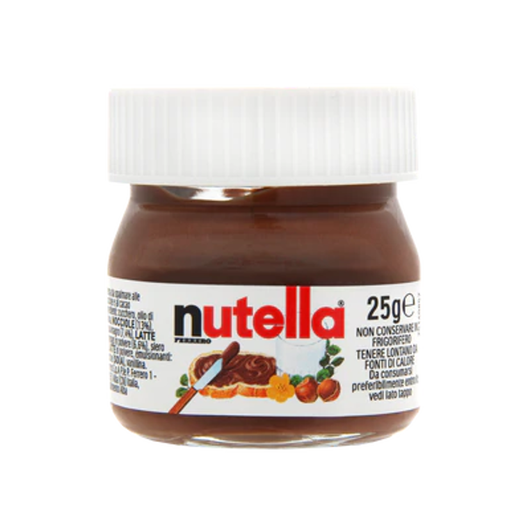 Image unavailable
Nutella chocolate and hazelnut spread, 25 g
The individual 25 g portion makes it easy to plan how much to take for a snack. Check the packaging for ingredients, allergens and sugar content per 100 g, as well as the type of container and its closure, before expecting it to work as a squeezy product.
View on Joybuy
Frequently asked questions
Is Nutri-Score compulsory on spread sold in France?
No. As the DGCCRF explains, displaying the Nutri-Score is voluntary. However, nutrition information on prepacked spread lets you check details such as energy, fat and sugars per 100 g.
Does the tax on sugary drinks apply to chocolate spread?
No. Article 1613 ter of the French General Tax Code, published by Légifrance, applies to drinks and liquid preparations for drinks, not to spreads. If sugar content is important to you, compare the amount per 100 g directly on the packaging.
Does all chocolate spread contain gluten?
No. You can’t assume that every product in this category has the same ingredients or traces. E.Leclerc’s Bio Village product listing warns that it may contain traces of cereals containing gluten. Check the ingredients list and any ‘may contain’ warnings for the product you buy.
How do you choose a snack to take to school if your child has a food allergy?
Choose a product based on its exact label and the requirements that apply to your child and their school, rather than relying on the format alone. The French Ministry of National Education explains that an individual healthcare plan can be put in place to set out the adjustments needed at school.


