Which criteria should you compare?
When choosing a spread for your organic shop, start with the label on the specific jar, then compare recipes according to what matters most to you.
| Criterion |
What to check |
Who it matters to |
| Organic certification |
The organic claim on the jar and the ingredients list for the product you have chosen, rather than just the recipe name. |
I want to make sure the product in my basket meets my organic criteria. Around 36% of shoppers put this check first. |
| Sugars and allergens |
The ‘of which sugars’ figure per 100 g, followed by the ingredients and any precautionary allergen warnings. You can also check the Nutri-Score if it appears on the packaging. |
For regular breakfasts, I need to compare sugar content and spot ingredients my household needs to avoid. This is the top priority for around 29% of shoppers. |
| Oils and other recipe criteria |
The type of fat used and, if you are looking for fair-trade products, the ingredients covered and the proportion of the recipe they make up. |
I want to avoid palm oil or understand exactly what a fair-trade claim covers. Around 21% of shoppers prioritise this aspect of the ingredients. |
| Pack size and availability |
The net weight, storage advice once opened and whether the product is available from your chosen shop or service. |
If I’m looking for a pack size that suits my household, I also want to be able to get the jar I’ve chosen when I do my shopping. This is a priority for around 14% of shoppers. |
Spreads available on Joybuy
This selection includes cocoa and hazelnut, cocoa and peanut, and praline recipes that you can compare when shopping for organic products. For each jar, check for an organic claim on the packaging: the word ‘Organic’ in a product name is not enough to confirm that the recipe is certified.
 Image unavailable
RIGONI DI ASIAGO Nocciolata Organic cocoa and hazelnut spread, 250 g
A cocoa and hazelnut option to try on toast. Check for an organic claim and allergen information on the jar you choose.
Size: 250 g.
View on Joybuy
 Image unavailable
LUCIEN GEORGELIN organic hazelnut and cocoa spread, 400 g
If you’re comparing organic hazelnut and cocoa spreads, Lucien Georgelin states that this 400 g product contains 16% hazelnuts and 7% low-fat cocoa.
It contains hazelnuts and milk. Check the ‘of which sugars’ figure on the jar before comparing it with another spread.
View on Joybuy
 Image unavailable
FUNKIE Organic Hazelnut Cocoa Smooth, 200 g
A cocoa and hazelnut recipe to consider if you want to compare 200 g spreads. Check that the full recipe is certified organic on the jar.
Before comparing it with other products, also check the allergens and nutritional values per 100 g on the packaging.
View on Joybuy
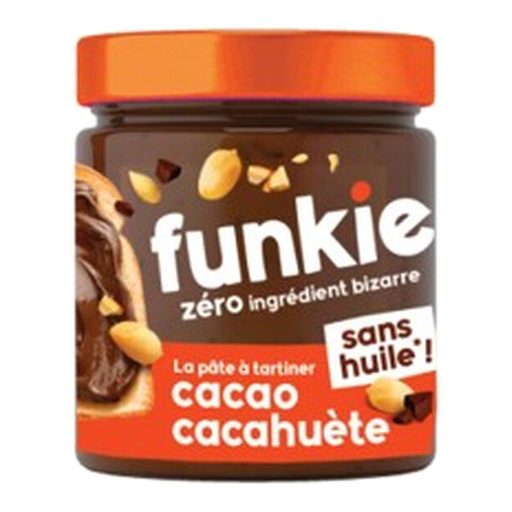 Image unavailable
FUNKIE Smooth Organic Cocoa & Peanut, 200 g
This 200 g cocoa and peanut spread offers something different from cocoa and hazelnut recipes. Check that it is suitable for everyone who will be eating it.
It contains peanuts. Check for an organic claim on the jar and look at its nutritional values per 100 g.
View on Joybuy
 Image unavailable
FUNKIE Organic Praline Smooth, 200 g
This 200 g praline recipe is another option to consider if hazelnuts matter to you; it contains hazelnuts.
To compare it with cocoa and hazelnut spreads, check the ingredients, organic claim and nutritional values per 100 g on the jar.
View on Joybuy
Frequently asked questions
How can you tell if a spread is organic in France?
Check for an organic claim or logo on the specific jar, then read its ingredients list. The Ministry of Agriculture says organic farming is governed by European regulations that also cover processed food products.
Does organic spread always contain less sugar?
No. Organic standards do not set the same sugar content for every spread. Compare the ‘of which sugars’ figure per 100 g on the packaging. For reference, Lucien Georgelin states that its 400 g organic hazelnut and cocoa spread contains 55 g of sugars per 100 g on the product page.
Is the Nutri-Score compulsory on spreads in France?
No. According to Santé publique France, producers choose whether or not to display it. If the logo appears on two comparable spreads, you can use it as a point of reference, but it cannot tell you on its own whether a recipe meets your ingredient or allergen requirements.
Does the ‘sugary drinks levy’ apply to spreads?
No. The levy described by the Ministry of the Economy applies to sugary drinks. When choosing a spread, compare the sugar figures in the nutritional information per 100 g instead.
How should you store organic spread after opening?
Follow the instructions on the jar you buy, as storage advice can vary between recipes. For its organic hazelnut and cocoa spread, Lucien Georgelin recommends keeping it away from heat and humidity and consuming it within 18 days of opening. This timeframe does not automatically apply to other products.


