Families sharing a jar during their stay
If you’re planning several breakfasts or snacks, choose a jar size to suit the number of people and how much you expect to use, rather than being swayed by a larger format.


To share chocolate spread over the October half-term holiday, choose a jar that contains the right amount for how much you expect to use. For lunchboxes, check whether the pack actually contains individually wrapped portions. A small jar is not necessarily portioned, and a multipack is not automatically a more favourable choice nutritionally. Compare the ingredients, allergens and nutritional information per 100 g, as well as the Nutri-Score if it is displayed.
If you’re planning several breakfasts or snacks, choose a jar size to suit the number of people and how much you expect to use, rather than being swayed by a larger format.
The weight of a small jar doesn’t tell you whether it contains portions to take with you. For example, Auchan’s product listing for a 200 g chocolate spread says it does not include individual sachets.
Nutritional information per 100 g makes it easier to compare the sugar and fat content of similar products. The Nutri-Score can provide an additional point of comparison when it appears on the product.
Start with how you plan to use it — sharing or taking individual portions with you — then check the label on each product. Two containers of different weights won’t necessarily meet the same need.
| What matters | What to check | Who it matters to |
|---|---|---|
| Nutritional profile | Compare the sugar, fat and salt per 100 g, and check the Nutri-Score if it is displayed. The French Ministry of the Economy explains that this logo is optional. | When choosing between similar recipes before a stay, some shoppers prefer to read the nutritional values rather than infer a score from the absence of a logo; around 27% would make this their priority. |
| Portions to take with you | Check the number of units, their weight and whether individual sachets are included: a small jar is still a jar. | If you need a separate amount for a lunchbox, the packaging matters as much as the total weight; this would be the main concern for around 27% of shoppers. |
| Ingredients and allergens | Read the ingredients list and any statements about possible traces on the product you choose. Don’t rely on the brand name or an organic label alone. | If ingredients or trace warnings determine what your household can choose, check the label for each recipe before considering its format; around 26% of shoppers would make this their priority. |
| Amount for sharing | Compare the net weight with the amount you expect to use over the holiday, particularly before choosing a large jar. | For breakfasts shared throughout your stay, you’ll need enough spread without opening a much larger quantity than you need; around 20% of shoppers would choose based on this first. |
In France, the Ministry of the Economy describes the Nutri-Score as an optional additional label. The DGCCRF explains that a nutrition declaration is compulsory on most prepacked foods.
If the logo isn’t shown, don’t assume a score: compare the values per 100 g on the packaging.
A 200 g container isn’t necessarily divided into individual units. Auchan’s product listing for its 200 g cocoa and hazelnut spread says it does not include individual sachets.
For lunchboxes, check the number of units and how they’re packaged before choosing.
If you portion the contents of a jar yourself, you’ll need suitable containers for taking them with you.
Family-size formats are designed for sharing, but you may open more than you need for a short stay.
Consider the net weight in relation to the number of people and the occasions when you’ll serve the spread.
E.Leclerc’s product listing for Bio Village hazelnut spread, 350 g, mentions possible traces of peanuts, cereals containing gluten and other nuts. It also displays a Nutri-Score E, calculated using the previous method stated on the listing.
Check the ingredients, allergen statements and score separately for the exact product, if a score is displayed.
Hazelnut and cocoa spread, available in large jars, among other formats: a Carrefour range includes an 825 g product.
Carrefour Classic’ and Carrefour Bio ranges include chocolate spreads in different weights in the retailer’s range.
Auchan offers, among other products, a 750 g Pasta Cao hazelnut and cocoa spread and a 200 g cocoa and hazelnut spread.
E.Leclerc offers a 350 g jar of Bio Village organic hazelnut spread.
The ALDI range includes a 750 g jar of Tartichoc hazelnut spread.
This selection includes jars in different sizes for sharing, as well as a 25 g format described as an individual portion to take with you. If you’re preparing lunchboxes, check how many units each offer includes: the weight of one portion alone doesn’t confirm that it’s a multipack.
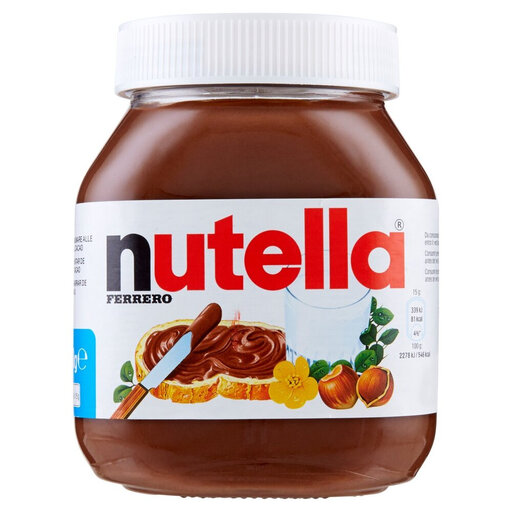 Image unavailable
This jar may suit you if you plan to share it at breakfast or as a snack. If you’re looking for a multipack, check how many units are included. Also check the nutritional information and any Nutri-Score displayed on the packaging.
 Image unavailable
This jar may suit a household planning to share the spread regularly. Compare its size with what you’ll need during your stay. For a lunchbox, check how it’s packaged rather than assuming the contents are divided into portions. Also check the nutritional label.
 Image unavailable
Consider this jar if several people will be sharing the spread during the holiday. Check that the quantity is right for your stay and, if you want portions to take with you, check how it’s actually packaged.
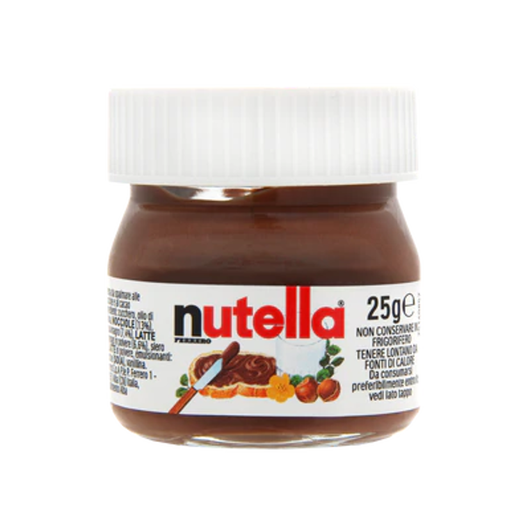 Image unavailable
This format is described as an individual portion you can take with you, making it worth considering for a lunchbox. Check how many portions are included before treating it as a multipack, then read the label for the ingredients and nutritional information.
No. The French Ministry of the Economy says the Nutri-Score is an optional additional logo. The DGCCRF explains that a nutrition declaration is compulsory on most prepacked foods, so check it even if no logo is displayed.
Compare products in the same category using their values per 100 g and, if both logos are displayed, their Nutri-Scores. Manger Bouger recommends limiting products rated D and E; if a product has no logo, you can’t infer its score.
No: a small weight doesn’t mean the product is already portioned. Auchan says its 200 g cocoa and hazelnut product doesn’t contain individual sachets. Check the number of units and, if necessary, take a suitable container.
Read the ingredients and any statements about possible traces on the packaging of the exact product. The Auchan listings mentioned here include hazelnuts and milk, while the E.Leclerc listing for Bio Village notes certain possible traces. These details don’t apply to every product from the same brand.
No: an organic label doesn’t tell you what the Nutri-Score will be. E.Leclerc’s listing for Bio Village hazelnut spread, 350 g, displays an E based on the previous calculation method stated by the retailer. Check the score and nutritional values of the product you’re considering.