Families planning several snack times
If the jar is regularly shared by several children, a 750 g or 1 kg size may suit the way you plan to use it. Carrefour and Auchan list these sizes in jars, so check how much you actually need.


For regular or shared snacks, start with a 750 g or 1 kg jar rather than a “sharing bag”: the family-size options listed by Carrefour and Auchan come in jars. Then choose a quantity that suits how you plan to use it, and compare the sugars per 100 g and the allergens for each product. If a child has an allergy or follows a medically prescribed diet, the jar’s label and the arrangements agreed with their school should take priority over the size.
If the jar is regularly shared by several children, a 750 g or 1 kg size may suit the way you plan to use it. Carrefour and Auchan list these sizes in jars, so check how much you actually need.
The “of which sugars” figure per 100 g makes it easy to compare jars of different sizes. Nutri-Score can also help when it appears on the packaging; Public Health France explains that displaying it is voluntary.
Check the allergens and any “may contain” warnings for the specific product you buy. If a child has particular needs at school, the French Ministry of National Education says that an Individualised Welcome Plan, or PAI, can be put in place.
For a shared snack, work out how much you need before comparing recipes. If someone has an allergy, first check that the specific product is suitable and complies with the child’s requirements.
| What to consider | What to check | Who is it for? |
|---|---|---|
| Size for several snack times | Net weight of the jar and the number of snacks planned. | When several children share a jar, I look for a quantity that suits those occasions; about 36% of consumers put this need first. |
| Comparing quantities | Net weight of each product, using the same basis for comparison. | For regular snacks, I want to compare jars of different sizes without judging by appearance alone; about 29% of consumers prioritise comparing quantities. |
| Recipe and nutritional information | Sugars per 100 g, ingredients and, if displayed, Nutri-Score. | When comparing two recipes, I want to check their sugar content on the same basis, whatever the jar size; about 21% of consumers prioritise this. |
| Allergens and school requirements | Ingredients, “may contain” warnings and any requirements that apply to the child. | If a child has an allergy or follows a medically prescribed diet, I need to rule out any unsuitable product before choosing a size; about 14% of consumers prioritise this check. |
Searching only for pouches could mean you miss out on family-size jars. Carrefour lists 1 kg jars, while Auchan has a 750 g jar of Pasta Cao.
Search by weight and jar packaging, then choose a quantity that suits the snacks you have planned.
Public Health France says that displaying Nutri-Score is voluntary. If it is not shown, you should still read the product’s nutritional information and ingredients.
In particular, compare sugars per 100 g, and use Nutri-Score as an additional guide when it is displayed.
Carrefour’s product information varies by product: its 825 g jar of Nutella lists hazelnuts, milk and soya, while Carrefour Classic' 1 kg mentions possible traces of cereals containing gluten, among other things.
Read the label on the jar you buy, including any “may contain” warnings, and follow any individual arrangements agreed with the school.
Carrefour lists 825 g and 1 kg jars; Joybuy also lists a 1 kg option.
Carrefour lists a 1 kg jar of hazelnut spread.
Auchan lists a 750 g cocoa and hazelnut spread labelled “no palm oil”.
These jars come in a range of sizes for snack time: 750 g and 1 kg for comparing common options, 3 kg if you need more, and 630 g if a smaller jar will do. The 750 g Banania product has a different recipe from cocoa and hazelnut spreads, so check that it is the one you are looking for.
 Image unavailable
A size to consider for regular snacks shared by several people. The Joybuy listing states 56.3 g of sugars per 100 g; if the child has an allergy, check the allergens on the jar you buy.
 Image unavailable
This 750 g jar is a smaller option than the 1 kg jar for shared snacks. Check the allergen list and any “may contain” warnings on the label.
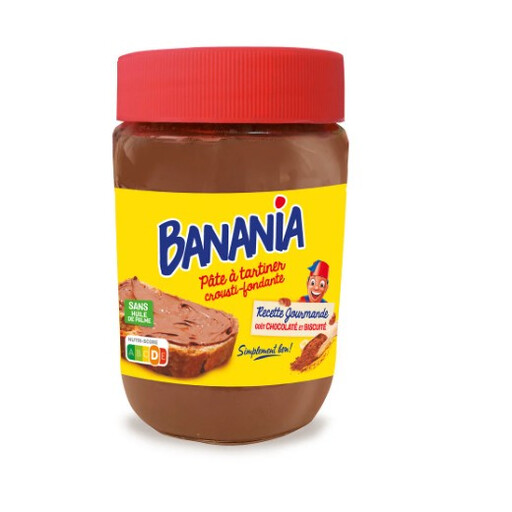 Image unavailable
Worth considering if a 750 g jar suits your planned snacks and you are looking for a banana-flavoured recipe. This is not a cocoa and hazelnut spread, so check the ingredients and allergens on the jar.
 Image unavailable
Consider the 3 kg jar only if you need more than a 750 g or 1 kg jar. Check that this size suits the way you plan to use it, and read the allergen information on the label.
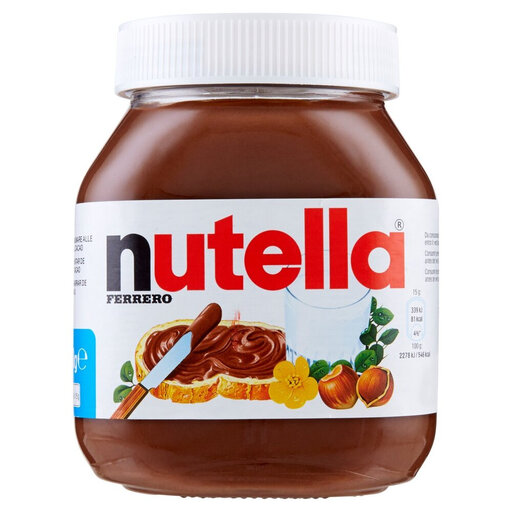 Image unavailable
This 630 g jar may suit you if you want less spread than in the 750 g or 1 kg sizes. Check the recipe and allergens for this product before sharing it at snack time.
No. As Public Health France explains, displaying it is voluntary in France. Separate rules apply to nutrition declarations on pre-packed food. To compare two jars, check the sugars per 100 g in particular, whether or not Nutri-Score is displayed.
No. The French Ministry of the Economy describes this levy as applying to sugary drinks, not as an indicator of the ingredients in a chocolate spread. To check the sugar content, consult the nutritional information on the jar, shown per 100 g.
No. You cannot assume that every recipe contains the same allergens. Carrefour lists possible traces of cereals containing gluten, among other things, for its 1 kg jar of Classic'. Check the label for the product you buy and follow any requirements that apply to the child. The French Ministry of National Education says that a PAI can be put in place for a pupil with a food allergy.
A 750 g or 1 kg jar is a good starting point if that quantity suits the snacks you have planned. Carrefour lists 1 kg options, while Auchan has a 750 g jar of Pasta Cao. Before choosing, compare the recipe and allergens for each jar too.